Why we preserve. The case for a rose that keeps.
The preserved rose has a reputation to overcome. For a long time it was a souvenir — kept under glass, faded, an artifact. The work the atelier does now is closer to a different proposition: a rose that earns its second life by being more itself, not less.
6 min read · Les Fleur Company
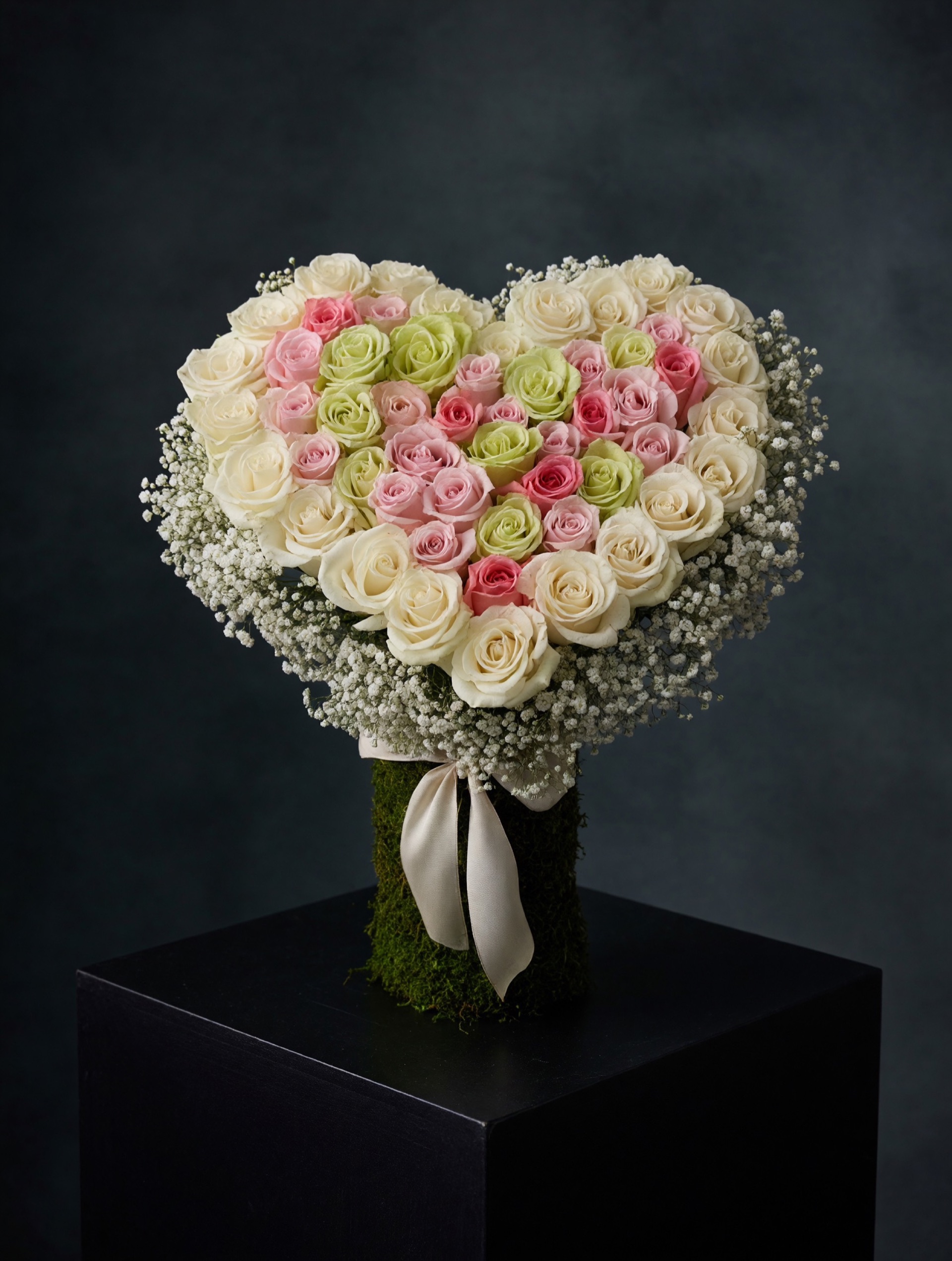
The Ecuadorian rose.
We source from the high country above Cayambe and Tabacundo, where the equator and the altitude conspire to produce the head size, stem strength, and colour density that the preservation process requires.
Not every rose preserves well. The varieties we trust — the Mondial, the Vendela, the Quicksand — were selected over three growing seasons for how they hold geometry after the glycerine cycle. The lesser varieties go soft at the petal edge; the ones we keep stay clean.
The case for permanence.
There is a quiet argument inside every fresh arrangement, which is that the gesture matters more than the duration. We don't disagree. But for the rooms that hold a single composition for a year — the entrance console, the bedside that gets remade in summer, the office that requires no maintenance — the preserved rose is the correct answer.
The work isn't about replacing the fresh. It is about choosing the right material for the room's actual life.
On colour.
The deepest part of the preservation work happens at the colour bath, where the rose is taken from its harvest tone and held at a single chromatic note for the rest of its life. We keep a narrow palette — oxblood, cream, dusty rose, the deep aubergine — because those are the colours that age cleanly inside a room.
Brights fade; the considered tones hold. That is the reason a five-year-old preserved rose, in the right palette, can still be the most quietly correct piece on the shelf.
Considered
How long does a preserved rose last?
In the dome or vessel, kept out of direct sun, between three and five years. We have pieces on shelf at the atelier past seven that still read as composed; the colour is the slowest thing to give.
Can a preserved rose be re-composed?
Yes. The atelier accepts pieces back for re-composition into new vessels; preservation work, properly done, is reversible into the next arrangement.