Reviving Vintage Florals: A Timeless Approach to Creating Unique Wedding Bouquets
A bride came to the studio last spring carrying a photograph — her grandmother, 1968, a bouquet of garden roses gone soft at the edges from forty years in a drawer. She wanted that. Not a replica, not a theme. That specific, unphotographable quality of a flower arranged before anyone thought to make it match the centerpieces. Building her vintage wedding bouquet took longer than any arrangement we made that season, and it taught us most of what follows here.
33 min read · Les Fleur Company
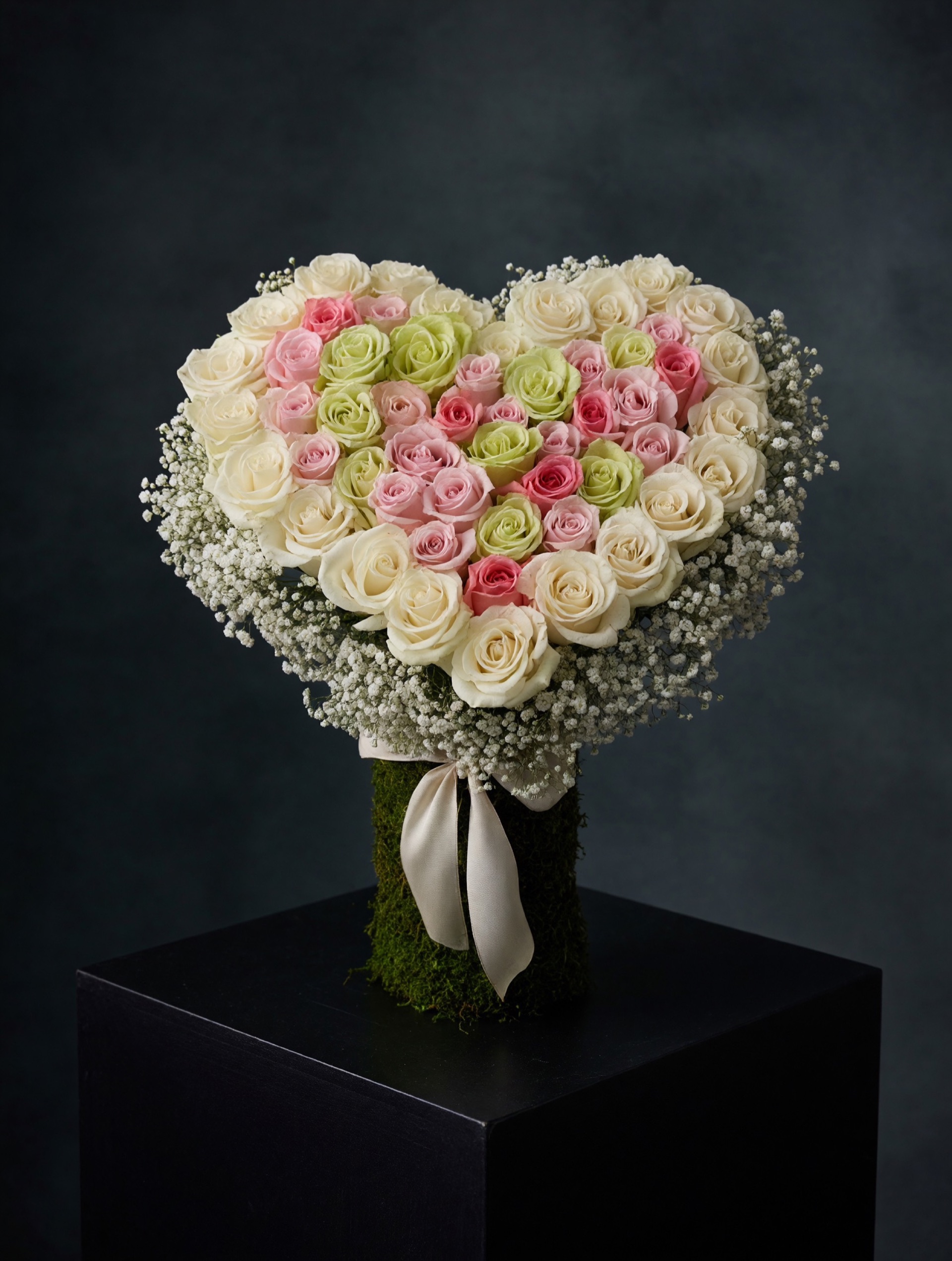
What "Vintage" Actually Means in Floral Design
Vintage is a construction problem before it is a color problem. Bouquets from the 1960s and 70s were built low and loose, hand-tied rather than wired, with visible stem length and an asymmetrical outline. Modern bridal bouquets, by contrast, trend toward a tight dome — uniform stem length, dense heads, a silhouette engineered for the overhead photograph.
The palette people associate with vintage — dusty rose, sage, ivory gone slightly warm — is really a description of garden-form petals under natural light, not a dye lot. A blush hybrid tea rose photographs flat. A garden rose with forty petals and an irregular bloom edge photographs the way an old print looks: soft, a little unresolved at the margins.
We ask three questions before designing anything described as vintage: What decade, specifically, is the reference from. What is the actual silhouette in the photo — round, cascading, or a loose posy. And what does the client want preserved about the feeling, separate from the specific flowers, since half the varieties common in 1965 are no longer grown at commercial scale.
Skipping that third question is the most common failure we see repeated by other studios. A client hands over a photo, the florist matches color alone, and the resulting bouquet reads as pastel-modern rather than vintage — technically similar, structurally nothing alike.
The Varieties That Carry the Vintage Look
Garden roses do most of the work. Mondial, dense and blowsy with a cream-to-blush gradient, reads as the closest living match to the roses in most mid-century wedding photographs. Vendela — ivory with a faint peach cast at the center — softens a bouquet that would otherwise read too bridal-white. Quicksand, a deeper apricot, gives a vintage bouquet its warmth without tipping into the orange range that photographs poorly against skin tones.
Lisianthus fills the gaps garden roses leave, with a papery, slightly wilted-looking petal structure that mimics age even on the day the bouquet is cut. Clematis contributes the trailing, unruly line that a tight modern bouquet edits out. Dusty miller — silvered, felted foliage — is the single ingredient most responsible for the sun-faded look clients describe without being able to name it.
Eucalyptus and peony round out the palette depending on season. Peony, when in season, brings the exact kind of loose, many-petaled bloom that reads as heirloom without any styling trick required. Out of season, we do not substitute a look-alike; we tell the client peony is unavailable and rebuild around garden roses at a larger scale instead.
The eleventh stem ruins this composition faster than any other. A vintage bouquet depends on visible negative space between blooms — the arrangement should look gathered, not packed. Add one stem past what the silhouette calls for and the whole thing reads as a modern bouquet wearing an old dress.
Sourcing Heirloom Blooms — What It Costs and Takes
Garden roses run $8 to $14 per stem wholesale, against $2.50 to $4 for standard hybrid teas. A bridal bouquet built primarily from garden roses — 18 to 24 stems, plus filler and foliage — lands between $350 and $900 retail depending on the market and the season, compared with $150 to $300 for a standard rose-and-greenery bouquet of similar size.
The cost difference is not markup. Garden roses are grown in smaller lots, ship with a shorter vase life — often three to five days versus seven to ten for hybrid teas — and arrive with more variation stem to stem, which means more culling at the workbench. We typically order 20 percent over the finished stem count to account for blooms that open unevenly or bruise in transit.
Seasonality narrows the window further. Peony is available roughly April through June in most North American markets; garden roses run more consistently but still peak in spring and early fall. A client planning a January wedding around a vintage peony bouquet is planning around a flower that does not exist commercially that month — the honest answer is to substitute, not to promise.
This is the reason we ask for eight to twelve months of lead time on vintage work, longer than the four to six months adequate for a standard arrangement. Heirloom growers plant against forward orders. A florist calling in March for a June wedding is competing for stems that were allocated the previous autumn.
The Atelier Process: From Sketch to Bouquet
Every vintage commission starts on paper, not in the cooler. We sketch the silhouette from the reference photograph, mark where the line breaks — where a clematis tendril or a loose rose head is meant to fall outside the main mass — and build a stem count against that sketch before ordering a single flower.
A mock-up follows, usually four to six weeks before the wedding, using stand-in varieties close in form and color to what will ship for the event itself. This is where most of the editing happens: removing stems, not adding them, until the loose hand-tied shape holds without wire.
Final assembly happens the morning of, typically a three-to-four-hour window for a full bridal party order. Stems are hand-tied at a single point, ribbon-wrapped over the binding rather than pinned, and the ends cut clean and left visible — a detail that reads instantly as considered rather than assembled.
We keep a written record of every vintage bouquet we build: variety list, stem counts, binding technique, water treatment. When a client returns for an anniversary arrangement or a sister's wedding three years later, that record is the difference between reproducing a feeling and guessing at one.
Preservation — Building a Bouquet That Lasts Beyond the Day
The case for a bouquet that keeps starts with timing, not sentiment. Stems begin degrading within hours of the ceremony; a bouquet meant for preservation needs to reach a preservationist, or at minimum cold storage, within 24 to 48 hours. We tell every vintage-minded client this in the first consultation, because it changes how the day is scheduled.
Freeze-drying holds dimension and true color best and typically runs $300 to $500 depending on bouquet size and turnaround. Pressing, at $80 to $150, flattens the arrangement into a two-dimensional keepsake — appropriate for a shadow box, not for a bouquet meant to sit on a shelf. Resin casting, $200 to $600, encases stems permanently but shifts color over years of light exposure more than freeze-drying does.
The irony of vintage floral work is that today's bouquet is tomorrow's photograph reference. A client who preserves her bouquet well is, in effect, building the heirloom her granddaughter will bring to a florist in thirty years. We treat every preservation order with that in mind — full documentation, honest color notes, no shortcuts on the transfer window.
Not every couple preserves. Plenty simply want the look for one day and let the flowers go. Both choices are legitimate; the mistake is deciding on preservation after the reception, once the window has already closed.
Common Mistakes Brides Make Chasing "Vintage"
The most frequent error is over-specifying color from a faded photograph. Old film shifts every hue toward sepia over time; a rose that looks brown-gold in a 1970 print was very likely a standard blush or ivory when it was cut. Building a bouquet to match the faded print rather than the flower produces something muddy, not heritage.
Second is treating dried or preserved flowers from a previous generation as sourcing material rather than reference. We occasionally get asked to incorporate an actual pressed flower from a family bouquet into a new arrangement. It can be done as a small accent — tucked into a boutonniere, framed alongside — but it cannot structurally anchor a fresh bouquet; dried stems don't hold water, weight, or shape the way a living arrangement needs to.
Third is over-adding. Clients chasing an heirloom look sometimes ask for more — more greenery, more trailing elements, more texture — assuming density reads as abundance the way it did in some 1970s arrangements. It doesn't. What reads as vintage restraint in a photograph is usually a smaller stem count with more negative space between blooms, not a larger one.
Pairing Vintage Bouquets with Modern Wedding Details
A vintage bouquet does not require a vintage wedding. Some of the strongest work we've done has paired a loose, garden-rose bridal bouquet against a spare, contemporary reception — concrete tables, minimal signage, a single arrangement doing the room's only decorative work. The contrast makes the bouquet more legible, not less.
Ribbon is the easiest place to modernize without losing the heirloom feeling. Silk ribbon in a muted tone, tied simply and left to trail, reads as considered regardless of the venue's aesthetic. Avoid lace overlays or doily-style wraps unless the entire event is committed to that register — applied as an afterthought, they read as costume.
Bridesmaid bouquets should echo the bridal bouquet's variety list at a reduced scale, not repeat it exactly. We typically drop one or two of the more expensive garden rose varieties from bridesmaid arrangements and let lisianthus and dusty miller carry more of the visual weight — the family resemblance holds without the full cost multiplying across a bridal party of six or eight.
Boutonnieres and corsages are where a single heirloom rose variety can appear without the expense of building an entire arrangement around it — one Mondial garden rose, minimal foliage, does the work of connecting the groom's party to the bridal bouquet's palette at a fraction of the cost.
What to Ask Your Florist Before You Commit
Ask to see previous vintage work in person or in unedited photographs, not just a curated portfolio — heavily filtered images obscure whether a florist actually understands garden-form structure or is relying on post-production to fake the softness. Ask specifically which varieties they intend to use and why, not just the general palette.
Ask about sourcing lead time and what happens if a specific garden rose variety is unavailable the week of the wedding — a florist without a substitution plan is not equipped for heirloom work, where variation between growing seasons is normal. Ask for a written stem count and mock-up before the final order is placed.
If preservation is a possibility, ask now, not after the wedding. Ask who receives the bouquet immediately following the ceremony, and confirm that person understands the 24-to-48-hour transfer window. This single logistical detail determines whether preservation is even possible, regardless of how the bouquet itself is built.
Finally, ask what the florist would change about the reference photograph. A studio confident in vintage work will have an opinion — where the silhouette should be simplified, where a variety substitution serves the day better than a literal match. A florist with no opinion is agreeing to copy, not to build.
Building Something Worth Keeping
The bride with her grandmother's photograph did not get an exact replica. She got a bouquet of Mondial and Vendela garden roses, lisianthus, and dusty miller, built low and asymmetrical, with more space between the blooms than either of us expected going in. She sent it to a preservationist the next morning. It sits in her hallway now, in a shadow box, next to the original photograph.
Neither bouquet looks like the other, exactly. They look like they belong to the same family.
Considered
What flowers are used in a vintage wedding bouquet?
Garden roses (Mondial, Vendela, Quicksand), lisianthus, clematis, dusty miller, and eucalyptus are the core of a vintage bouquet. The look comes from garden-form petal structure and muted, sun-faded color — not from any single flower being labeled vintage.
How much does a vintage-style bridal bouquet cost?
Expect $350 to $900 for a bridal bouquet built from garden roses and heirloom varieties, versus $150 to $300 for a standard hybrid-tea arrangement of similar size. The difference is stem cost and hand-tying time, not markup.
How far in advance should I book a florist for vintage flowers?
Book eight to twelve months out. Garden roses and heirloom varieties are grown in limited runs against specific orders, so a florist working six weeks ahead often cannot source the exact stems your bouquet requires.
Can you preserve a vintage wedding bouquet?
Yes — pressing, freeze-drying, and resin casting are the three standard methods. Freeze-drying holds dimension and color best but runs $300 to $500. The arrangement must go to a preservationist within 24 to 48 hours of the ceremony.
What's the difference between vintage and rustic wedding flowers?
Rustic leans on texture and foraged material — wildflowers, wheat, unfinished wood accents. Vintage leans on cultivated garden form and a restrained, sun-faded palette. The two overlap but vintage is the more disciplined, less casual register.
Should a vintage bouquet match my grandmother's wedding flowers exactly?
Treat an old photograph as a reference for form and palette, not a shopping list. Flower varieties from decades ago are often unavailable or unreliable at scale; a florist should reproduce the feeling with stems that hold up through a full day.