Unveiling Legacy, One Petal at a Time
A mother arrived at the atelier carrying a shoebox of dried petals wrapped in tissue — her own bouquet, nineteen years old, brittle at the edges but still faintly rose-colored. She wanted her daughter's wedding flowers to survive the same way. Not photographed well. Not admired for an evening. Kept. That request reframes the entire brief. A considered florist is no longer building for Saturday. She is building for the box that gets opened again in 2045.
27 min read · Les Fleur Company
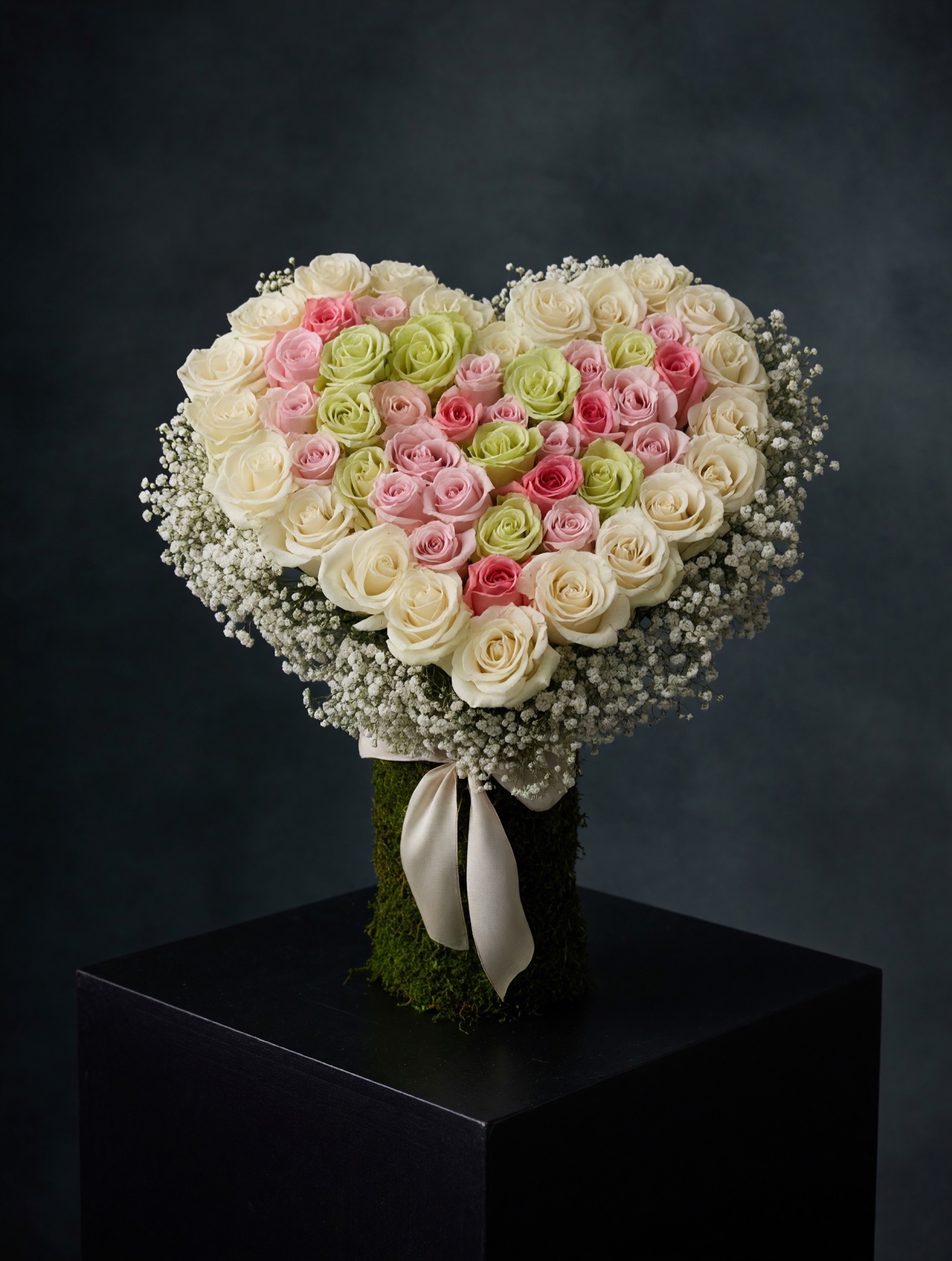
The Afternoon a Grandmother's Garden Became a Bridal Bouquet
The request above is not unusual. Clients increasingly arrive with a specific flower in mind — not for its color, but for its provenance. A grandmother grew roses along a fence line in Sacramento for forty years. A father proposed with lavender from a roadside stand near Lake Tahoe. These details rarely show up on a mood board. They show up in conversation, almost as an aside, and they are the actual brief.
An atelier that listens for this does something different with the order. It is no longer sourcing "garden roses, blush." It is sourcing a stem that needs to survive handling twice — once for the ceremony, once for the keepsake. That distinction determines variety, cut stage, and even which supplier gets the call that week.
Clients planning a Lake Tahoe wedding in particular tend to carry this instinct strongly — the setting itself asks for permanence, not spectacle. The mountains do not need help being noticed. The flowers are there to mark a date, which is a different job than filling a room.
What the Word Heritage Means at the Bench
Heritage, inside a floral practice, is not a mood. It is a set of working constraints. It means choosing stems for structural integrity over immediate drama, handling water and cold storage with more discipline than a single-day arrangement requires, and refusing shortcuts — floral foam chief among them — that trade longevity for speed.
It also means accepting a narrower palette. Not every bloom that reads well in a photograph will press, dry, or resin well a year later. Hydrangea, for instance, is generous and inexpensive, and it browns within days once cut regardless of treatment. A heritage arrangement is built around flowers that do the opposite — that get more interesting as they age, not less.
Our piece on composing for endurance goes further into which structural choices extend an arrangement's working life past the event itself. The short version: heritage is decided before the first stem is cut, not after.
The Case for the Rose That Keeps
Not all roses are built the same. Some are grown for volume and shipping tolerance — large heads, thin petal count, bred to open fast and sell fast. Others are grown with density in mind, petal structure that holds its architecture even as the water leaves the cell walls. The second category is what a heritage-minded atelier reaches for.
This is not nostalgia. It is horticultural fact, documented by growers and extension programs that study postharvest behavior in cut roses. A dense-petaled variety loses moisture more evenly, which means less curling, less browning at the edge, and a shape that still reads as a rose months later rather than a flat brown disc.
The practical result: a bride who wants her bouquet pressed or dried should know, before the order is placed, that the variety matters more than the color match. A florist who skips this conversation is optimizing for the ceremony photo only — which is a legitimate choice, but not the one the heritage client is actually paying for.
Varieties Built to Last: Mondial, Vendela, Quicksand
Three garden rose varieties come up again and again in heritage work, each for a different reason. Mondial carries a dense, old-world petal count that holds its layered shape through drying with minimal flattening — it looks like a painting of a rose even after the moisture is gone.
Vendela, a creamy ivory variety, resists the yellowing that plagues many white and cream roses as they age. That matters more than it sounds: a preserved bouquet that has gone muddy yellow within a year reads as decay, not legacy. Quicksand, with its warm taupe-blush tone, tends to deepen rather than fade, which gives a pressed or dried piece more presence a decade out than it had on day one.
Supporting material earns its place the same way. Lavender dries cleanly and holds scent longest of any stem in the kit. Dusty miller's silvered leaf keeps its color almost indefinitely once dried, which is why it appears in heritage arrangements far more often than its runway presence would suggest. Lisianthus and peony can both press successfully, but only if cut at a specific stage — peony especially, since a fully open bloom collapses under its own moisture during pressing while a tighter bud holds form.
Composition as an Act of Preservation
Restraint is not only an aesthetic position at Les Fleur. It is a preservation strategy. A dense, maximalist bouquet with forty overlapping stems bruises itself in the vase before the ceremony even starts — petals pressed against neighboring petals, moisture trapped between layers, edges browning from contact rather than age.
A composition built on negative space, by contrast, gives each stem room to be handled individually later — pulled apart for pressing, dried separately, or arranged into a shadow box without needing to be untangled from six other blooms it was never meant to touch for three days straight.
This is the throughline connecting composition and heritage as pillars: the eleventh stem that ruins a silhouette on the day is often the same stem that bruises its neighbor and ruins the keepsake a year later. Our guide to the essential elements of a timeless composition covers this discipline in more detail, and it is worth reading before, not after, the final stem count is set.
Inside the Atelier: How a Legacy Arrangement Is Built
The process starts earlier than most clients expect — often six to eight weeks out, when the florist is sourcing specific varieties rather than placing a generic order. Stems are hand-selected at the market stage, not catalog stage, which means rejecting roses that look fine in a photo but show early signs of petal separation at the base.
At the bench, construction favors hand-tying and water tubes over floral foam. This is slower — a hand-tied bouquet takes roughly twice the assembly time of a foam-mounted piece — but it keeps every stem in direct, clean water until the moment it is cut for the ceremony, rather than sitting in oxygen-starved foam for two days prior.
Cold storage discipline matters just as much. Stems held at 34 to 38 degrees Fahrenheit overnight lose dramatically less structural integrity than stems left at room temperature, a gap that becomes visible within 48 hours. None of this shows up in the final photograph. All of it shows up in what survives the following year. The atelier techniques behind a one-off composition and a preservation-ready one overlap almost completely — the difference is in the handling, not the design.
After the Day Ends: Preserving What Was Grown
The preservation window is narrower than most couples assume. Flowers should reach a preservation artist, or begin a home-drying process, within 24 to 48 hours of the ceremony. Petals left in water past that point begin to soften in ways that no technique reverses.
Three methods dominate the work. Air-drying, hung upside down in a dark, low-humidity space, is the simplest and least expensive, though it changes color — most blooms deepen or desaturate rather than holding their wedding-day shade. Pressing, done flat under weight for one to two weeks, preserves color better and suits flat-mount framing. Resin casting, the most expensive route, holds dimensional shape and true color longest but requires the most technical skill and the least margin for error.
Our note on the atelier's relationship to impermanence is worth reading here, because it argues the less popular but more honest position: not everything should be preserved, and choosing which three stems matter is itself part of the craft.
Where Families Go Wrong, and What to Ask Instead
The most common failure is timing. A family decides on preservation a week after the wedding, once the bouquet has already sat in a vase of standing water, half the stems soft at the base. At that stage, even a skilled preservation artist can save perhaps a third of the material.
The second failure is construction, and it happens before the family ever touches the bouquet. Florists who build primarily for same-day visual impact often reach for floral foam and heavy misting, both of which shorten a stem's working life. A client who cares about preservation should ask, directly, during the consultation: how is this being constructed, and is foam involved. It is a reasonable question, not a difficult one, and a florist confident in the work will answer it plainly.
The third failure is choosing flowers for color alone. A rare, saturated dye-injected bloom may photograph beautifully and then fade to gray within a month, regardless of preservation method, because the color was never structural. Ateliers working from varieties like Mondial and Vendela sidestep this entirely — the color is in the petal, not applied to it.
Choosing an Atelier That Treats Flowers as Inheritance
A florist's portfolio will show you the wedding day. It will rarely show you the eighteen months after. Ask instead for examples of preserved work from past clients, or whether the studio has a standing relationship with a pressing or resin artist. A studio that treats heritage seriously will have an answer ready, not an improvised one.
It is also worth asking how the studio approaches related work — our piece on reviving antique florals for modern occasions is a useful litmus test, since it shows whether a florist thinks about continuity as a design problem or merely a sentimental add-on priced at the end of the invoice.
The shoebox the mother brought in was not an accessory to the brief. It was the brief. Nineteen years from a ceremony to a kept petal is not a long time in the life of a rose variety bred correctly, cut at the right hour, and handled by someone who understood, before the first stem went into water, that the work was never going to end on Saturday.
Considered
What does heirloom floral design actually mean?
It means the arrangement is built from the start to survive past the event — chosen stems with structural integrity, handling that avoids bruising or excess moisture, and a plan for drying, pressing, or framing. It is a construction decision made at the bench, not a sentiment added afterward.
Which flowers hold up best for preservation?
Garden roses with dense petal structure — Mondial, Vendela, Quicksand — along with lavender, dusty miller, and eucalyptus. Lisianthus and peony can be pressed successfully if cut at the right stage. High-water-content blooms like hydrangea brown quickly unless specifically treated.
When should I arrange flower preservation for my wedding?
Before the event, ideally when booking the florist. Preservation artists need stems within 24 to 48 hours of the ceremony, before petals begin to soften. Deciding the week after the wedding is usually too late for the bouquet itself, though loose stems can sometimes be salvaged.
Does floral foam ruin flowers for preservation?
It can. Foam traps excess water at the stem, which accelerates rot and discolors petals before any drying process begins. Ateliers working toward preservation typically use water tubes, chicken wire, or hand-tied technique instead.
Can an arrangement be both photogenic and preservable?
Yes, and the two goals are more compatible than most assume. Restrained compositions with clear negative space tend to dry and press with more legibility than dense, overfilled arrangements, where overlapping stems bruise each other and lose shape.
How much does preserving a wedding bouquet typically cost?
Professional pressing or resin preservation generally runs from several hundred to over a thousand dollars depending on scale and medium. The range reflects labor — each stem is handled individually — rather than material cost.