Family Heirlooms in Estate Wedding Florals
A bride called the atelier eleven months before her wedding at a stone estate in El Dorado Hills, carrying a shoebox. Inside: a pressed gardenia from her grandmother's 1968 bouquet, gone the color of tea paper. A rosary. A single cufflink that had belonged to her father, who would not be walking her down the aisle. She did not ask us to display these things. She asked if they could live inside the arrangements — not beside them, inside them. That is the entire discipline of heirloom floral work in one request.
23 min read · Les Fleur Company
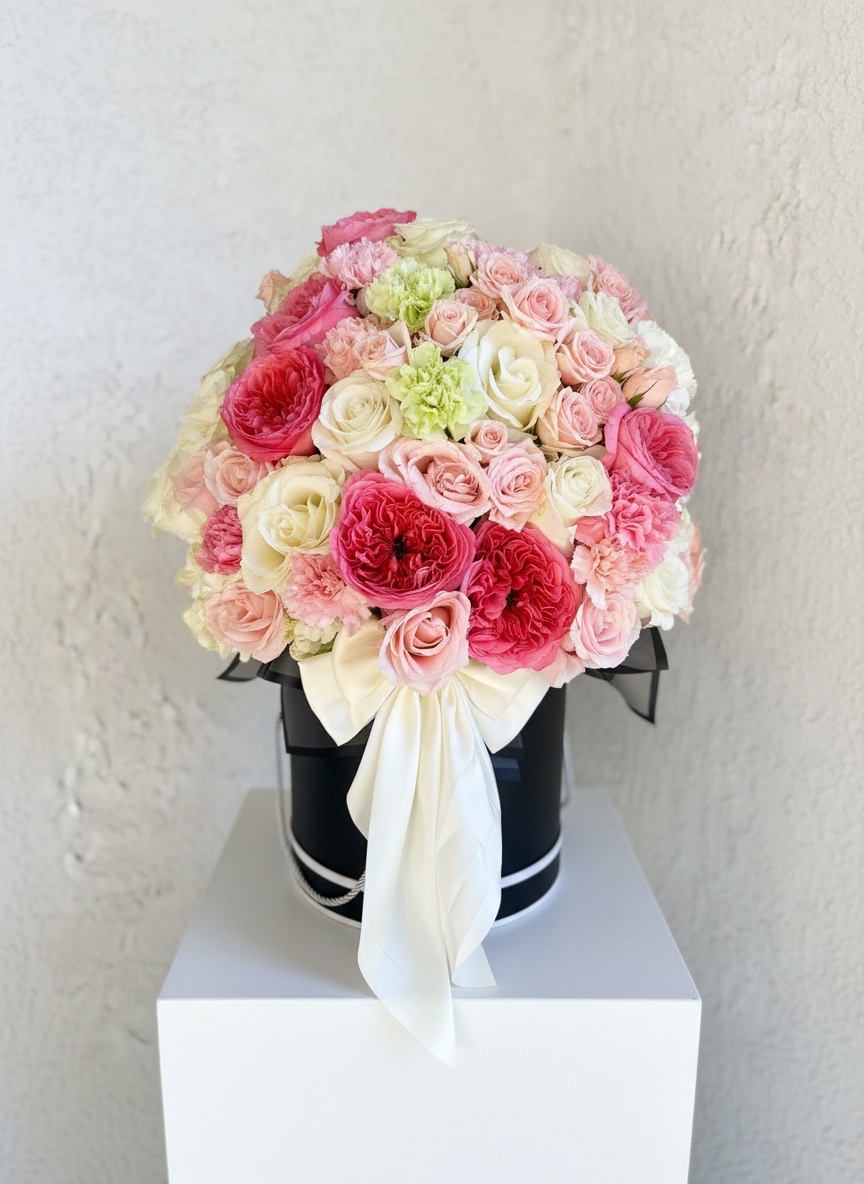
What Actually Counts as a Floral Heirloom
Families often arrive thinking they have nothing to work with. They are usually wrong. A floral heirloom is any object with family history that can be incorporated into or referenced by the arrangement — pressed botanicals from a previous wedding, a brooch pinned into a bouquet's base, lace cut from a mother's gown and wrapped around stems, a locket, a rosary, a monogrammed handkerchief tucked into the binding.
It also runs the other direction. Many of our estate clients preserve flowers from the current wedding specifically so a daughter or niece can carry something forward in twenty years. We have built arrangements with this second use already planned — a bouquet designed to be split, one half thrown or kept fresh for the day, the other immediately sent to a preservation studio.
The mistake is waiting until the week of the wedding to mention any of this. A florist needs to know what exists — and what state it's in — before the first stem is ordered, because the heirloom often dictates mechanics: wiring, binding, what the arrangement can and cannot be built around. See our notes on building a floral legacy worth keeping for how this plays out across a full program, not just the bridal bouquet.
Varieties That Hold Their Shape
Not every flower is suited to heirloom work, and this matters more than most couples realize. Thin-petaled, high-water-content blooms brown at the edges within days of pressing and lose structure almost immediately under freeze-drying. We build heirloom-adjacent arrangements around garden roses specifically because the varieties hold form under pressure — Mondial for density and a true red that doesn't brown, Vendela for a cream that ages to ivory rather than yellow, Quicksand for a blush that reads warm in both fresh and dried states.
Lavender, dusty miller, and eucalyptus press flat cleanly and keep their silhouette in a frame for years — we recommend all three to clients who want a pressed keepsake from the ceremony florals rather than the bouquet alone. Peony is a harder case: extraordinary fresh, difficult to preserve, prone to shattering under freeze-drying if cut even a day past peak. We tell clients this directly rather than let them discover it after the fact.
Clematis and other climbing varieties serve heirloom work differently — not through preservation but through reference, trained along a trellis or arch to echo a garden a grandmother once kept. The essential elements of a timeless floral composition apply here as everywhere: the right variety chosen for what it needs to survive, not only for how it photographs on the day.
Composition in a Room That Already Has Rules
Estate venues do not yield to a florist's preferences. A nineteenth-century mantel is a fixed fourteen inches deep. A ballroom ceiling built in 1911 sits at nine feet, not the fourteen a modern hotel offers, which changes every proportion for a hanging installation. Narrow hallways, period staircases, and preservation easements on historic properties — some estates prohibit anything affixed to original woodwork — all shape what the composition can be before a single color decision is made.
We treat this as the discipline it is rather than a limitation to complain about. A low mantel asks for a long, low horizontal arrangement rather than a tall pedestal piece. A narrow foyer asks for restraint — three arrangements placed with intention outweigh nine crowded into a space built for one. The eleventh stem ruins the composition in a ballroom; in a period house with original plaster, it ruins the room.
Estate settings in Lake Tahoe and the Sierra foothills bring their own version of this constraint — vaulted timber interiors, stone fireplaces the scale of a small room, window lines that compete with anything placed in front of them. We've built heirloom-integrated programs for both; see the work at our Lake Tahoe and El Dorado Hills estate venues for how the surrounding architecture, not just the flowers, sets the terms.
The Timeline: What Actually Happens, Month by Month
Heirloom work on a compressed timeline rarely goes well. We ask for the first consultation nine to twelve months before the wedding date — earlier if a family heirloom needs conservator assessment, which can itself take six to eight weeks to schedule and complete.
At month nine, we review the objects in person. Pressed botanicals older than thirty years often need stabilization before handling; metal pieces may need cleaning a conservator should do, not a florist. At month six, we finalize mechanics — how a brooch attaches to a bouquet handle without damaging either, how lace wraps without obscuring stem lines. At month three, we confirm variety availability for the week of the wedding, since Mondial and Vendela roses are grown to order rather than pulled from standing stock.
The final week is mechanics and rehearsal only — no new decisions. By the time a bride is dressing, the heirloom has already been tested in the binding twice. This sequencing is the actual craft of atelier floral work — the planning that happens long before anyone sees a finished arrangement.
Where Families Get This Wrong
The most common error is treating the heirloom as decoration added to a finished design rather than the starting point for one. A brooch pinned onto a bouquet as an afterthought looks exactly like what it is — an addition, not an integration. The second most common error is fragility denial: assuming a sixty-year-old pressed flower can be handled the same way a fresh stem can.
What It Actually Costs
Clients ask for numbers early, and they deserve them. A full estate wedding floral program — ceremony, reception tablescapes, a statement installation, bridal party — runs $18,000 to $48,000 depending on guest count, venue square footage, and the number of distinct installations. Heirloom integration itself adds relatively little to that figure: $500 to $1,500 covers the additional consultation time, specialized mechanics, and careful handling of fragile objects.
Preservation after the wedding is billed separately and should be budgeted before the day, not decided afterward in a fog. Freeze-drying a full bouquet runs $400 to $900 depending on size and density — a dense garden rose bouquet costs more to process than a loose, airy one. Pressing costs $150 to $400 and suits single stems or smaller arrangements intended for a frame. Resin casting of individual stems, popular for bridesmaid or mother-of-the-bride keepsakes, runs $200 to $600 per piece.
A rough rule we give clients: budget three to five percent of the total floral program for preservation if the goal is to pass something down. It is a small enough line item that families rarely argue with it once they understand what it buys — a bouquet that still exists at the ten-year anniversary rather than one that lived for six hours.
After the Vows: Preservation as Its Own Craft
What happens to the flowers after the ceremony is where heritage is actually made, not merely described. A bouquet left unattended in the reception heat for four hours before anyone thinks to refrigerate it has usually lost whatever preservation value it had. We ask a designated person — a maid of honor, a parent, never the bride — to collect the bouquet within an hour of the ceremony ending and get it into water or a cooler.
Freeze-drying takes two to six weeks and preserves the arrangement in close to its original dimensional form — the method we recommend when a family wants the bouquet itself, intact, displayed under glass. Pressing flattens everything but keeps color remarkably well for decades when done correctly and kept out of direct light; we've seen forty-year-old pressed garden roses from Vendela-type varieties that have barely shifted in tone.
Our longer piece on the atelier's relationship to impermanence covers the tension at the center of this work directly: flowers are built to fade, and preservation is a choice to interrupt that, not a denial of it. The honest version of heritage work accepts both truths at once.
Choosing Who Gets to Hold Your Family's Objects
Not every florist should be handling a family's pressed flowers or a grandmother's brooch, and a good one will say so. Ask directly: how many heirloom-integrated arrangements has this studio built. Ask what happens if an object is more fragile than expected — does the studio have a conservator relationship, or does it proceed anyway. Ask to see the mechanics plan before the final week, not after.
A studio uncomfortable answering these questions in detail is not necessarily a bad florist — but it is the wrong one for this specific work. The estate weddings we take on in Lake Tahoe and across our private event work tend to involve exactly this kind of object-handling, and the families who ask the most pointed questions upfront are, without exception, the ones most satisfied with the result.
This is also where a gift card or early deposit conversation becomes useful for families coordinating heirloom work across multiple generations — a grandmother contributing toward the floral program as her own form of participation, rather than simply handing over an object and stepping back.
A Note on What Gets Passed Down
The gardenia in that shoebox did not end up on display. It sat, nearly invisible, wired into the underside of the bridal bouquet's handle, wrapped once in the same ivory ribbon her grandmother had used. No guest noticed it. The bride did, every time she held the bouquet that day, and again three years later when she unwrapped the preserved version at her daughter's christening. That is the only measure of success this kind of work actually has — not whether anyone saw it, but whether it was there.
Considered
What is a floral heirloom in wedding design?
A floral heirloom is an existing family object — a pressed flower from a prior wedding, a brooch, lace from a veil, a rosary — worked into new arrangements rather than displayed separately. The term also covers flowers preserved from the current wedding for a daughter or granddaughter to carry forward.
How far in advance should I bring heirloom pieces to my florist?
Nine to twelve months before the wedding, at the first design consultation. Fragile objects — pressed botanicals, aged lace, metal with tarnish — often need a conservator's assessment before a florist can safely build around them, and that review takes time.
Can real flowers be preserved from the wedding day itself?
Yes. Freeze-drying preserves full bouquets in their dimensional form for $400 to $900 depending on size. Pressing costs less, $150 to $400, but flattens the piece. Resin casting of single stems runs $200 to $600 and suits a bridesmaid or sibling gift.
Do heirloom flowers cost more than a standard wedding florals package?
The heirloom integration itself adds relatively little — usually $500 to $1,500 for the design consultation, mechanics, and handling of fragile objects. The larger cost driver is venue scale and guest count, which apply to any estate wedding regardless of heirloom work.
What flower varieties hold up best for heirloom or preservation work?
Garden roses in the Mondial, Vendela, and Quicksand varieties keep their shape under pressure and retain color after drying better than thinner-petaled blooms. Lavender, dusty miller, and eucalyptus press flat and hold their silhouette for years in a frame or book.
Who should I ask to handle heirloom pieces — a florist or a conservator?
A florist for the design and mechanics, a conservator for anything with structural fragility — tarnished metal, brittle lace, decades-old pressed botanicals. A studio experienced in estate work will tell you plainly which pieces need outside expertise before they touch them.