Heritage Florals: Reviving Timeless Techniques
A bride once asked us, three weeks before her wedding, why her bouquet would take longer to build than it would take to photograph her entire reception. The answer was not sentimental. Her bouquet was being hand-tied and wired in the heritage method — a technique that predates floral foam by roughly a hundred years — and that method does not move quickly. It was never built to. Heritage florals are not a mood board aesthetic borrowed from old wedding photographs. They are a specific set of construction techniques, largely abandoned by the industry once foam made volume production possible, and reviving them properly means relearning skills that most working florists today were never taught.
25 min read · Les Fleur Company
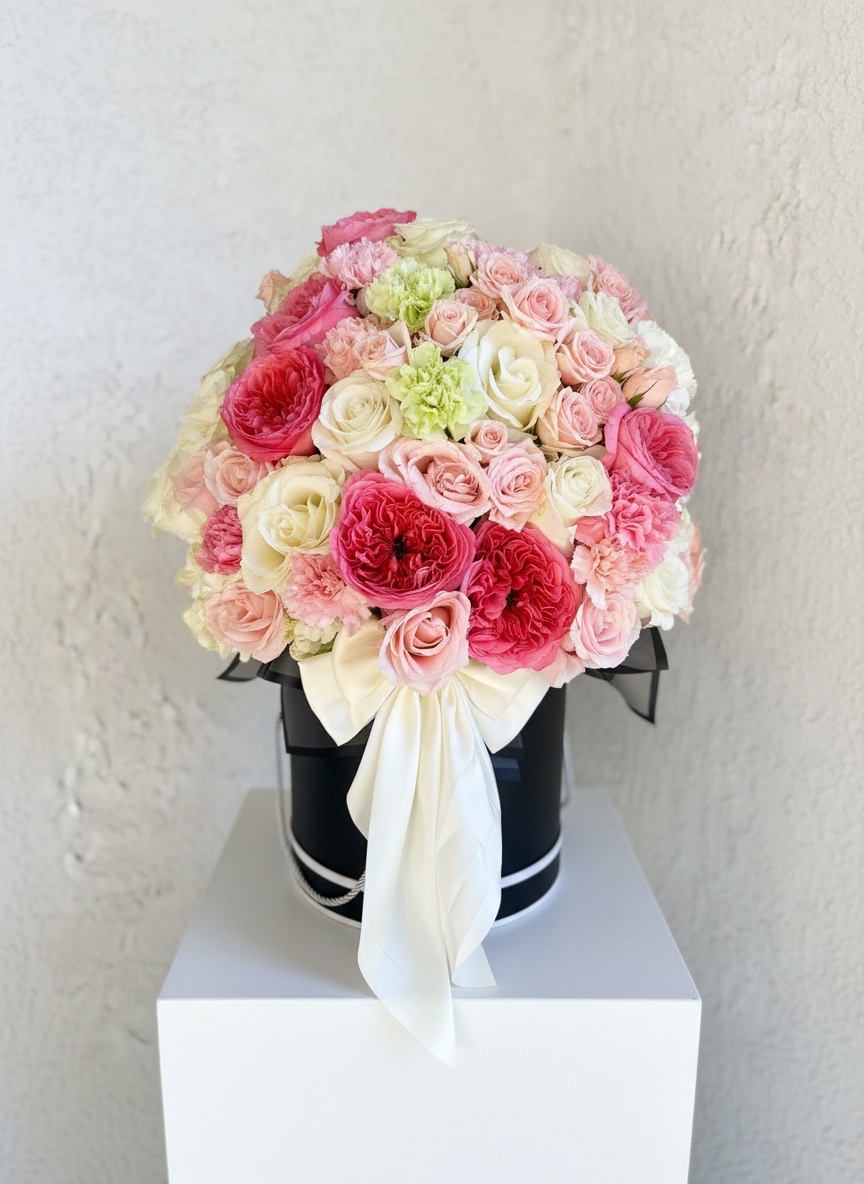
What Heritage Floral Technique Actually Means
Before the 1950s, when phenolic floral foam entered commercial use, every bouquet, every centerpiece, every ceremony installation was built by hand using wire, twine, and spiral binding. Stems were not inserted into a block and left to drink. They were gathered, rotated, and bound at a single point — the binding — so the entire composition held its shape from tension, not saturation.
This matters for more than nostalgia. A spiral hand-tied bouquet distributes weight evenly around its binding point, which means it holds its silhouette for the full length of a ceremony, a reception, and often several days after. A foam-mounted arrangement begins losing structural integrity the moment the foam starts to dry out, typically within six to eight hours in a warm room.
We use the term heritage to describe this family of techniques: hand-tying, wiring, binding, and the related preservation methods of pressing and drying. It is a statement about method, not a filter applied to a photograph.
Wiring and Binding: The Methods That Predate Foam
Wiring a stem is not decorative — it is structural. A 24-gauge wire inserted through the calyx of a garden rose, wrapped and taped, gives a stem the ability to bend into a silhouette the plant could never hold on its own. This is how Victorian-era florists built the deep, domed posy bouquets that modern brides still request without knowing their origin.
Binding is the second half of the technique. A spiral hand-tie — stems crossing at a single point, each rotated slightly from the last — creates a dome that opens naturally as it is turned in the hand. Done correctly, a binding point holds forty to sixty stems without a single one working loose over four hours of handling.
Our studio's approach to this discipline is covered in more technical detail in our breakdown of atelier techniques for floral composition, where we walk through binding angles and wire gauge selection stem by stem.
Pressing and Drying: Preservation as Discipline
Heritage technique does not end at the ceremony. Pressing and drying are the preservation half of the discipline, and they are time-sensitive in a way most clients do not anticipate. Flowers pressed or hung to dry within 24 to 48 hours of an event retain roughly 60 to 70 percent of their original color. Wait a week, and that number drops closer to 30 percent, because cellular breakdown has already begun.
A traditional flower press — two boards, blotting paper, a screw clamp — still outperforms a book for anything beyond a single bloom, because even pressure across the full stem matters more than weight alone. Silica preservation, by contrast, suits dimensional flowers like garden roses and peony that would be crushed flat by a press but can be dried in three dimensions over seven to ten days.
Eucalyptus, lavender, and dusty miller press cleanly and hold color well past a year. Peony and dahlia are harder — their water content is high, and they are more likely to brown at the petal edge during drying regardless of method.
Materials With a Memory: Choosing Varieties That Hold
Not every bloom is suited to heritage technique, and choosing the wrong variety is the most common error we see from studios attempting this work for the first time. Garden roses such as Mondial, Vendela, and Quicksand hold their petal structure under wire tension far better than a standard hybrid tea rose, because of denser petal counts and a shorter window between peak bloom and wilt — which, counterintuitively, means they are more predictable to work with, not less.
Lisianthus wires cleanly along its hollow stem. Clematis, used sparingly as a trailing element, tolerates binding without snapping if it is conditioned for at least six hours beforehand. Lavender and dusty miller are workhorses for both live composition and preservation — they press, dry, and hold scent longer than almost anything else in the kit.
We cover the selection logic behind these pairings in our guide to crafting a timeless floral composition, which addresses material choice as a structural decision rather than a palette one.
The Atelier's Record: Why We Document Every Composition
Every heritage-method piece that leaves our studio is logged — stem count, wire gauge, binding height, and a photograph of the binding point before ribbon is wrapped over it. This is not archival vanity. It is how a composition gets rebuilt accurately if a client requests the same bouquet for an anniversary five years later, which happens more often than one might expect.
The record also protects against drift. Without documentation, a studio's interpretation of a client's original request slowly shifts over repeat orders — a stem added here, a variety substituted there — until the tenth version bears little resemblance to the first. The record is the discipline that prevents this.
This is the same logic behind what we describe elsewhere as the studio's case for permanence — not every arrangement needs to be rebuildable, but the ones that matter to a family across decades should be. We expand on that argument in our piece on composing for endurance.
Common Mistakes Studios Make With "Heritage" as a Buzzword
The word heritage has become decoration in parts of the floral industry — attached to foam-mounted, high-volume arrangements because the color palette reads as antique. This is the most common mistake we encounter when auditing other studios' claims: dusty rose and sage green do not make a composition heritage. Technique does.
A second mistake is skipping conditioning. Heritage technique depends on stems that have been hydrated, stripped of lower foliage, and rested for four to six hours before wiring begins. Skip this step and wired stems snap under tension roughly twice as often — a failure rate we measured directly after a season of tracking breakage across two apprentices learning the technique.
A third mistake is pricing heritage work like standard foam work. Because the labor is three to four times longer, a studio that prices a heritage bouquet at standard bouquet rates is either losing money or, more often, quietly cutting corners on wiring to hit the clock — which produces a bouquet that looks correct in a photograph and fails by the end of the reception.
Heritage in Practice: A Wedding Walkthrough
A recent ceremony called for twelve heritage-method pieces: a bridal bouquet, six bridesmaid bouquets, a boutonniere set, and three standing arrangements for the ceremony arch, later repurposed for the reception. Total build time across the studio was just under eighteen hours — roughly 150 minutes for the bridal bouquet alone, 70 minutes per bridesmaid bouquet, and the remainder split across the arch pieces.
Every stem was conditioned the night before. Wiring began at 6 a.m. on the wedding day for anything using garden roses, since Mondial and Vendela hold firmest when wired within eight hours of installation. The arch pieces were hand-tied on removable frames so they could be lifted intact and reset at the reception without rebuilding.
After the event, the bridal bouquet and one bridesmaid bouquet were pressed within 30 hours, at the family's request, for framing. The remaining material was composted. This is the full lifecycle of heritage work — construction, ceremony, and in some cases, a second life as a preserved object.
Cost, Time, and the Economics of Doing It Properly
Clients comparing quotes often ask why a heritage-method bouquet costs 40 to 60 percent more than a foam-set equivalent using similar stem counts. The answer is almost entirely labor. A foam arrangement with 40 stems might take 35 minutes to complete. The same 40 stems, hand-tied and wired, take 90 minutes or more — and that time cannot be compressed without sacrificing the structural integrity the technique exists to provide.
Preservation adds a second line item. Pressing or silica-drying a bouquet after the event typically adds 2 to 4 hours of studio time spread across one to two weeks, plus materials and framing if requested. We quote this separately so clients understand it as a distinct service, not an upsell folded into the original order.
Studios considering offering heritage technique should budget training time honestly. It takes most florists 20 to 30 practice pieces before wiring failure rates drop to an acceptable range — well below what a single workshop weekend can teach.
The Quiet Argument for Permanence
A heritage-method bouquet does not announce itself. It holds its shape through a receiving line, a first dance, a drive home, and in the right conditions, a decade in a shadow box on a hallway wall. The eleventh stem would have ruined it. The wire no one sees is the reason it lasted. For a client thinking about her flowers for a single afternoon, the technique asks for nothing. For the one thinking about them twenty years on, it is the only argument that holds.
Considered
What does "heritage florals" actually mean?
Heritage florals describes arrangements built using pre-foam techniques — hand-tying, wiring, binding, and sometimes pressing or drying — developed before floral foam became standard in the 1950s. The term refers to method and materials, not simply a vintage color palette or antique vessel.
How long does a heritage-method bouquet take to make?
A hand-tied, wired bridal bouquet in the heritage method typically takes 90 to 150 minutes of focused studio time, depending on stem count and structural complexity. A comparable foam-mounted arrangement takes 30 to 40 minutes, which is the core reason heritage work costs more.
Can wedding flowers really be preserved after the event?
Yes. Pressing, air-drying, and silica preservation can retain a meaningful portion of an arrangement's color and form, typically 60 to 70 percent of original vibrancy, provided the flowers are processed within 24 to 48 hours of the event. Garden roses, lisianthus, and eucalyptus press and dry well; peony and dahlia are harder to hold.
Why do heritage floral arrangements cost more than standard arrangements?
Labor, not materials, drives the cost. Hand-tying and wiring take three to four times longer than foam-setting, require a trained hand, and often include preservation work after the event — all of which is billed as craft time rather than stem cost.
What flowers hold up best in heritage techniques like wiring and pressing?
Garden roses (Mondial, Vendela, Quicksand), lisianthus, clematis, lavender, and dusty miller tolerate wiring and binding well due to sturdy stems and dense petal structure. Eucalyptus and dusty miller also press and dry reliably, making them common choices for both live composition and preservation.
Is floral foam bad for flowers or just outdated?
Floral foam is not inherently damaging to the flowers themselves, but it is non-biodegradable and was engineered for speed and uniform water retention, not longevity of form. Heritage technique was developed before foam existed and remains the standard for arrangements intended to be preserved or to hold structure without a mechanical anchor.