Floral Heritage: A Guide to Building Wedding Bouquets That Last
A client called us eleven years after her wedding. Not for a new arrangement — for a repair. The shadow box holding her bouquet had cracked in a move, and the freeze-dried garden roses inside, Mondial and Vendela, had shifted against the glass. The marriage that bouquet came from had ended four years earlier. She kept the flowers anyway. That is the entire argument for building a timeless wedding bouquet from the start: the flowers often outlast the version of the day they were cut for, and they deserve to be built for that.
22 min read · Les Fleur Company
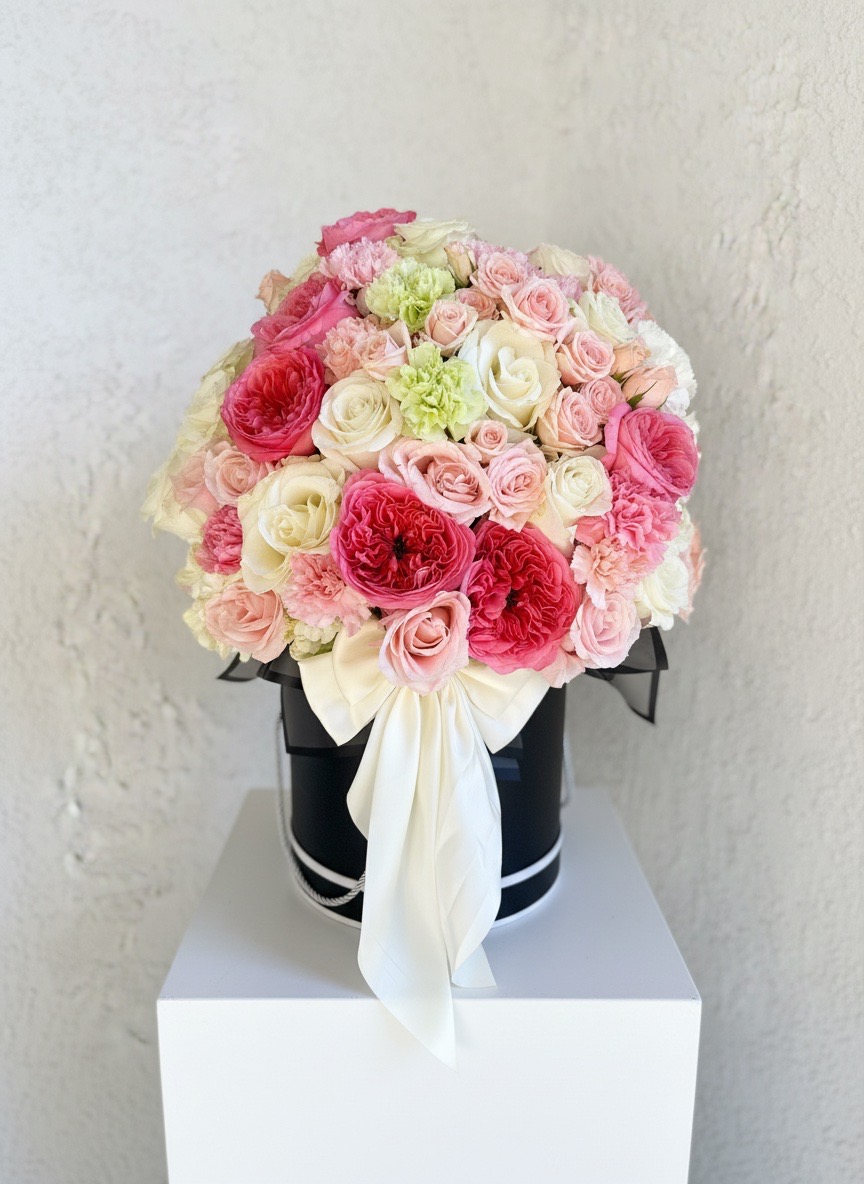
What Heritage Means in Floral Design
Heritage, in an atelier context, isn't a mood board word. It's a design constraint: build for permanence, not just for the day. That constraint changes decisions most florists never think to make — which stems get cut for photographs, which get set aside untouched, and which varieties even make the order in the first place.
A bouquet built only for the day optimizes for openness — full bloom, maximum color saturation, the widest possible face on camera. A bouquet built for heritage optimizes for structure that holds after the water is gone. These two goals overlap less than most clients expect, which is why we ask about preservation before we ask about color palette.
The distinction shows up most clearly in peony. A fully open peony photographs beautifully for about four hours before its outer petals begin to bruise, and it rarely survives drying without shattering. A peony cut one stage tighter holds its shape through a full reception and preserves far more reliably — a compromise most brides are glad to make once it's explained, and one almost none of them are offered unless the studio raises it first.
Choosing Varieties Built to Last
Not every flower earns a place in a bouquet meant to be kept. We build our preservation-forward bouquets around a short list of varieties chosen specifically for petal density and drying behavior, not appearance alone.
Garden roses carry the most weight. Mondial, with its high petal count and deep color saturation, presses and freeze-dries with almost no color shift — the closest we've found to a true one-to-one match between fresh and preserved. Vendela, ivory and dense, holds structure well but can yellow slightly under freeze-drying if not processed within 48 hours of the ceremony. Quicksand, warmer and taupe-toned, presses cleanly but is better suited to freeze-drying than flat pressing, since its color depends on dimension to read correctly.
Lisianthus is the unsung workhorse of a heritage bouquet — ruffled, papery, and naturally suited to drying without additional treatment. Dusty miller, technically foliage rather than bloom, preserves almost indefinitely and adds textural contrast that ages well in a shadow box. Lavender, when included, should be treated as an accent rather than a structural stem; it dries fast and adds fragrance, but its color fades under strong light faster than any bloom in the bouquet.
The Preservation Process, Method by Method
Three preservation methods cover nearly every request we get, and each comes with real trade-offs clients should hear before the wedding, not after.
Freeze-drying is the standard for dimensional preservation — the bouquet keeps its three-dimensional shape and most of its original color. The process takes six to ten weeks and runs $400–$900 depending on bouquet size and whether a display case is included. It requires the bouquet to reach the preservation specialist within 24 to 48 hours of the ceremony; every day beyond that increases the risk of uneven drying or mold at the stem base.
Pressing flattens the bouquet into a two-dimensional keepsake, usually framed. It costs less — $150–$350 — and finishes in two to four weeks, but it fundamentally changes what's preserved: dimension is gone, and thicker blooms like garden roses need to be split before pressing, which most clients don't expect until they see it.
Air-drying is the least expensive option and the one clients most often attempt themselves, hanging the bouquet upside down in a dark, dry space for two to three weeks. It works reasonably well for lavender, dusty miller, and lisianthus, but garden roses air-dried without support tend to lose petals and shrink unevenly — a $0 method that often produces a $0 result.
Building the Bouquet for Two Lives
The practical fix for the tension between "looks best on camera" and "preserves well" is simple, though almost no one asks for it: cut two sets of stems. One set, fully open, goes into the working bouquet carried down the aisle and photographed through the reception. A second, smaller set of the same varieties — cut a stage tighter, conditioned separately, kept out of the reception entirely — gets handed off for preservation the following morning.
This costs more. Typically 15–20% more in stem count, since the preservation set is effectively a second, smaller bouquet built alongside the first. But it solves the single biggest failure point in wedding bouquet preservation: a bouquet that's been carried, tossed toward, photographed against, and left in a hot car for four hours before anyone remembers to refrigerate it.
For clients who don't want the added cost, the fallback is simpler and less reliable: refrigerate the working bouquet immediately after the reception, in water, and get it to a preservation specialist within 24 hours. It works often enough to be worth doing. It doesn't work as reliably as building for two lives from the start.
Common Mistakes and What Actually Holds
The mistakes we see are consistent enough to list, and most of them are avoidable with a five-minute conversation at consultation rather than a scramble the week of the wedding.
None of these mistakes are visible on the wedding day. They surface six weeks later, when the preservation artist calls to say half the roses didn't survive shipping — a call no studio wants to make and no bride wants to receive.
Working with Family Heirloom Elements
Heritage bouquets often carry more than flowers. A grandmother's brooch pinned into the wrap, a swatch cut from a mother's veil, a small cluster of flowers pressed from a previous generation's wedding tucked into the handle — these elements do real emotional work, but they need to be handled as separate from the working stems, not woven through them.
We build a dedicated handle wrap — ribbon or fabric wound around the stems below the bloom line — specifically because it's removable. Heirloom items get pinned or tucked into that wrap rather than into the flowers themselves, which means they can be lifted off cleanly before the bouquet goes to a preservation specialist, protecting both the heirloom and the flowers from each other.
This matters practically as much as sentimentally. Metal brooches left in contact with damp stems for a full reception can tarnish or, worse, rust-stain fabric and petal alike. Pressed flowers from a prior generation are usually decades past the point where they can tolerate handling, let alone a second round of moisture from a fresh bouquet. Keep them adjacent, not embedded, and both survive the day intact.
A Timeline for Heritage Bouquet Planning
The preservation conversation belongs at the design consultation, typically eight to twelve weeks before the wedding, at the same appointment where color and silhouette get decided. This is when variety substitutions — a fuller rose in place of an open peony, for instance — are still easy to make without disrupting the rest of the order.
Four to six weeks out, if a preservation-specific stem set is part of the plan, we confirm the preservation specialist and their turnaround window, since freeze-drying studios often book six to eight weeks ahead during peak wedding season, April through October.
The week of the wedding, we brief whoever is responsible for the bouquet after the reception — usually a maid of honor or a parent — on the 24-hour handoff window. This single instruction, given clearly in advance, prevents the most common failure: a beautiful bouquet forgotten in a hotel room for three days while everyone else recovers from the weekend.
Within 24 to 48 hours after the ceremony, the preservation set ships or hand-delivers to the specialist. From there, it's six to ten weeks of patience, and then a shadow box or a pressed frame that, more often than the photographs on the wall, someone will still be holding onto years after the reason it was made has changed.
Considered
How do you preserve a wedding bouquet so it lasts?
The most reliable methods are freeze-drying, which preserves color and three-dimensional shape over six to ten weeks, and pressing, which flattens the bouquet for framing in two to four weeks. Both require the bouquet to reach a preservation specialist within 24 to 48 hours of the ceremony, before petals begin to dehydrate unevenly.
Which flowers hold up best for a preserved bouquet?
Full-petaled garden roses, lisianthus, and dusty miller preserve reliably because their dense petal structure holds shape through drying. Peony and single-layer blooms often shatter or flatten unevenly, so studios typically substitute a fuller variety for the stems designated for preservation, even within the same bouquet.
How much does wedding bouquet preservation cost?
Pressing typically runs $150–$350 depending on framing. Freeze-drying, the more dimensional and expensive option, runs $400–$900 depending on bouquet size and whether a display case is included. Most studios recommend deciding at consultation, since it affects which stems get cut for the bouquet.
When should I tell my florist I want to preserve my bouquet?
At the design consultation, typically eight to twelve weeks before the wedding — not after the event. Preservation-ready stems are sometimes cut and conditioned separately from the working bouquet, and variety selection changes when preservation is part of the brief from the start.
Can you add family heirlooms to a wedding bouquet?
Yes — a brooch, a locket, a swatch of a mother's or grandmother's veil, or pressed flowers from a previous wedding are typically wrapped into the bouquet's handle rather than the working stems, so they survive handling and can be removed cleanly before preservation.