The Art of Atelier Floral Composition for High-Society Events
A foundation gala, three hundred and forty guests, a ballroom with twenty-two-foot ceilings and a stage the client wanted framed but not overwhelmed. Load-in at nine, doors at seven. By four in the afternoon the room was still half scaffolding and drop cloth — and the client, understandably, wanted to know why there weren't more flowers up yet. There would be. But the answer to why not now is the same answer to what atelier composition actually is: the work that happens before anything gets placed determines whether the room holds together at seven, not how many buckets arrived at nine.
25 min read · Les Fleur Company
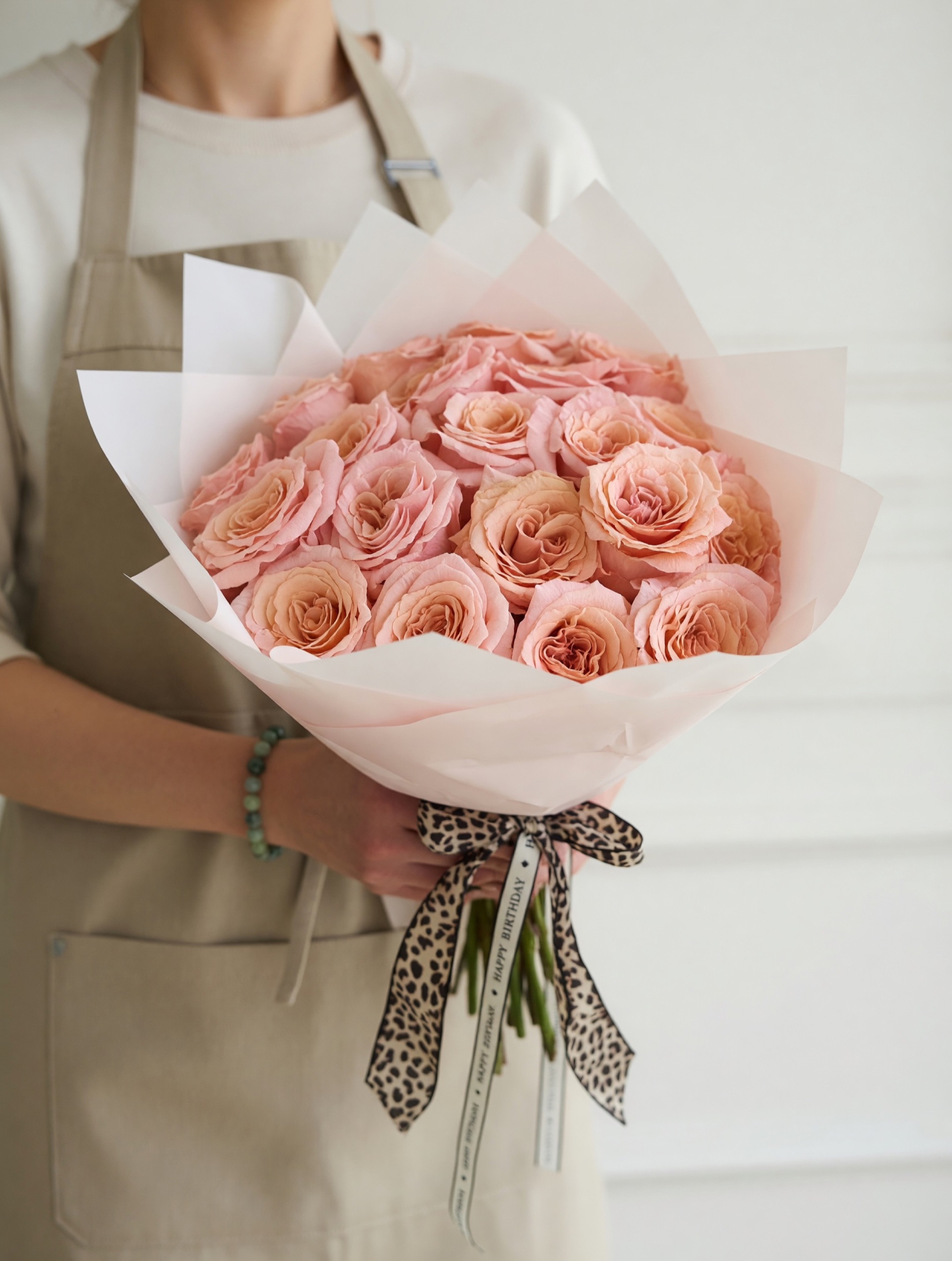
What "Atelier" Actually Means in Floral Work
The word gets used loosely in event marketing, so it is worth being precise. An atelier is a working studio — historically the term for a painter's or couturier's workshop, where pieces are developed through process rather than assembled from a catalog. Applied to flowers, it means the studio sketches before it sources, sources before it cuts, and conditions before it composes. Nothing goes into a vessel that hasn't been considered against the room it is meant to occupy.
This is different from the standard event-floral model, where arrangements are built to a recipe — a set stem count per size, repeated across twenty centerpieces. Atelier work is built per room, per moment. Two arrangements for the same wedding might use entirely different mechanics if one sits under a chandelier and the other anchors a low farm table.
It also means the studio takes fewer events. A shop filling forty orders a week cannot give any single arrangement the hours an atelier gives one installation. The trade-off is scale for depth — and for a high-society event, where the arrangement is one of perhaps three things a guest will remember about the room, depth is the point.
The Anatomy of a Composition: Silhouette, Restraint, Negative Space
The technical discipline of atelier composition comes down to three things: silhouette, restraint, and negative space. Silhouette is the outline the arrangement makes against the room — tall and narrow for a head table with sightlines to protect, low and wide for a farm table meant to encourage conversation across it. Every stem is placed in service of that outline, not independently of it.
Restraint is the harder discipline. There is a real, testable point at which an arrangement stops improving and starts degrading — florists in the studio sometimes call it the eleventh stem, the addition that tips a composition from resolved to crowded. Ten garden roses, evenly spaced with room to breathe, read as considered. Fill the same vessel to fifteen and the arrangement reads as anxious, as though it doesn't trust itself to be seen.
Negative space is what restraint protects. The gaps between stems, the visible line of a branch, the water showing through a clear vessel — these are not absences, they are decisions. A composition with no negative space has nowhere for the eye to rest, and a room full of arrangements like that becomes exhausting well before the toasts start.
Sourcing: Where the Work Begins Before the Vase
Composition is downstream of sourcing. A studio cannot build a restrained, resolved arrangement from stock that arrived tired, bent, or three days past its ideal cut window. Atelier studios typically work with a small rotation of growers rather than a single wholesale account, because different varieties come from different regions and different seasons.
Garden roses — Mondial for its density and blush-to-cream color shift, Vendela for its ivory reliability, Quicksand for its warm, antique tone — are usually flown or trucked in on a cold chain and worked within twenty-four to forty-eight hours of cutting. Lisianthus, dusty miller, and eucalyptus are more forgiving and can be conditioned over several days. Clematis and peony are the most demanding: narrow bloom windows, real risk of shatter if mishandled, and worth it anyway for the specific softness they bring to a composition nothing else replicates.
This is also where budget conversations get concrete. A client asking for peony in December is asking for greenhouse-forced or Southern Hemisphere stock at a price multiple of in-season cost — not a design failure, a sourcing reality worth discussing before it becomes a surprise on the invoice.
The Studio Day: From Bucket to Ballroom
For a large-scale installation, the working day starts long before the venue call time. Flowers are processed the morning of or the evening before — stripped, cut at an angle, and set into conditioning water with floral preservative. A team of three to five florists will typically spend thirty to sixty combined hours on a significant program: consultation and design time, mechanics-building, the working session itself, and installation at the venue.
Mechanics come before beauty. Chicken wire, water tubes, and reusable frames have largely replaced floral foam in atelier practice, both for sustainability and because they give a florist more control over stem angle. Building the mechanics for a single large urn arrangement can take forty-five minutes before a single stem goes in.
Installation at the venue is its own discipline — arrangements are often built partially in-studio and finished on-site, since transport can shift stems even in a well-packed van. A florist checking sightlines from the head table, adjusting a silhouette by two inches because a guest chair now blocks it, is doing the last and often most important ten percent of the composition.
Common Hiring Mistakes — and What to Do Instead
The most frequent misstep clients make is briefing a florist on color before briefing them on the room. Color is a downstream decision. The room's height, light, existing decor, and the timeline of the event should come first.
Budgeting for Atelier Work: What the Investment Actually Buys
Clients comparing a quote from an atelier studio against a big-box event florist are often comparing two different products. The atelier quote includes design consultation hours, sourcing from specialty growers, mechanics and reusable hardware, a working team on-site for installation, and strike at the end of the night. A retail quote is largely material cost plus a standard labor markup.
As a rough range, a single large-scale ceremony or stage installation from an atelier studio might run several thousand dollars once design, sourcing, labor, and installation are accounted for — not because the flowers themselves are exceptional in cost, but because the hours behind them are. A low centerpiece for a seated dinner, by comparison, might run a few hundred dollars per table depending on variety and vessel.
Ask any atelier studio for a line-item breakdown before signing. A studio confident in its process will show the work — design hours, sourcing, mechanics, delivery, installation, strike — rather than presenting a single bundled number. That breakdown is itself a signal of how the studio operates.
Heritage in Practice: Building Arrangements That Hold
Composition and heritage are related disciplines. An arrangement that collapses by hour three of an eight-hour event has failed regardless of how it photographed at four o'clock. Atelier studios plan for the full arc of an event, not just its opening moment.
This means choosing varieties deliberately against the timeline. Garden roses and lisianthus are workhorses for exactly this reason — properly conditioned, they hold shape and color for the length of a formal dinner. Softer, more fleeting blooms like peony or clematis are placed where their peak window overlaps with a specific moment the client cares about most — a ceremony arch, a first-look backdrop — with the understanding that their condition by the last dance will differ from their condition at six o'clock.
Hydration matters more than most clients realize. Water tubes are checked and refilled through the evening for any arrangement without access to a larger reservoir. A florist topping off water tubes during cocktail hour is not fussing — it is the same discipline that built the composition in the first place, extended across the night.
What to Expect From a First Consultation
A working atelier studio structures its first meeting around the event, not the flowers. Expect questions about the venue's architecture and lighting, the timeline hour by hour, existing decor elements the florals need to work around, and the moments that matter most to the client — the toast, the recessional, the photograph the client has already imagined.
From there, a considered studio produces a design concept — sketches, material references, a color and texture direction — before committing to a full quote. Some studios build a small mock-up arrangement for significant events, so the client sees the actual silhouette and material palette rather than a mood board approximation.
Clients should leave that first meeting with a rough sense of budget range, a timeline for follow-up meetings, and a lead time for booking. A studio that skips straight to a price list without asking about the room is optimizing for a transaction, not a composition.
When the Room Is Doing Its Own Work
Not every high-society event needs a heavy floral program. A room with strong architecture — original moulding, good natural light, a view — sometimes needs restraint more than volume. An experienced atelier studio will say so, even when a larger program would be the more profitable recommendation. A single considered arrangement on a mantel can do more for a room than eight arrangements competing with each other across it.
This is the judgment that separates a design partner from a vendor. The studio's job is to read what the room already has and add only what it is missing — which sometimes means less than the client initially asked for.
By seven that evening, the gala room held together — not because of how many flowers filled it, but because of what was left out. The arrangement on the stage did its work quietly enough that no one mentioned it by name. That was the intended outcome.
Considered
What does atelier floral design mean?
Atelier floral design refers to a studio practice built on process rather than production — arrangements developed through sketching, material selection, and hand-mechanics, in the tradition of a working craft studio rather than a retail flower shop filling standing orders.
How far in advance should I book a florist for a high-society event?
For weddings or galas with significant floral programs, book nine to twelve months out. Atelier studios often take one event per date and source specialty varieties like garden roses or clematis from growers who need lead time to confirm availability.
Why do custom floral arrangements cost more than standard event flowers?
Cost reflects labor hours, sourcing, and mechanics — not just stem price. A single large installation can take a team 30 to 60 combined hours, plus specialty containers, floral foam alternatives, and delivery logistics that standard arrangements don't require.
What flowers hold up best for a long event?
Garden roses such as Quicksand and Vendela, lisianthus, and eucalyptus tend to hold well across a six- to eight-hour event when properly hydrated and conditioned. Softer blooms like peony and clematis are chosen for early-event impact and are placed where their peak window aligns with key moments — ceremony, first look, toast.
What should I bring to a first meeting with a floral atelier?
Bring the venue floor plan, guest count, event timeline, and any fixed elements — existing decor, architecture, lighting. A working atelier will ask about the room before asking about color, since composition is built around the space the flowers have to hold.
Is silk ribbon or trailing detail necessary for a formal event?
No — it's a design decision, not a requirement. Silk ribbon and trailing elements are used deliberately to extend a silhouette or soften a hard edge, not as a default addition. A restrained arrangement without trailing detail can carry a room just as well.