Antique Florals: The Atelier's Case for Revival
A bride arrives at the atelier with her grandmother's wedding photograph. 1962, black and white, roses the size of saucers held low against silk. She does not want a replica of the photograph. She wants the weight it holds — a flower that looks as though it has already survived something, and will survive the reception besides. This is the request the atelier receives more often now than a decade ago: antique florals not as costume, but as argument. The case for a bloom that predates the wedding industry itself, handled with the same restraint any composition demands.
27 min read · Les Fleur Company
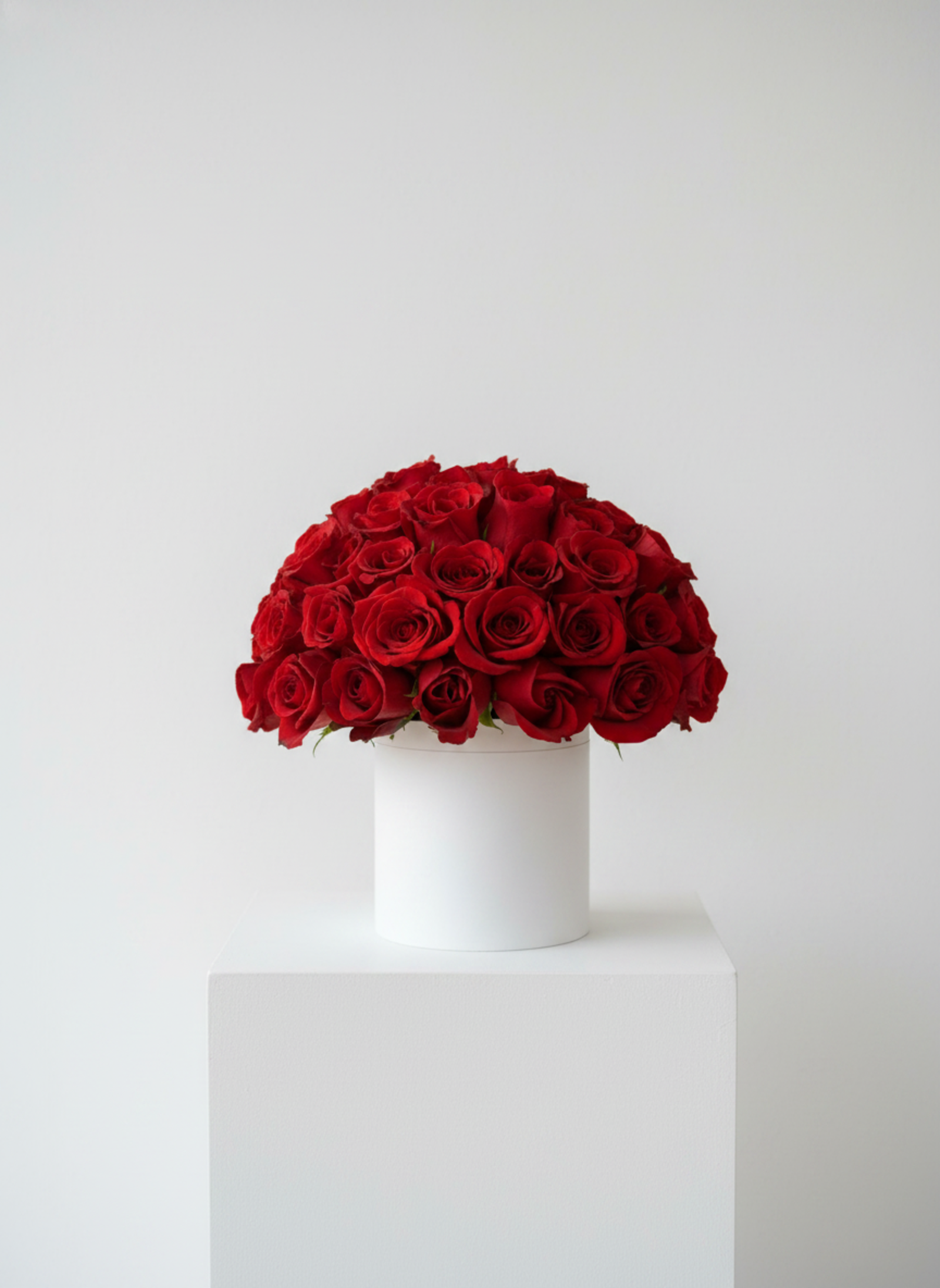
What Antique Florals Actually Means
The word gets used loosely. Clients send a Pinterest board of dusty pink arrangements and call it vintage, when what they mean is a color, not a flower. Antique, properly, refers to old garden rose classes established before 1867 — Gallica, Damask, Bourbon, Centifolia, Alba. These are not cultivars bred for uniform cup shape or a six-day vase life. They were selected over centuries for scent, for an informal petal count that can run past a hundred, for a bloom that opens flat and fades honestly rather than browning at the edge.
Souvenir de la Malmaison. Cardinal de Richelieu. Both old garden rose varieties, both bred before refrigerated shipping existed, both still grown by a small number of specialty farms. Set beside a modern garden rose — Mondial, Vendela, Quicksand — the difference is immediate. Modern cultivars are bred for the supply chain: tighter heads, longer holding time, consistent color lot to lot. Antique varieties were never asked to survive a truck.
This is not a case against modern roses. The atelier uses Mondial and Vendela constantly, and for good reason. It is a case for naming the antique variety correctly before a client commissions one, because a grower cannot fulfill a request for "that dusty pink from the photo" — only a request for a named class, cut in its season.
The Materials Beyond the Rose
Antique revival work rarely stops at roses. Heirloom lisianthus varieties carry a looser, more ruffled petal than the commercial hybrids bred for uniform double blooms, and their color tends to shift mid-bloom rather than hold flat — a trait a modern breeding program would correct and a revival composition depends on.
Dusty miller earns its name honestly here. The silvered foliage appeared in Victorian posies as a stabilizing frame, cut low and left to carry the structural weight so the bloom above it could stay loose. Clematis, trained rather than cut to a single stem, references the cottage garden directly — a climbing habit the atelier works in rather than against. Eucalyptus, particularly the seeded and silver dollar varieties, supplies the same silvered tone without reading as decorative filler.
Peony belongs on this list too, though its antique varieties are harder to source than its modern ones — tree peony cultivars bred before the twentieth century, blooming in a narrower window and holding a looser, less symmetrical head. A revival composition built from these materials looks assembled by hand because it was, and because the materials themselves resist the machine-cut uniformity a modern grower optimizes for.
How the Atelier Approaches a Revival Commission
The process starts before a single stem is ordered. A client brings a photograph, a swatch of an heirloom textile, a grandmother's brooch — something with material weight, not a mood board of other people's weddings. The atelier reads the object for what it actually says about scale, density, and color, which is often different from what the client assumes it says.
From there, three or four anchor varieties get selected and confirmed against a grower's seasonal availability — not the client's preferred wedding date. A mock composition follows, built at roughly half the final scale, so the irregularity of the antique stems can be assessed honestly before the full order is placed. This is slower than ordering from a standard catalog, and it is meant to be.
The studio's process for this kind of work is described at length in Atelier Workspace Design, which covers how the physical space itself is organized around exactly this kind of sequential, unhurried commission. A revival piece does not get built on the same bench timeline as a standing order.
The client walk-through happens once, with the mock composition in front of them, before anything is finalized. Changes made at that stage are structural, not decorative — moving a line, removing a stem, never adding one.
Composition Discipline With Heirloom Stems
The eleventh stem ruins the composition. This holds more, not less, with antique material, because heirloom stems are irregular by nature — a Gallica rose does not grow to a uniform length, and forcing six of them into a symmetrical line fights the material rather than uses it.
Negative space does the real work here. A revival arrangement built correctly uses roughly a third fewer total stems than its modern equivalent, because each antique bloom carries more visual weight on its own. Overcrowding an heirloom composition does not read as abundance; it reads as a mistake the florist didn't notice.
The atelier's broader approach to this kind of restraint is laid out in Atelier Techniques For Creating Unique Floral Compositions, which addresses the same discipline applied to modern material. The antique variety simply makes the rule harder to ignore — there is less margin for a stem that doesn't need to be there.
Silhouette matters more than usual in this work too. An heirloom rose photographs differently in profile than a modern cultivar, with a flatter, looser face, so the composition has to be built with its final viewing angle — ceremony aisle, dinner table, bridal portrait — decided before the first stem is cut.
Heritage: The Case for the Flower That Keeps
Preservation was never an afterthought in antique floral work; it was often the point. Many heirloom varieties, because of their simpler petal count and lower moisture content, press and dry with far more fidelity than modern hybrids, which tend to brown and collapse under the same treatment.
The atelier sets stems aside at the time of composition specifically for this purpose — a practice covered in Composing For Endurance: Timeless Floral Arrangements For Lasting Legacy. A client who commissions antique florals for a wedding is, more often than not, already thinking about the piece that outlives the day — a pressed study, a dried arrangement, a single preserved bloom under glass a decade later.
This is where the distinction between antique and merely vintage-styled matters most. A modern rose dyed or treated to look aged will not preserve the same way its structure wasn't built for it. An actual old garden rose variety was already built for a longer relationship with time, which is the entire argument for using one.
Antique Florals at the Modern Occasion
Weddings remain the primary commission, but not the only one. Anniversary dinners, milestone birthdays, and estate events increasingly request the same material — not for nostalgia's sake, but because an antique composition does its work quietly, without asking to be photographed to be understood.
The atelier has built full antique-material weddings for clients in San Francisco, where period architecture and an heirloom rose composition tend to agree with each other more than a contemporary palette does. The same logic extends to private estate events and gala work, where the room itself is already doing historical work the flowers should support rather than compete with.
Seasonality constrains these commissions more than clients expect. Peak windows for most antique garden rose and heirloom peony varieties run from April through June, which means a late-year event will likely need to substitute a related modern cultivar for at least part of the composition, disclosed to the client well in advance rather than discovered at delivery.
Common Mistakes in Requesting Antique Florals
The request usually arrives wrong before it arrives right, and correcting it early saves the commission. The recurring errors:
None of these are failures of taste. They are the ordinary friction of working with a living material that was never bred to be convenient.
Sourcing Antique Varieties
Fewer than a handful of specialty growers in the United States maintain serious old garden rose stock at commercial scale, and the atelier's relationship with two or three of them is the entire supply chain for this category of work — there is no wholesale substitute.
Estate gardens and private collections occasionally supply cuttings for a single commission, particularly for clients with family land, though this is the exception rather than a dependable source. Auctions of heirloom nursery stock surface occasionally and are worth tracking for a studio serious about this work, less as a sourcing channel than as a way of staying current on which varieties are becoming harder to find.
The broader principles behind sourcing and material selection for considered compositions are addressed in 5 Essential Elements To Craft A Timeless Floral Composition For Luxury Weddings, which remains relevant even when the material in question predates the wedding industry by two centuries.
The Flower That Has Already Lived
What a client is actually asking for, underneath the photograph and the swatch, is permanence borrowed from a flower that has already proven it can last. The atelier's role is to supply that honestly — the correct variety, sourced in season, composed with restraint, with enough set aside to outlive the day it was cut for.
Bring the photograph. Bring the textile. The consultation starts there, and the variety gets named before anything else does.
Considered
What counts as an antique flower variety?
Antique, or old garden, roses belong to classes established before 1867 — Gallica, Damask, Bourbon, Centifolia, Alba. The term extends informally to heirloom peony, lisianthus, and clematis cultivars bred for scent and informal form rather than uniform shape or extended vase life.
Can antique florals be used in a modern wedding?
Yes. The atelier pairs old garden rose classes with contemporary foliage and a restrained composition so the arrangement reads as considered rather than costumed. The flower supplies permanence; the structure around it stays current.
How far in advance should I order heirloom wedding flowers?
Plan an 8-12 week lead time. Specialty growers who carry old garden rose and heirloom peony varieties plant and cut to order, and supply is seasonal — typically April through June for most antique cultivars.
Do antique roses last as long as modern garden roses?
No. Old garden rose varieties such as Souvenir de la Malmaison or Cardinal de Richelieu typically hold for two to three days, compared with five to seven for modern cultivars like Mondial or Vendela. The composition is built around that window, not against it.
Can antique florals be preserved after the event?
Many heirloom varieties press and dry with more fidelity than modern hybrids because of their simpler petal structure and lower moisture content. The atelier sets aside stems at the time of composition specifically for this purpose.
What is the difference between antique and heirloom flowers?
Antique typically refers to a formally classified old garden rose predating 1867. Heirloom is used more broadly for any variety passed down through cultivation rather than bred for commercial uniformity — a distinction worth asking a grower about directly.