The Language of Flowers: Understanding Historical Floral Symbolism for Meaningful Wedding Design
A bride arrives with a tear sheet. Garden roses, something trailing and soft, a gesture toward white she cannot quite name. She knows what she wants it to look like. What she rarely asks — and what most florists rarely offer — is what the flowers have meant for three centuries before the image existed.
30 min read · Les Fleur Company
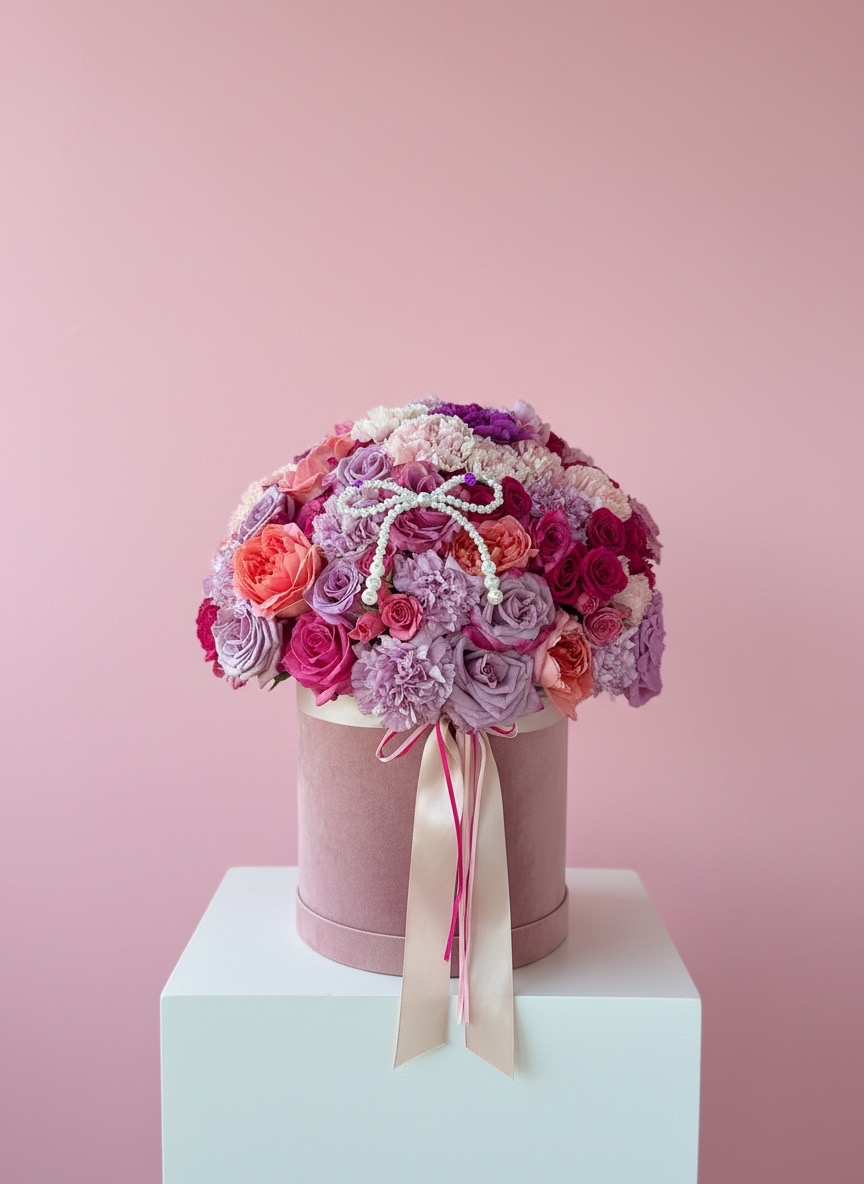
What Floriography Actually Was — and Why It Still Matters
A bride arrives with a tear sheet. Garden roses, something trailing and soft, a gesture toward white she cannot quite name. She knows what she wants it to look like. What she rarely asks — and what most florists rarely offer — is what the flowers have meant for three centuries before the image existed.
Floriography, the practice of assigning symbolic meaning to specific flowers and arrangements, reached its height in Victorian England and France between roughly 1820 and 1880. It was not decorative whimsy. It was a functional system for communicating sentiment in an era when direct expression was constrained by social protocol. A bouquet handed across a threshold was a sentence. The receiver knew how to read it.
The custom did not originate in Victorian drawing rooms. It traveled west through Ottoman court culture, where the practice of selam — encoding messages through objects — was documented as early as the seventeenth century. Lady Mary Wortley Montagu introduced it to England in her letters from Constantinople in 1718. What followed was two centuries of codification, argument, and competing dictionaries that agreed on almost nothing — which is itself useful to know before building a wedding around a single symbol.
More than sixty distinct floriography dictionaries were published in England and America between 1820 and 1900. They disagreed frequently. The same flower carried different valences depending on the author, the decade, and the national tradition being drawn from. What this history tells a working florist is that floral symbolism has always been an evolving conversation, not a fixed code — and that participating in it requires knowing the conversation well enough to make deliberate choices within it.
The Roses That Carry Meaning — and Which Varieties to Choose
The rose has carried more symbolic weight than any other cut flower in recorded Western history. In the Victorian system, color was the primary carrier of meaning. Red roses declared love; white roses signaled purity or secrecy; yellow roses were, controversially, associated with jealousy in some dictionaries and friendship in others. Pink roses suggested admiration, refinement, gratitude — a softer register that suited the language of a considered occasion.
Variety matters more than the average wedding brief acknowledges. A Quicksand garden rose — its petals moving from blush to warm sand to a faint copper at the edges as it opens — carries a different visual and material quality than a Mondial or a Vendela. The Mondial is clean, formal, a rose that holds its shape under pressure and reads as deliberate even in a large arrangement. The Vendela is cream, cool, close to white without committing. These are not interchangeable choices, even when their symbolic meaning is similar.
For a wedding working within the language of flowers tradition, rose selection becomes compositional and semantic simultaneously. A Quicksand rose reads warm and intimate; it asks to be looked at closely rather than from across the room. A white Mondial placed at the center of a ceremony arrangement makes a different claim on the space — more formal, more public. The variety determines not just color but register, and register is meaning in floral design.
White garden roses alongside dusty miller have been used for generations to suggest purity and remembrance together — not as sentiment, but as design logic. The grey of the dusty miller absorbs the white and slows it. The arrangement becomes a conversation rather than a declaration. This is what symbolic precision offers: not a single emphatic statement, but a composed one.
White Flowers and What They Say Beyond Purity
The association between white flowers and weddings is so established that it can obscure what white flowers actually meant — and mean — in more specific terms. Lily of the valley, a perennial favorite in bridal work, was associated with a return to happiness in the Victorian lexicon. The stephanotis suggested good luck in marriage. White ranunculus was a statement of radiant charm. These are distinct ideas inside what reads, visually, as a single color story.
Lisianthus deserves particular attention here. The flower resembles a rose at certain stages of opening but carries its own symbolic lineage — traditionally associated with appreciation, charisma, and a lifetime bond. In an arrangement, lisianthus adds texture without competing for attention. It fills the middle of a composition the way supporting language fills a text: necessary, not decorative. The fact that it also suggests commitment makes it a meaningful choice for the bridal context without requiring any explanation.
White anemones occupied a stranger position in the historical record. In Greek tradition, the anemone grew from the blood of Adonis and became associated with forsaken love and anticipation — a meaning that Victorian florists quietly softened into "sincerity." The tension between the original meaning and the revised one is not a problem. It is a record of how floral language adapts across centuries, which is its own kind of heritage. A flower that has carried multiple meanings across multiple traditions brings depth to a composition, not confusion.
Foliage as Sentence Structure
Most attention in the language of flowers falls on blooms. The foliage in the historical dictionaries was equally encoded, and in some compositions more structurally important. Ivy signified fidelity and marriage — a meaning direct enough that it appears consistently across competing Victorian references. Myrtle, carried in royal bridal bouquets since Queen Victoria's own wedding in 1840, stood for love and good luck. The Queen clipped a sprig from a bouquet given to her by Prince Albert's grandmother, planted it, and from that cutting came the myrtle carried in nearly every British royal wedding since. This is heritage in a literal botanical sense: a plant cutting more than 180 years old, still producing.
Eucalyptus arrived in Victorian arrangements later and with less formal encoding, but its silver-green quality aligned it visually with the dusty miller that had long been used to suggest remembrance. In contemporary atelier work, eucalyptus serves a structural role — it extends the silhouette, creates negative space, gives the arrangement room to breathe. Whether or not the couple knows what dusty miller historically suggested, the material does its work in the composition. Symbolism and structure, in a well-made arrangement, are not separate operations.
Lavender, used more as a dried accent than a structural element in much wedding work, was associated with devotion in the Victorian system. It also carries a practical heritage: tucked between linens, pressed into correspondence, used to scent and preserve. There is a quiet argument for lavender in a wedding that intends to last — in photographs, in dried arrangements, in pressed flowers from the bouquet kept decades later. Permanence as intention, held in a small stem.
Clematis, often overlooked in favor of showier blooms, was associated in some Victorian sources with mental beauty and ingenuity. As a trailing element, it follows the natural fall of an arrangement, softens the edge of a vessel, suggests something still growing rather than finished. In the context of a wedding — an occasion that is, by definition, a beginning — the clematis carries a compositional argument for openness.
Flowers That Complicate — and Why That Is Correct
The language of flowers is not a clean system. The same bloom carried different meanings across different national dictionaries, different eras, and occasionally within the same reference text. Yellow flowers generated significant interpretive disagreement: sunflowers meant adoration in one tradition and haughtiness in another. Marigolds appeared under grief in some lists and jealousy in others. The pansy, whose name derives from the French pensée — thought — consistently signified remembrance, but whether that remembrance was tender or melancholic depended on the context in which it arrived.
This inconsistency is not a reason to abandon the framework. It is a reason to use it honestly. A couple choosing clematis — associated with mental beauty in some Victorian sources, ingenuity in others — is not making an error when they cannot cite a specific lexicographic origin. They are choosing a flower that the tradition already regarded as meaningful and, at the same time, argued over. That tension is more interesting than a clean, verified symbol. It is, in fact, closer to how language actually works.
What matters at the level of design is not that every guest can decode the arrangement. It is that the couple knows what they chose and why. The knowledge sits behind the composition. It gives the work a reason to exist beyond visual preference, and reason is what separates a commissioned arrangement from a commodity purchase. The arrangement does not need to announce its meaning. It only needs to have one.
Building a Symbolic Palette Without Over-Explaining
The failure mode in symbolic floral work is legibility — making the arrangement so conceptually loaded that it stops functioning as a composition and becomes a document. The arrangement that explains itself too loudly has already failed the room. Restraint is not a limitation in this tradition; it is the discipline that allows meaning to be felt rather than read.
A palette built with floriographic intention might look like this: Quicksand garden roses for admiration and appreciation, lisianthus for commitment and charm, dusty miller for remembrance, ivy for fidelity, a lavender accent for devotion. The arrangement is coherent at the level of meaning. It is also, more importantly, coherent at the level of color — warm blush, cream, silver-grey, trailing green. The symbolism reinforces rather than dominates. The guest who knows nothing of floriography sees a considered arrangement. The couple knows what every element was chosen for.
Historical precedent supports this approach. In the Victorian posy, the bloom at the center carried the primary message; surrounding flowers modified it. A central peony — associated with good fortune and a happy marriage — modified by white ranunculus and backed by myrtle reads, in that tradition, as a composed statement about the life ahead. In a modern arrangement, the same structural logic applies: what is central is what the eye returns to, and the flowers around it determine what it means in context. This is not a decorative principle. It is a compositional one.
The number of stems matters here too. Ten chosen with precision communicate more than twenty chosen for volume. The eleventh stem that disrupts the silhouette is not addition — it is dilution. A composition with symbolic intent requires the same discipline as any considered composition: the clarity to remove what does not belong, even when it is beautiful on its own.
The Case for Knowing What Your Flowers Meant
A wedding arrangement made without awareness of floral tradition is not lesser work. Composition stands on its own. But an arrangement made with knowledge of what these flowers have meant — what they have carried through centuries of weddings, funerals, courtships, and letters that were never sent — carries a different weight. It participates in a lineage.
The Royal Horticultural Society maintains botanical records tracing the cultivation history of many wedding staples — the garden rose, the peony, the clematis — across centuries of breeding and use. The RHS rose archives document varieties that have been in continuous cultivation since the seventeenth century. Working with a Mondial or a Quicksand means working within that lineage, whether the grower and the bride are aware of it or not. Heritage is not declared. It is inherited.
The Victoria and Albert Museum's collections include documented examples of Victorian floriography — illustrated dictionaries, embroidered samplers, painted fans — that show how systematically this language was recorded and taught. It was not casual or sentimental. It was a designed communication system, applied with the seriousness that any atelier applies to its craft. The florists who maintained those dictionaries were doing something closer to typography than decoration: encoding meaning in a material form and trusting the receiver to read it.
That seriousness is what the work asks for now. Not nostalgia. Not the reproduction of a Victorian aesthetic. The understanding that flowers have meant things for longer than any single trend — and that working with that understanding is not sentiment. It is craft.
Commissioning Work With Intention
When a client arrives asking for something romantic and a little wild, the question beneath that request is usually: what do I want this arrangement to say? The answer they give — once they know there is a language to draw from — tends to be more specific. And more specific briefs produce more considered work.
The conversation worth having before any wedding floral commission begins not with color palette but with what the couple is genuinely drawn to and why. A bride who is always choosing peonies — in paintings, in gardens, on paper — is probably responding to something about the flower's quality of opening, the way it takes its time. When she learns that the peony has been associated with good fortune and a happy marriage across multiple traditions and centuries, that resonance is not manufactured. It is recognized. The flower was already doing its work before she knew the history.
Sometimes the history complicates rather than confirms. A couple drawn to yellow flowers — yellow garden roses, mimosa, late-season sunflowers — may encounter a tradition that associated that color with jealousy or haughtiness. The right response is not to discard the choice. It is to understand what is being worked against, and to make the choice deliberately. The arrangement that holds a complicated history is often the more honest one.
A flower chosen with knowledge of what it has meant is a flower placed in the room with full intention. That intention does not require an audience to be real.
Considered
What is the language of flowers called?
The language of flowers is called floriography. It refers to the practice of assigning symbolic meanings to specific flowers and arrangements, which reached its most codified form in Victorian England between roughly 1820 and 1880, drawing on earlier traditions from Ottoman court culture and ancient Greek botanical symbolism. More than sixty distinct dictionaries were published in England and America during that period.
What flowers symbolize love and commitment in a wedding bouquet?
Roses have historically signified love across most Western floral traditions, with pink garden roses suggesting admiration and white roses purity or secrecy. Ivy consistently signified fidelity across competing Victorian references. Myrtle has stood for love and good luck in marriage since the classical period. Peony was associated with good fortune and a happy marriage. Lisianthus carries associations with a lifetime bond.
What did Victorian floriography say about white wedding flowers?
In the Victorian system, white flowers carried distinct meanings beyond a general association with purity. Lily of the valley signified a return to happiness; stephanotis was associated with good luck in marriage; white ranunculus with radiant charm; lisianthus with appreciation and a lifetime bond. These are meaningfully different ideas within a single color palette — a distinction that matters when building a composed arrangement.
What does a peony mean in a wedding arrangement?
In the Victorian language of flowers, peonies were associated with good fortune, prosperity, and a happy marriage — one of the more consistent meanings across competing dictionaries. In historical posy construction, the bloom at the center carried the primary symbolic message, modified by surrounding flowers. A central peony backed by myrtle and white ranunculus read, in that tradition, as a composed statement about the life ahead.
How do I use flower symbolism in a wedding without it feeling forced?
Build a palette that is coherent both visually and symbolically. Choose flowers you are genuinely drawn to, research their historical meanings, and select the combination where composition and symbolism tell the same story. The meaning does not need to be explained to guests — it should sit behind the work as intention, felt in the precision of the choices rather than announced in a program note.
What did myrtle mean in royal wedding bouquets?
Myrtle has signified love and good luck in marriage since at least the classical period. The British royal tradition of including myrtle in bridal bouquets began with Queen Victoria's 1840 wedding. She planted a cutting from a bouquet given by Prince Albert's grandmother, and sprigs from that original plant have been carried in royal bridal bouquets ever since — a botanical lineage now more than 180 years old.