The Atelier Process: Designing Bespoke Wedding Florals
A bride emails on a Tuesday with a screenshot of a Pinterest board — forty-one images, pinned inside a single hour, no two arrangements in the same palette. She wants to know if we can do this, pointing at an image with no venue attached, no season noted, no sense yet of what her own wedding will ask for. This is where the atelier process begins, and it rarely begins with flowers. It begins with questions the board cannot answer.
27 min read · Les Fleur Company
The First Consultation: What We Actually Ask
A proper consultation runs sixty to ninety minutes, not the fifteen-minute phone call some studios treat as sufficient. We ask about the venue before we ask about color — a barn in El Dorado Hills and a glass-walled room over the Bay want different things from the same rose. We ask about guest count, because two hundred guests changes the math on everything from labor hours to the number of arrangements that need to survive a six-hour reception without wilting.
We also ask what most florists skip. Is there a flower from a mother's or grandmother's wedding that should reappear. Is there a color the client has been told to avoid by someone else's opinion rather than her own. Budget gets discussed here too, in ranges rather than round numbers — full-service weddings through the atelier typically fall between eighteen and forty-five thousand dollars, and naming that range early prevents three months of design work built toward a number nobody agreed to.
By the end of the consultation we have a working brief: venue, season, guest count, budget band, and the two or three emotional anchors that will guide every decision after. Nothing gets sketched until this exists in writing.
Reading the Venue Before the Flowers
A site visit follows the consultation whenever the calendar allows it, and it changes more decisions than clients expect. Ceiling height determines whether a suspended installation reads as generous or crowds the room. A stone fireplace or a chandelier already doing visual work means the florals should support that architecture rather than compete with it — we have walked into rooms where the single correct choice was less, not more.
Light direction matters as much as square footage. A reception tent with afternoon sun coming through the western wall will bleach pale blush arrangements by six o'clock; a room lit entirely by candlelight after dark needs deeper, more saturated tones to read at all. We photograph the room at the hour the event will actually happen, not at whatever hour the walkthrough was scheduled.
Properties differ enormously even within the same region — a lakeside estate along Lake Tahoe asks for something entirely different from a downtown rooftop, even when the guest count and budget are nearly identical. The venue, more than any trend board, sets the terms the florals have to answer to.
The Design Board: Building the Palette in Layers
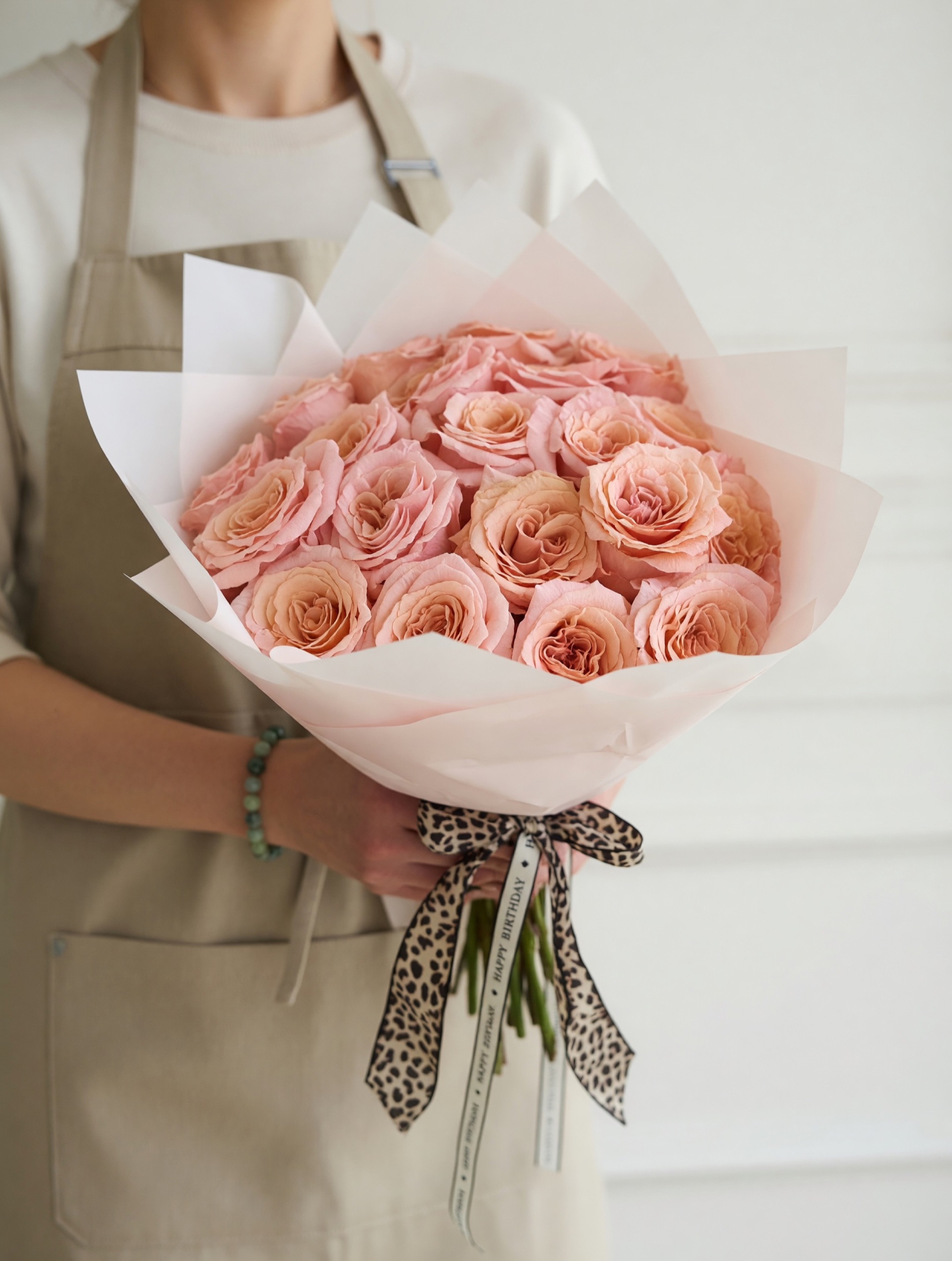
Once the brief and venue are settled, the design board gets built in three layers rather than as a flat mood board. The foundation layer is the workhorse bloom — garden roses like Mondial or Vendela, peony in season, the flower that will appear in the highest volume and therefore needs to be available, consistent, and photograph well from ten feet away.
The structure layer is texture and greenery: dusty miller for its silvered edge against deep tones, eucalyptus for movement and scent, the material that gives an arrangement its shape before a single accent bloom goes in. The accent layer is smallest by volume and largest by effect — lisianthus, clematis, a single unexpected stem that earns its place.
This is also where restraint gets decided. We build boards with a hard cap on the number of varieties per arrangement, usually five to seven, because a tenth or eleventh variety rarely adds anything a guest will register — it just crowds the composition and raises the cost without raising the result. The full reasoning behind that discipline is laid out in our guide to timeless floral composition, and it holds for every board we build, regardless of budget.
Sourcing: Where the Stems Come From and Why It Matters
Sourcing is the least visible part of the atelier process and the one that determines whether the design board is realistic. Named garden rose varieties — Mondial, Vendela, Quicksand — are grown primarily in Ecuador and Colombia, and named-variety orders through our growers require a six-to-eight-week lead time. A client who wants a specific rose confirmed four weeks out is choosing from what is already moving through the supply chain, not from the full catalog.
Locally, California growers fill in seasonal material — dahlias in late summer, ranunculus in early spring — that travels better and costs less than flying the same look in from overseas. We source through auction and direct-grower relationships in roughly equal measure, and the split shifts with the calendar: more direct-grower work in peak wedding season, more auction sourcing in the shoulder months when demand outpaces domestic supply.
Cold chain handling from farm to studio is not a marketing detail. Roses held above 34 degrees Fahrenheit for even a few hours during transit lose days of vase life before they ever reach a bucket. We track delivery temperatures the way a kitchen tracks a walk-in cooler, because a compromised shipment forty-eight hours before a wedding is not a problem money fixes on short notice. The process behind this sourcing work is part of what we mean by atelier craft, detailed further in this behind-the-scenes look at bespoke floral arrangements.
The Mechanics: Structure Before Beauty
Before an arrangement looks like anything, it is mechanics — the unglamorous architecture holding the flowers in place. We build foam-free wherever the design allows, using chicken wire structures, water tubes, and hand-tied bindings instead, both for the longevity of the stems and for the runoff that floral foam sends into the water system. Foam-free construction takes roughly twenty to thirty percent longer to build than foam-based work, and we account for that in labor estimates rather than absorbing it as a surprise.
Every mechanic decision traces back to how the arrangement will actually be used. A processional arrangement bolted to a shepherd's hook needs a different internal structure than a reception centerpiece meant to be viewed from all sides. A bouquet that has to survive four hours of handling, hugging, and photographs needs binding tight enough to hold its shape without crushing stems.
This is also where the eleventh stem gets caught. A design board can look balanced on paper and still tip into clutter once real stems are in hand — the mechanics stage is where a builder physically removes what the composition does not need, even after it was approved on the board.
The Trial Arrangement — and Why We Insist On One
For full-service weddings, we build a trial arrangement roughly eight to ten weeks out, at approximately seventy percent scale, photographed under lighting matched as closely as possible to the venue's actual conditions. A trial photographed in bright studio light tells a client almost nothing about how the same arrangement will read at seven in the evening under string lights.
Clients walk through the trial in person when geography allows it — texture and scale read differently on a screen than in a room. Two revision rounds are included in full-service contracts; additional rounds run a flat fee, typically around 350 dollars, because rebuilding a trial from new stems is real material cost, not a formality.
The trial has caught problems no amount of planning prevented on paper — a blush that reads pink under tungsten light, a silhouette that looked balanced in a sketch but top-heavy once built at scale. This is the same discipline described in how atelier floristry elevates wedding composition through consistency — the trial is not a courtesy, it is where consistency between design and delivery gets tested while there is still time to fix it.
Production Week: The Timeline Behind the Day
Production for a mid-to-large wedding spans three days, not one. A typical schedule: Wednesday is stem processing — cutting, hydrating, stripping foliage below the waterline for every flower that will go into Saturday's arrangements. Thursday is mechanics — building the structural bones for large-scale pieces like arches or suspended installations that need time to cure and settle. Friday is assembly, when the bulk of arrangements come together in the walk-in cooler. Saturday is installation and, often, teardown the same night.
Across that window, a full wedding typically consumes forty to sixty combined labor hours across a team of three to five people. That number surprises clients who picture one florist working quietly the morning of the event. The reality is closer to a small kitchen brigade, each person responsible for a category of work — greenery prep, mechanics, bouquet assembly, installation — moving in parallel rather than sequence.
Cooler space is its own constraint. A studio needs walk-in capacity for the full volume of a wedding's arrangements to hold overnight at 38 to 42 degrees Fahrenheit before installation, and undersized cold storage is one of the more common reasons smaller studios cap the number of weddings they take in a single weekend.
Installation Day: The Work No One Sees
Installation is sequenced, not simultaneous. Ceremony florals go in first, while the venue is still empty and there is room to work at height without guests moving through the space. Reception details follow, timed against catering and rental deliveries so the room is fully dressed with enough margin before doors open — we generally build in a two-hour buffer for anything involving ladders, suspended work, or架构al elements that need to be checked twice.
Staffing on installation day scales roughly to one florist for every twenty-five to thirty guests when the day includes both ceremony and reception installs, tighter if there is a same-day teardown and reset between the two. A wedding at a property like those in El Dorado Hills, where ceremony and reception often sit on the same grounds, requires a different install sequence than a two-venue day with travel time between them.
Teardown, when it falls on the same night, is its own quiet operation — arrangements collected, personal flowers returned to the wedding party or family, rented mechanics recovered, all while the room is still full of guests who never see any of it happen.
What Happens After: Preservation and the Case for Restraint
What survives the wedding day is decided earlier than most couples realize. Pressing, resin casting, and frame preservation each require different handling — some preservationists need the bouquet within twenty-four to forty-eight hours of the ceremony, delivered still hydrated, not left to dry out in a hotel room overnight. We flag this during the design stage now, because a client who decides on preservation the Monday after the wedding has usually already lost the window.
Restraint runs through the entire process for a reason beyond aesthetics. An arrangement built to hold a room does its work quietly — it does not need forty stem varieties to be remembered, and the flowers that keep, whether pressed under glass or simply photographed well, tend to be the ones that were never crowded to begin with.
The atelier process, start to finish, is a sequence of decisions made in the right order — venue before palette, mechanics before beauty, trial before production. The work that lasts is rarely the work that tried hardest to be noticed.
Considered
How far in advance should I book a bespoke wedding florist?
Nine to twelve months out for a full-service wedding, particularly for dates in peak season (May through October) or for arrangements built around named garden rose varieties that require a six-to-eight-week grower lead time. Six months is workable for smaller weddings with more seasonal flexibility.
What happens during a wedding florist consultation?
A proper consultation runs sixty to ninety minutes and covers the venue's architecture and existing light, guest count, the emotional throughline of the day (a mother's wedding flowers, a grandmother's favorite bloom), and budget structure — before any specific flower is chosen.
Do I need a trial arrangement before my wedding?
For full-service weddings above a certain scale, yes. A trial built at roughly seventy percent scale and photographed under lighting matched to the venue reveals proportion and color problems that swatches and mood boards cannot. Most ateliers include one or two revision rounds before charging separately.
How many hours does it take to produce wedding florals?
A mid-to-large wedding typically requires forty to sixty combined labor hours across a three-day production window — stem processing and hydration, mechanics, assembly, and installation — handled by a team of three to five, not a single florist working alone the morning of.
Can wedding flowers be preserved after the event?
Yes. Pressing, frame preservation, and resin casting are the most common methods, and each requires different handling immediately after the wedding — some flowers need to be delivered to a preservationist within twenty-four to forty-eight hours. This should be arranged during the design stage, not decided the week after.