The Art of Negative Space in Luxury Floral Composition: Creating Elegant Simplicity for Modern Weddings
The arrangement near the altar had eleven stems. The florist added one more — a sprig of dusty miller to soften the edge — and the whole thing collapsed into ordinariness. Eleven had been enough. The twelfth stem was the arrangement trying too hard.
30 min read · Les Fleur Company
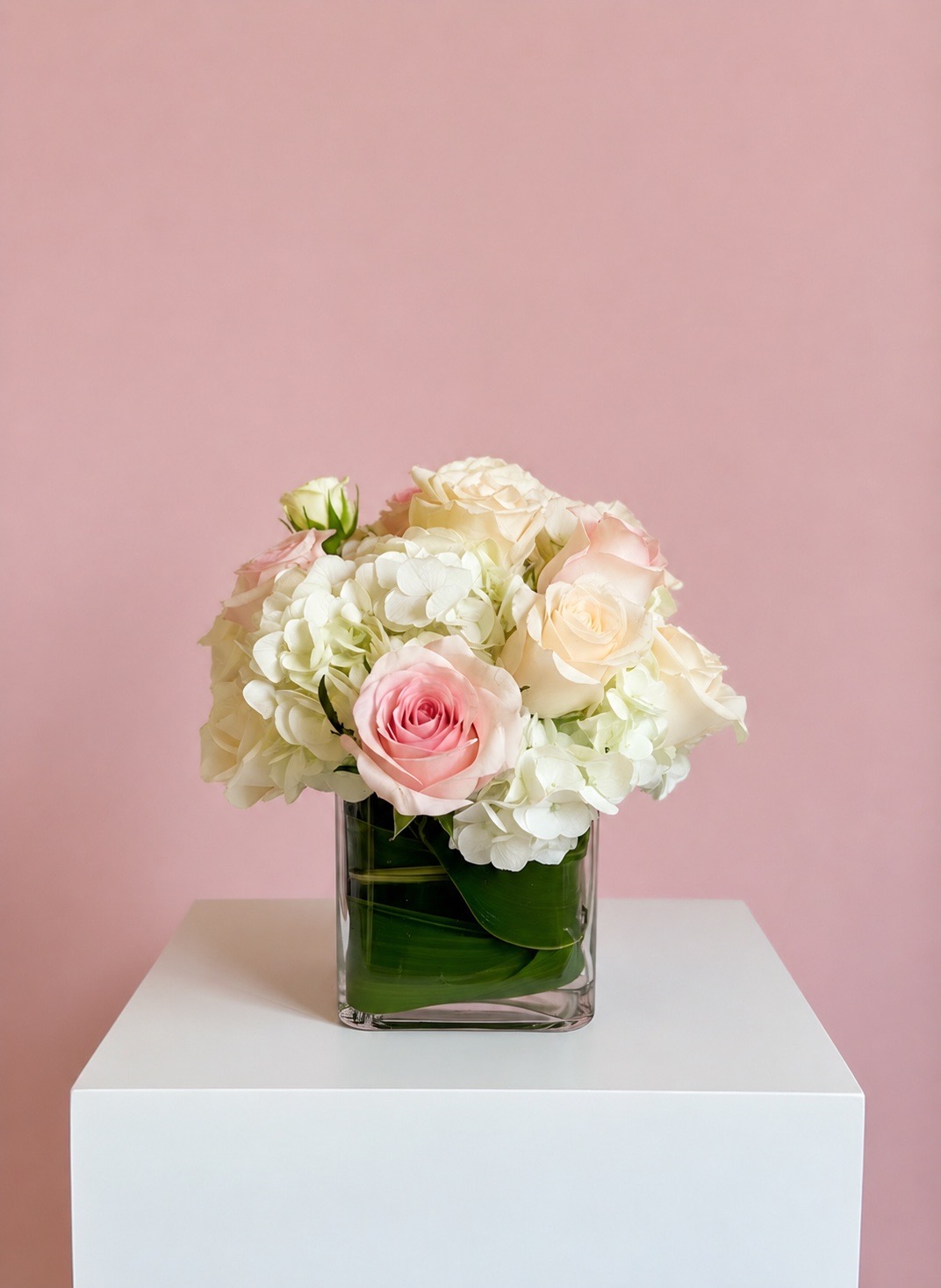
What Negative Space Means in the Language of Arrangement
In architectural drawing, negative space is the area around and between subjects. In painting, it is the silence that allows the figure to be read. In floral composition, it is the decision to stop — and to stop before the natural impulse demands otherwise.
There is a useful distinction between an arrangement and a composition. An arrangement places flowers in a vessel. A composition considers the relationship between the stems, between the stems and the vessel, and between the vessel and the space it will occupy. Negative space is the tool that makes that third consideration — the surrounding space — part of the work.
The instinct in floral design is toward fullness. Clients often arrive at consultations with editorial references — dense, overflowing arrangements that photograph well and read as abundant. What those images rarely convey is that the best work in those photographs is held together not by the flowers but by the structure around them. The negative space is doing the compositional work. The flowers are resting in it.
An arrangement with intentional negative space communicates differently than one without it. It reads as considered. It holds a line without being asked. It changes as the viewer moves around it — a quality that dense arrangements rarely achieve.
Why Restraint Is Technically Harder Than Abundance
There is a workbench truth that experienced florists understand and rarely discuss with clients: it is far easier to fill a vessel than to leave it partially empty and have that emptiness feel deliberate.
When an arrangement is dense, the eye accepts it. The brain reads fullness as intentional because it requires no interpretation. But a composition with three garden roses — Quicksand, for their dusty pink that holds for days — and a single arc of clematis requires the eye to work. The viewer must accept the silence. If the placement is even slightly off, the whole piece reads as unfinished rather than composed.
The tradition of negative space in arrangement has roots that extend well before contemporary Western floristry. In Japanese ikebana, the principle of ma — the meaningful interval or pause — is considered as compositionally significant as the plant material itself. This is not mysticism; it is a structural principle that has shaped arrangement practice for centuries and that any designer working seriously with composition will encounter, whether or not they name it.
This is the discipline that separates trained atelier work from retail arrangement. The restraint has to be earned. Every stem that remains must justify its position. The one that cannot does not belong. This is not a philosophy; it is a technical standard. And it is why negative space composition typically takes longer to build — not less.
In practice, an experienced floral designer might spend thirty minutes building a piece and another twenty minutes removing stems, assessing, and replacing only what earns its way back in. The final arrangement may have twelve stems. The floor may have six.
The Materials That Hold Space Well
Not all flowers hold space. Some stems — particularly full, spherical blooms — tend to fill the eye and close off the air around them. Others are naturally architectural, and they create structure that makes the surrounding space more visible rather than consumed.
For compositions that rely on negative space, certain materials carry more than others:
The choice of vessel matters equally. A clear glass column allows the stems themselves to become part of the composition — visible, structured, part of the negative space calculation. An opaque ceramic holds a different conversation. Neither is correct; both are decisions that must be made in relation to the room.
Negative Space Across Scales — From Centerpiece to Installation
The principle of negative space does not change with scale. It becomes more complex, but the underlying logic holds: the air between elements is part of the composition, not a gap to be filled.
At a dinner table, a centerpiece built around negative space creates a different conversation than one that obscures sight lines. A composition of seven peonies at forty centimeters in height, arranged to one side of the vessel with a trailing eucalyptus arc, allows guests across from each other to see. The arrangement does not ask to be the subject of dinner. It is present without dominating.
At a ceremony installation — an arch, a standing arrangement flanking an altar — negative space becomes structural. An arch built at full density reads from twenty meters away as a mass. An arch built with deliberate openings, where climbing stems of garden roses reach upward with air between them, reads as a living thing. The wind can move it. The light can pass through it. It does not look like a product; it looks like it grew there.
For cocktail hour arrangements — often overlooked in favour of the ceremony and reception pieces — a tall, single-variety composition in a narrow vessel can accomplish what a dense mixed arrangement cannot: it draws the eye upward and creates a vertical moment in a room full of horizontal conversation. Five stems of white lisianthus in a thirty-inch column vessel, with the stems visible through glass and a single branch of eucalyptus breaking the line, is a composition that holds a room without announcing itself.
Negative Space in the Wedding Environment
The wedding environment presents particular challenges for floral composition because the arrangement must function across multiple registers simultaneously: it must photograph, it must hold for eight to twelve hours, it must read from multiple distances, and it must exist alongside textiles, architecture, and the presence of many people.
Dense arrangements can photograph well but lose their coherence in person. Negative space compositions, handled correctly, do the opposite: they improve in person. The space that reads as emptiness in a photograph reads as breath in the room.
When working with a couple who has spent months looking at editorial images, the conversation about negative space is one of the most important a floral designer can have. It begins not with less is more — a phrase that has lost all meaning — but with a question: what do you want the room to feel like when you walk into it?
The answer to that question usually has nothing to do with flowers. It has to do with arrival. With the quality of attention in the space. With whether the room feels assembled or inhabited. Negative space in floral composition is one of the primary tools for answering that question through arrangement.
A reception room with four large compositions — each built with restraint, each holding an arc of garden roses at a different height, each allowing the eye to rest between stems — feels different from a room where every surface is covered. The first room says: there is room for you here. The second says: look at all of this.
How to Commission Work That Prioritises Composition
Clients who want negative space work — who have arrived at that understanding, whether from experience or instinct — approach the commissioning conversation differently. They are not bringing a specific flower list. They are bringing a sensibility.
The most productive consultation conversations begin not with a flower list but with a description of the environment. What is the room? What is its primary light source? What does the textile look like — the linens, the gown, the chair covering? What is the ceiling height? These are the questions that shape a negative space composition, because negative space must be calibrated to its surroundings. A composition that breathes correctly in a ten-foot loft reads differently in a twenty-foot cathedral nave.
The American Institute of Floral Designers identifies environment and atmosphere as foundational to meaningful commission work — the starting point before any material decisions are made. That principle holds for any serious floral engagement:
Negative space is not a budget reduction. The arrangement with eight stems, placed correctly, may require as much or more time to build than one with twenty-four. It requires decisions. And those decisions, made well, are the work.
The Arrangement That Does Not Ask to Be Noticed
There is a category of floral work the industry rarely discusses because it is difficult to sell: the arrangement that guests could not describe afterward, but that they felt. The one that made the room seem considered without drawing attention to itself.
This is what negative space in floral composition offers. Not invisibility — the work is present. But a quality of presence that does not demand. The flowers do their work, and the event does its work, and the two coexist without competition.
A Mondial rose at the centre of a composition, surrounded by the air that allows its form to be read, is a different object than the same rose pressed between seventeen others. It becomes, briefly, the thing itself rather than part of a mass. That distinction is what clients are asking for when they say they want something simple. They are not asking for less. They are asking for clarity.
The discipline of negative space is, in the end, a discipline of editing. Of knowing which stem carries the composition and which one relieves it of that responsibility. Of being willing to stop. The eleventh stem was right. The twelfth ruins it. This is what it means to compose rather than to arrange.
The work that lasts — in memory, in photograph, in the way a room is remembered — is rarely the work that filled every surface. It is the work that knew when to leave space.
Considered
What is negative space in floral design?
Negative space in floral design is the intentional air, pause, and open area within or around an arrangement. Rather than filling a vessel to density, a designer working with negative space treats the surrounding air as part of the composition — making each stem more visible and the overall piece more architecturally considered.
Does negative space in floral arrangements cost less than full arrangements?
Not necessarily. A composition built around negative space requires more considered placement and careful editing — removing stems that do not serve the work — which often takes more time than filling a vessel. The stem count may be lower, but the craft investment is comparable or higher.
What flowers work best for negative space floral compositions?
Garden rose varieties such as Quicksand and Vendela hold a soft edge that reads well against open air. Clematis introduces trailing movement without filling space. Lisianthus in bud stage holds a strong silhouette. Dusty miller clarifies surrounding stems without competing with them. These materials allow the surrounding air to remain part of the composition.
How do I ask my florist for a more minimal, negative space style?
Rather than requesting fewer flowers, describe the feeling you want the room to carry — and share architectural photographs of the space. A good atelier will use those to calibrate scale, silhouette, and proportion. Allow the designer to propose stem count, and be open to a number lower than expected.
Does negative space work for large-scale wedding installations like ceremony arches?
Yes — and often more effectively than density. An arch built with deliberate openings allows light to pass through and creates movement that a fully covered arch cannot. It reads as a living structure rather than a manufactured one, particularly at the distances typical in ceremony spaces.
How does negative space floral composition photograph on a wedding day?
Negative space compositions can appear less full in photographs than dense arrangements — this is a real consideration for couples who prioritise editorial images. In the room itself, however, restrained work carries more presence and improves with proximity. The experience of the day is typically more aligned with the composition than the photograph is.