Reviving Vintage Florals: Uncovering Hidden Gems in 19th-Century French Wedding Arrangements
A client brought us a folder of letters last spring — her great-great-grandmother's correspondence with a florist in Lyon, dated 1887. Nine pages, mostly about invoices. Forty stems of white camellia, twelve of orange blossom, a posy holder in silver plate costing more than the seamstress made in three weeks. No photograph survives of the finished bouquet. The letters were the only record left, and they told us more than any photograph could have. This is the actual work of reviving 19th-century French wedding florals: not copying an image, but reconstructing an object from fragments that were never meant to describe it in full.
24 min read · Les Fleur Company
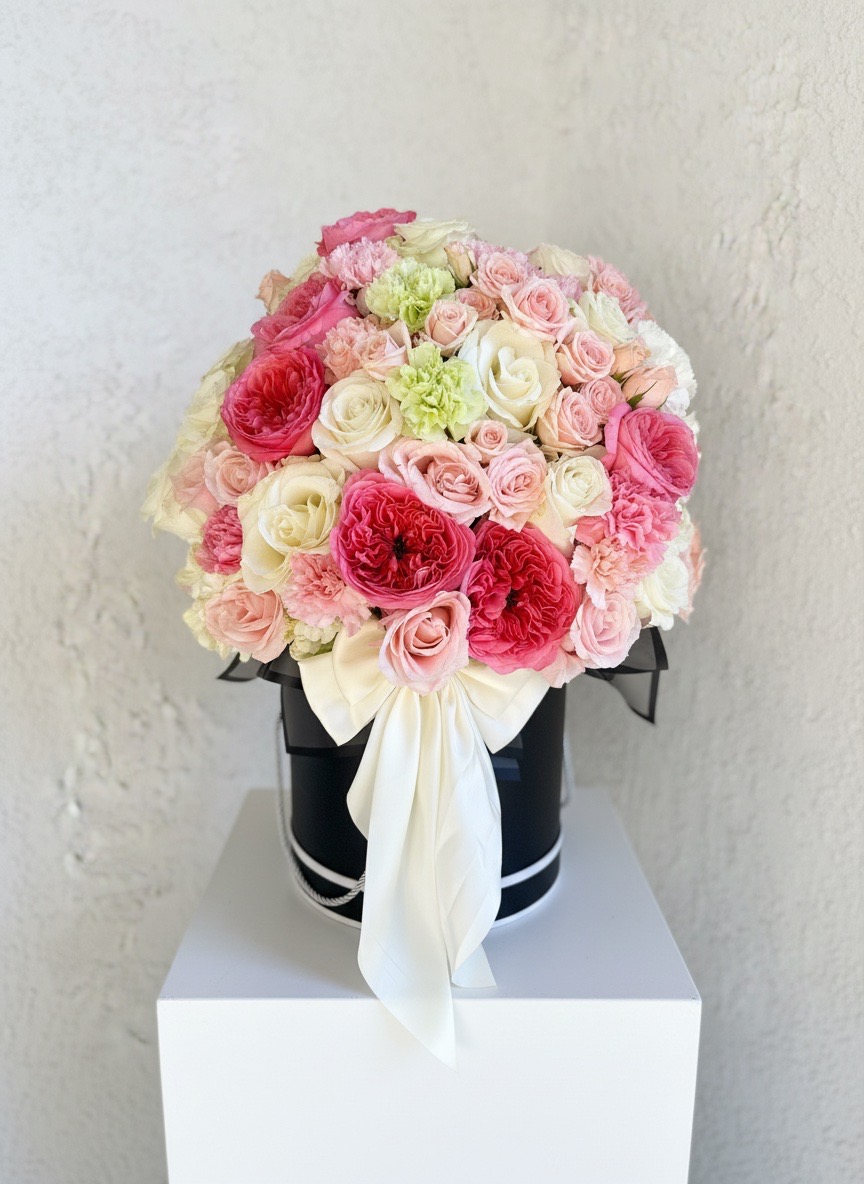
What Nineteenth-Century Sources Actually Tell Us
The primary sources for 19th-century French wedding florals are not photographs. Photography existed by the 1860s, but wedding photography as a routine practice did not become common in France until closer to the 1880s, and even then the images were staged, static, and often taken days after the ceremony with a studio bouquet standing in for the real one. The more reliable record sits in three places: trousseau ledgers kept by families, florist correspondence and invoices, and illustrated fashion periodicals such as La Mode Illustrée and Le Moniteur de la Mode, which described bridal dress and accompaniment in detail for a subscriber base that expected accuracy.
These sources agree on scale in a way that surprises most clients. A bouquet de mariée in the 1860s rarely exceeded thirty stems. Twenty was common. The posy holder — a metal or filigree cone called a porte-bouquet, sometimes fitted with a small vial of water — physically constrained the size. A holder measuring four inches across cannot accommodate an armful. Restraint was not an aesthetic choice available to the bride; it was built into the hardware.
We treat every revival project as an archival question first. Before sourcing a single stem, we ask what document is driving the decision — a ledger, a letter, a periodical plate, a surviving holder in a private collection. If the answer is "a photograph we found online," we slow down. Photographs from this period, particularly hand-tinted or later reproductions, distort scale and color reliably enough that we no longer treat them as primary evidence without a second source to confirm them.
The Language of Flowers, Decoded for the Altar
Floriography — the assignment of meaning to individual blooms — was not a parlor game in the Second Empire. It governed what a bride could and could not carry without saying something she did not intend. Orange blossom (fleur d'oranger) meant chastity and fertility and appeared in nearly every wedding record we have reviewed, worn in the hair as well as carried. Myrtle signified marriage itself, a near-mandatory inclusion traceable back through earlier European bridal custom. Stephanotis, imported and expensive, stood for marital happiness and appears disproportionately often in the ledgers of wealthier families, which tells its own quiet story about who could afford to say what.
Camellia carried more nuance — the white variety read as adoration and perfection of the beloved, while red camellia signaled a passion considered too forward for a bridal bouquet and rarely appears in that context. Heliotrope, when included, referenced devotion. Lily of the valley (muguet), tied closely to French tradition around the first of May, signified a return of happiness and shows up in spring weddings with notable frequency.
A revival that swaps these for whatever is seasonally available misses the point of the source material entirely. We are not opposed to substitution — the next section covers why substitution is often necessary — but substitution should preserve meaning where meaning was intentional, not simply preserve color. A camellia can be replaced. What it was saying should not be discarded without the client knowing it was ever said.
Materials: What the Second Empire Grew, and What We Grow Instead
The roses of this period were not the roses on the market now. Rosa centifolia — the cabbage rose, dense with a hundred petals — and moss roses, with their fragrant, bristled calyx, dominated period bouquets. Both are difficult to source commercially today; they bruise easily, hold a short vase life, and are grown mostly by specialist and heritage nurseries rather than the cut-flower trade.
Our substitution is deliberate rather than approximate. Mondial gives us the full, layered density that centifolia had without the bruising. Vendela offers the same soft ivory cast that period sources describe as the dominant bridal color, and it holds through a full ceremony and reception without wilting — something no nineteenth-century bride could rely on. Quicksand, with its warm blush undertone, stands in where records describe a rose "the color of tea," a period descriptor we have cross-referenced against three separate florist ledgers.
Around the rose, the period palette was green and white with restraint: myrtle foliage, orange blossom, stephanotis vine, and occasionally a trailing ivy. We carry that structure forward with eucalyptus for the silvery, muted foliage tone period sources describe, dusty miller where a document calls for a grey-leafed plant we cannot source in its original form, and clematis vine where the record specifies trailing greenery from the holder's base. Lavender appears sparingly, more often in the sachets tucked into a trousseau chest than in the bouquet itself, and we resist the temptation to add it purely for scent when no source calls for it.
The Case for the Rose That Keeps
Heritage work eventually asks a harder question than which flower to use: what is worth preserving in the first place. A rose that wilts within six hours photographs the same as one that lasts three days, but only one of them survives the reception, the drive home, the week after. Vendela and Mondial were not chosen for this practice because they are trendy. They were chosen because they hold — through heat, through handling, through the twelve hours a bridal party actually spends with a bouquet before anyone thinks to press it.
This is the argument for permanence over spectacle that runs through everything we build. A centifolia rose in an 1860s bouquet was often wilted by the time the wedding breakfast concluded; period letters occasionally mention a bride's bouquet being "refreshed" or replaced entirely for the evening portion of the celebration, a detail almost never mentioned in modern retellings of these weddings. We do not consider that a flaw to hide. We consider it a reason to choose differently now, when a couple wants an heirloom photograph forty years on, not just a ceremony hour.
Some clients ask us to press or dry a portion of the bouquet afterward — a practice with its own nineteenth-century precedent, since pressed wedding flowers appear in family Bibles and scrapbooks from the period with some regularity. Camellia and myrtle press well. Garden roses at full bloom do not, and we tell clients this before the wedding, not after, so the choice of what to preserve is made with the right expectations.
Reconstructing an 1860s Bridal Bouquet: A Process Note
When a client wants a genuine reconstruction rather than a loosely vintage-inspired arrangement, the process runs differently from a standard commission. We start with the document — ledger, letter, or fashion plate — and build a stem list before touching a single flower. For the 1887 Lyon correspondence mentioned earlier, that list came to twenty-six stems: eighteen camellia, six orange blossom, and two stephanotis, wired rather than stemmed in water, matching the described construction of a porte-bouquet.
Wiring changes the entire technique. Period bouquets were built stem by stem onto fine wire, wrapped in floristry tape or ribbon, and set into a metal holder rather than gathered and hand-tied in the contemporary style. This construction takes roughly twenty-two to twenty-six hours across a small team for a bouquet of this size — meaningfully longer than a comparable modern hand-tied bouquet, which we typically build in four to six hours. Clients requesting an authentic reconstruction need to know this before booking; it affects both cost and lead time, and we quote it separately from our standard occasion work.
We source or commission a period-appropriate holder where possible, working with a small number of antique dealers and silversmiths rather than modern floral supply catalogs. Where no holder is available, we note the substitution plainly in the client proposal rather than presenting a modern cone mount as something it is not.
Where Revivals Go Wrong
The most common failure we see, including in our own early attempts at this work, is treating vintage as a mood board rather than a discipline. A few recurring mistakes:
The corrective in each case is the same: go back to a primary or near-primary source, and let the stem count and construction method — not the color story — set the boundaries of the design. A revival that gets the palette right and the structure wrong is not a revival. It is a modern bouquet wearing an old photograph as a filter.
Provenance, Museums, and the Question of Ethics
We do not claim expertise we have not earned through documentation. Before taking on a reconstruction commission, we check what has already been established by institutions with actual conservation standing — decorative arts museums, costume institutes, regional French archives — rather than relying solely on family papers, which are valuable but rarely complete. The Victoria and Albert Museum's published research on the language of flowers has corrected more than one assumption we carried into early projects, particularly around which meanings were genuinely widespread versus which were popularized later by twentieth-century florist marketing.
There is also a plain ethical line in this work: presenting a modern interpretation as a verified historical reproduction misleads a client who is paying, often significantly, for authenticity. We separate our proposals into two clear categories — documented reconstruction, where every major choice traces to a source we can cite, and vintage-inspired design, where we borrow period structure and materials without claiming a one-to-one match. Clients deserve to know which one they are commissioning, and the price and process differ accordingly.
When a family archive is thin, we say so rather than filling gaps with invention presented as fact. A ledger that lists "white flowers, twenty francs" without naming the variety stays an open question in our proposal, not a resolved one dressed up with confidence it has not earned.
Bringing Archive Structure to a Contemporary Wedding
Most couples who come to us for this work are not asking for a museum piece. They want a modern wedding that carries a genuine thread back to something — a grandmother's photograph, a family story, a general affection for the period — without committing to full reconstruction cost or timeline. This is where archive structure is more useful than archive replication.
We pull the stem discipline forward without the exact material list: a tighter, smaller bouquet than current trends favor, built with intention around a limited palette, using one or two meaning-bearing flowers chosen deliberately rather than decoratively. A bride who wants to honor a specific ancestor might carry a single stem of camellia within a modern Mondial and eucalyptus composition — a gesture that respects the source without asking a florist to fabricate a full period holder for a single symbolic accent.
For the ceremony arrangements and reception tablescapes around her, we often extend the same discipline: fewer stems per arrangement than a contemporary maximalist wedding would use, more negative space, foliage chosen for structure rather than volume. It reads as restraint to a modern eye and, not coincidentally, as historically grounded to anyone who has actually read the ledgers. The two readings are not in tension. They come from the same root.
A Closing Note
The letters from Lyon never told us what the bouquet looked like when it was carried down the aisle. They told us what it cost, what it weighed in francs, and what a florist thought was worth writing down. We built the reconstruction from that absence as much as from what was present — and the bride who commissioned it told us, afterward, that the not-knowing was the part she liked best. Some record survives complete. Most does not. The work is deciding what to do with what is left.
Considered
What flowers were actually used in 19th-century French wedding bouquets?
Camellia, orange blossom, stephanotis, myrtle, moss roses, heliotrope, and lily of the valley dominate the record. Color ran narrow — white, cream, and green — with a single accent bloom reserved for meaning rather than decoration.
How big were Victorian-era French bridal bouquets?
Smaller than most revivals assume. Trousseau ledgers and florist invoices from the 1850s through 1880s describe bouquets of twenty to thirty stems, held in a posy holder or tussie-mussie no wider than a hand.
What is the language of flowers and did it apply to weddings?
The language of flowers, or floriography, assigned meaning to individual blooms — orange blossom for chastity and fertility, myrtle for marriage itself, stephanotis for marital happiness. Bridal bouquets were composed as much for their message as their appearance.
Can you recreate a 19th-century bouquet with modern flowers?
Yes, with substitutions. Period roses such as centifolia and moss roses are rarely commercially grown today; modern varieties like Mondial, Vendela, and Quicksand offer comparable density and hold better in transport and heat.
Where can I find real records of historical wedding florals?
Decorative arts museums, costume institutes, and digitized 19th-century periodicals hold the most reliable material — florist correspondence, trousseau inventories, and fashion plates rather than later reconstructions or stock photography.
Why do modern 'vintage' wedding bouquets look different from actual 19th-century ones?
Most modern vintage-inspired arrangements borrow a soft color palette but keep contemporary scale and stem count. Actual period bouquets were smaller, tighter, and built around meaning-bearing flowers rather than volume.