Reviving Vintage Florals: How 19th-Century Techniques Shape Wedding Blooms That Last
A bride came to the studio in March with a shoebox. Inside were pressed pansies her grandmother had flattened in a family Bible sometime in 1961, along with a black-and-white photograph of a wedding posy so tightly packed it looked almost architectural. She didn't want a replica. She wanted to know if flowers could still be made to behave the way they had for her grandmother — held without water, carried for hours, kept afterward instead of thrown away. The honest answer is yes, and the methods are older than either of us.
35 min read · Les Fleur Company
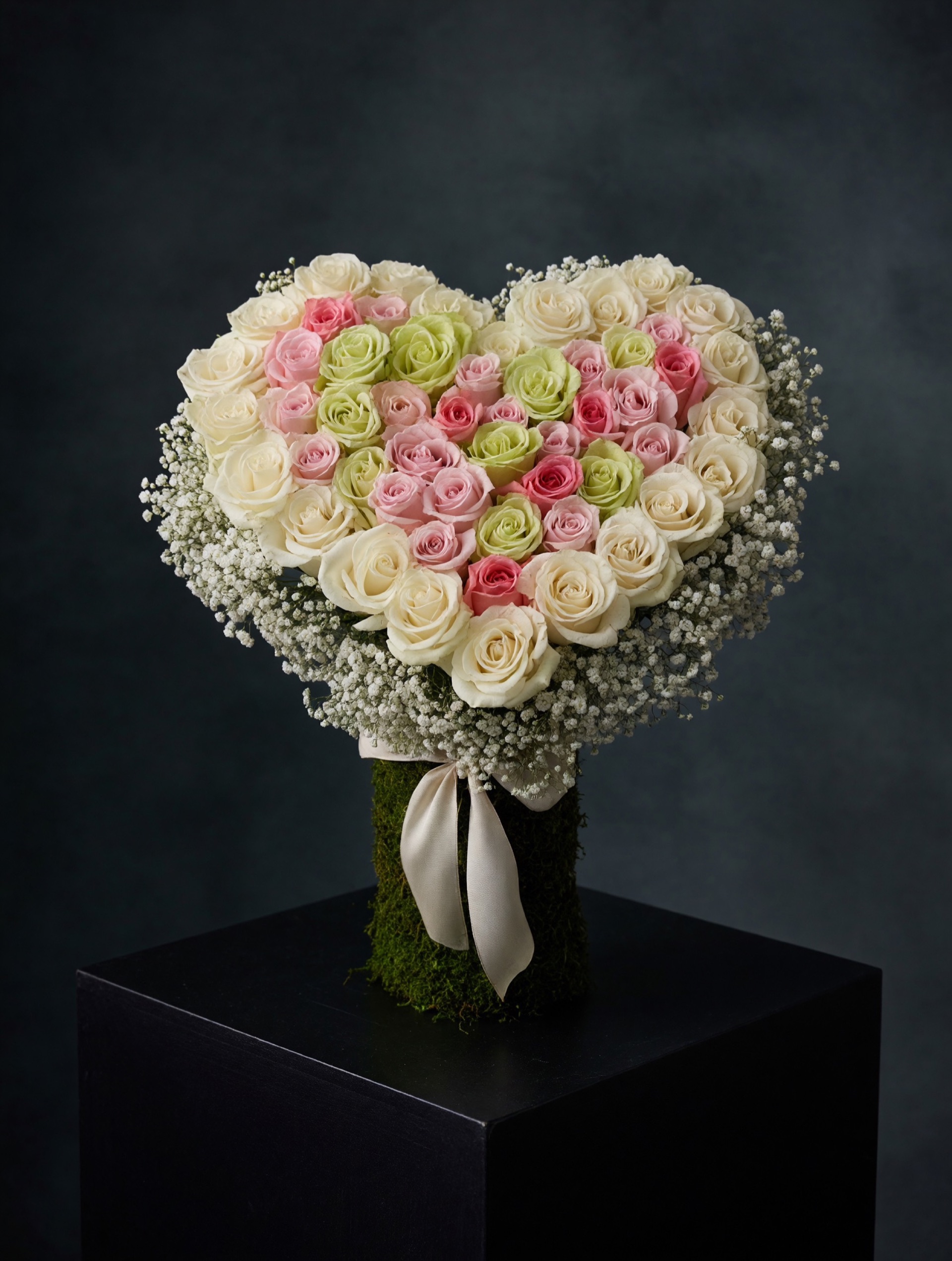
What "Vintage" Actually Meant in the 19th Century
The word gets used loosely now, usually to describe a muted palette of dusty miller, blush garden roses, and trailing clematis. That's part of it, but color was a byproduct of constraint, not aesthetic preference. Victorian florists worked with what a given estate garden produced that week, cut by hand, arranged without the global supply chain that lets a studio order peonies in November.
The construction mattered more than the palette. A period bouquet was a small, dense, hand-held object — built to be carried through a church, a reception, and a carriage ride home, all without a water source. That single constraint shaped everything: stem count, wiring, the tight binding point, the use of foliage as structural backing rather than filler.
Recreating that look with loose, foam-mounted, water-fed modern arranging misses the point entirely. The silhouette came from the method. A studio that wants the vintage result has to accept the vintage discipline — fewer stems, tighter binding, a plan for how the piece survives six hours without a vase.
That's the distinction worth holding onto before ordering a single stem: vintage is a construction problem the 1800s solved out of necessity, and it's the necessity, not the nostalgia, that makes the technique worth borrowing.
The Tussie-Mussie and the Discipline of Restraint
The tussie-mussie — a small, tightly bound nosegay, often finished with a paper doily or lace collar — was the standard hand-held bouquet through much of the century. It rarely exceeded the width of two fists. That's not a stylistic choice we're romanticizing after the fact. It's a physical limit: a hand can only close around so much stem before the binding point fails.
Modern bouquets have abandoned that limit because they don't have to respect it. Wire, tape, and a bouquet holder let a florist build something twice the size a period arranger could have physically carried. The result is often a bouquet that reads as generous but composes poorly — too many focal blooms competing for the same sightline, no negative space for the eye to land.
A disciplined vintage build works from a fixed count. In our studio, a hand-tied bridal posy in this style runs eighteen to twenty-four stems total, including foliage — not the thirty-five to forty a full modern cascade might use. Every stem earns its place: three to five garden roses as the visual anchor, a supporting layer of lisianthus or clematis, and a foliage collar of dusty miller or eucalyptus doing the structural work at the binding point.
The eleventh stem, added because the piece "felt like it needed something," is almost always the one that ruins it. Restraint isn't a mood here. It's the mechanism that made the silhouette work in 1875, and it's the mechanism that makes it work now.
Pressing, Drying, and the Victorian Language of Preservation
Flower pressing predates the Victorian era, but the 1800s turned it into both craft and correspondence. Pressed pansies, forget-me-nots, and pansy violas were tucked into letters, Bibles, and mourning lockets — a way of keeping a specific bloom, from a specific day, indefinitely flat and colorfast if kept from light and moisture.
For a wedding, pressing works best for sentimental inclusion rather than as the primary material. A single bloom from a mother's bouquet, pressed and framed, or set into the cover of a guest book, carries weight a fresh arrangement can't. It's also unforgiving — pressing flattens dimensional flowers like garden roses poorly, while flat-faced blooms like pansies, larkspur, and small clematis press cleanly in seven to ten days under moderate weight.
Air-drying is the second period method, and it's more forgiving for larger stems. Lavender, dusty miller, and certain rose varieties dry well when hung upside down in a dark, ventilated space for two to three weeks. The Victorian language of flowers assigned meaning to nearly every species used this way — the Victoria and Albert Museum's collection catalogs how specific, coded, and widely understood that vocabulary once was. A couple doesn't need to know the full lexicon to use the idea: choosing lavender for its associations with devotion, or rosemary for remembrance, gives the material a reason beyond appearance.
None of this replaces the fresh bridal bouquet. It supplements it — a preserved keepsake built alongside the ceremony flowers, not instead of them.
Glycerin Preservation: The Technique Modern Studios Forgot
Glycerin preservation is the most useful 19th-century method most modern florists have quietly dropped, mostly because it takes weeks, not hours. The process is straightforward in principle: cut foliage is placed in a solution of roughly two parts water to one part glycerin, and the stem draws the mixture up over one to three weeks, replacing the water in the plant's cells with glycerin. The result doesn't dry out or turn brittle. It stays pliable, often for years, sometimes darkening slightly in tone but never crumbling.
Eucalyptus is the standard test case — it takes glycerin readily and holds a soft, leather-like texture afterward that's almost indistinguishable from fresh at a glance. Dusty miller, magnolia leaves, and ruscus all preserve well. Delicate flowering stems generally don't; the technique is foliage-first for a reason.
For a wedding, this matters practically. A ceremony arch built partly from glycerin-preserved greenery can be assembled days ahead instead of the morning-of, reducing the compressed labor window that causes most wedding-week floral failures. It also means a couple can keep a meaningful piece of the ceremony decor afterward, instead of watching all of it wilt within a week.
The tradeoff is lead time. Preservation needs to start six to eight weeks out, with a test batch first — glycerin uptake varies by stem freshness and cut angle, and a studio that skips the test risks an uneven, patchy result on the wedding piece itself.
Wiring and Structure: How Period Florists Built Arrangements That Held
Before floral foam existed — it wasn't invented until the 1950s — florists held every stem in place mechanically. Wiring was the primary method: a fine gauge wire inserted through or wrapped around the base of a bloom, then taped with floral tape to disguise the metal and add a small amount of rigidity.
This solved two problems at once. It let a florist position a flower's head at an angle the natural stem wouldn't hold on its own, and it let delicate blooms — sweet pea, lily of the valley, small garden rose buds — survive being carried for hours without a water source drawing up through the stem.
Modern corsages and boutonnieres still use this exact method, largely unchanged. A boutonniere built today is wired, taped, and finished with a stub wire stem rather than the natural one — which is why it survives being pinned through a lapel and worn for a twelve-hour day without wilting by the toast.
Full bouquets use wiring more selectively now, usually to reinforce weak stems or correct the angle of a single problem bloom rather than to build the whole piece. That's a reasonable modern adjustment — full wiring is labor-intensive, and a good hand-tie with proper conditioning covers most of what a period florist needed wire to achieve. But knowing the technique exists, and when to reach for it, is the difference between a boutonniere that holds and one that's drooping in the ceremony photos.
Sourcing Heirloom Varieties: What to Actually Ask For
"Vintage" gets attached to entire categories of flowers that vary enormously in how they perform. Garden roses are the clearest example. Mondial is a dense, ruffled, blush-to-cream variety that holds its shape well over a long day. Vendela runs a soft ivory with excellent vase life and structural firmness — a dependable choice for anything wired or carried without water for extended periods. Quicksand shifts through warm caramel-to-mauve tones as it opens, which reads as antique without any artificial aging or dyeing.
Lisianthus is the other workhorse for this look — its ruffled, rose-like bloom reads as heirloom material at a fraction of the cost, and it holds up well once properly hydrated. Peony is the variety couples ask for most and should be warned about most: gorgeous in early bloom, but it fatigues fast out of water and drops petals under heat or handling. We place it where it will be seen early — the bridal bouquet, photographed within the first two hours — rather than in pieces meant to last the full reception.
A short list worth bringing to a sourcing conversation:
The Royal Horticultural Society maintains detailed variety guidance for gardeners and florists sourcing rose stock, which is worth consulting before committing to a specific cultivar for a wedding order months out.
Common Mistakes Couples Make Chasing a Vintage Look
The most frequent error isn't material — it's volume. Couples see a reference photo of a dense Victorian posy and assume denser is more authentic, when the actual period constraint was smaller, tighter, and fewer stems overall. Requesting a bouquet that's both oversized and vintage-styled asks for two contradictory things at once.
The second mistake is color drift toward beige. Muted doesn't mean colorless. Victorian arrangements used deep burgundy, plum, and forest tones alongside the blush and ivory that dominate modern "vintage" boards. A palette built entirely of cream and white loses the contrast that made period arrangements read as rich rather than faded.
The third is skipping the conditioning step to save time. Every technique above — wiring, glycerin, hand-tying — depends on stems that have been properly hydrated and hardened off before construction begins. A studio that receives flowers the morning of the wedding and arranges them immediately, without a conditioning period the day before, will see faster wilting regardless of how period-accurate the technique is.
And the fourth: treating a single pressed flower or preserved bouquet as decoration rather than as the object it is. A pressed keepsake from a grandmother's wedding deserves a frame or a case, not a spot pinned loosely to a welcome sign where it will curl and fade within a season.
Building the Case for the Rose That Keeps
Heritage, in this work, isn't sentiment. It's a preference for materials and methods that last past the day they were built for. A glycerin-preserved eucalyptus garland can sit in a linen closet for three years and still hold its form when it comes back out. A wired boutonniere, disassembled after the wedding, can be reused as a small framed piece. A pressed bloom, done correctly, outlives the marriage license it was cut for.
That's the argument for borrowing 19th-century technique over defaulting to whatever is fastest with current tools. Floral foam is quick, but it's also an environmental liability increasingly restricted by venues and, more to the point here, it produces arrangements with no plan for what happens after the reception ends. A hand-tied, conditioned, selectively wired bouquet has a second life built into its construction from the start.
Couples don't need to commit to full period accuracy to benefit from this. Even one element — a preserved arch garland, a pressed boutonniere flower kept in a locket, a bridal bouquet built on a fixed stem count instead of an open one — brings some of that permanence into a day otherwise defined by things that don't last.
A Simple Plan for Working the Technique Into a Modern Wedding
Start the conversation with a florist ten to twelve weeks out, not four. Glycerin preservation alone needs six to eight weeks of lead time, and a proper hand-tied posy built to a fixed stem count needs a sourcing plan, not a same-week order.
Bring anything sentimental early — the shoebox, the photograph, the pressed pansy from 1961. A studio can build toward a specific historical reference far more accurately with the object in hand than with a Pinterest board of similar-looking arrangements.
Decide, early, which single element carries the vintage weight. Trying to make every piece — bouquet, boutonnieres, arch, centerpieces — fully period-accurate usually produces a wedding that looks costumed rather than composed. One disciplined hand-tied bouquet, one glycerin-preserved arch garland, or one pressed keepsake does more work than an entire day built on the theme.
The shoebox bride, in the end, carried a posy of Vendela garden roses, dusty miller, and a single sprig of lavender pressed from her grandmother's garden the week before. Nothing about it asked to be noticed. It simply held, through a six-hour day, exactly the way the 1961 photograph said it should.
Considered
What makes wedding florals "vintage" versus just old-fashioned looking?
True vintage florals borrow the construction methods of the period — hand-tied posies, wired stems, glycerin-preserved foliage — not just a muted color palette. A bouquet can look Victorian and still fall apart by cocktail hour if it wasn't built the way Victorian florists actually built.
Can wedding flowers really be preserved from the 19th century onward?
Glycerin preservation, refined through the 1800s, has kept foliage supple for decades in some documented cases. Modern studios use the same base technique — a two-to-one water-to-glycerin solution, absorbed over one to three weeks — to preserve eucalyptus, dusty miller, and other structural greenery.
Which flowers hold up best for a vintage-style bouquet?
Garden roses (Mondial, Vendela, Quicksand), lisianthus, and clematis vine hold their form well when properly conditioned. Peony is beautiful but short-lived out of water, so it's usually placed last and photographed early rather than carried for hours.
Do I need real antique flowers for a vintage wedding bouquet?
No. Vintage refers to technique and material sourcing, not literal age. A studio recreates the period's discipline — density, wiring, restrained color — using fresh, seasonal stems. Pressed or preserved elements from a family arrangement can be incorporated, but they are the exception, not the foundation.
How far in advance should preserved florals be prepared for a wedding?
Glycerin-preserved foliage needs one to three weeks of absorption time before use, so it should be started six to eight weeks before the wedding to allow for testing and a second batch if the first doesn't take evenly.
What's the biggest mistake couples make trying to achieve a vintage floral look?
Overloading the arrangement. Victorian posies were dense but disciplined — a fixed number of stems, chosen with intent. Modern couples often add "one more" bloom for fullness, which is the exact instinct that ruins the silhouette the era was known for.