Reviving Traditional Floral Arranging Techniques in Modern Weddings
A bride called us eleven months ago about a bouquet from her mother's wedding, still boxed in the attic, the ribbon gone brittle but the roses somehow holding their shape. She wanted to know if we could build hers the same way. We had to explain that the way—spiral hand-tying, no foam, no wire through the stems—was not a style choice her mother's florist had made for aesthetic reasons. It was simply how bouquets were built in 1986, before floral foam blocks became the industry default. The technique was the inheritance, not the flowers themselves.
28 min read · Les Fleur Company
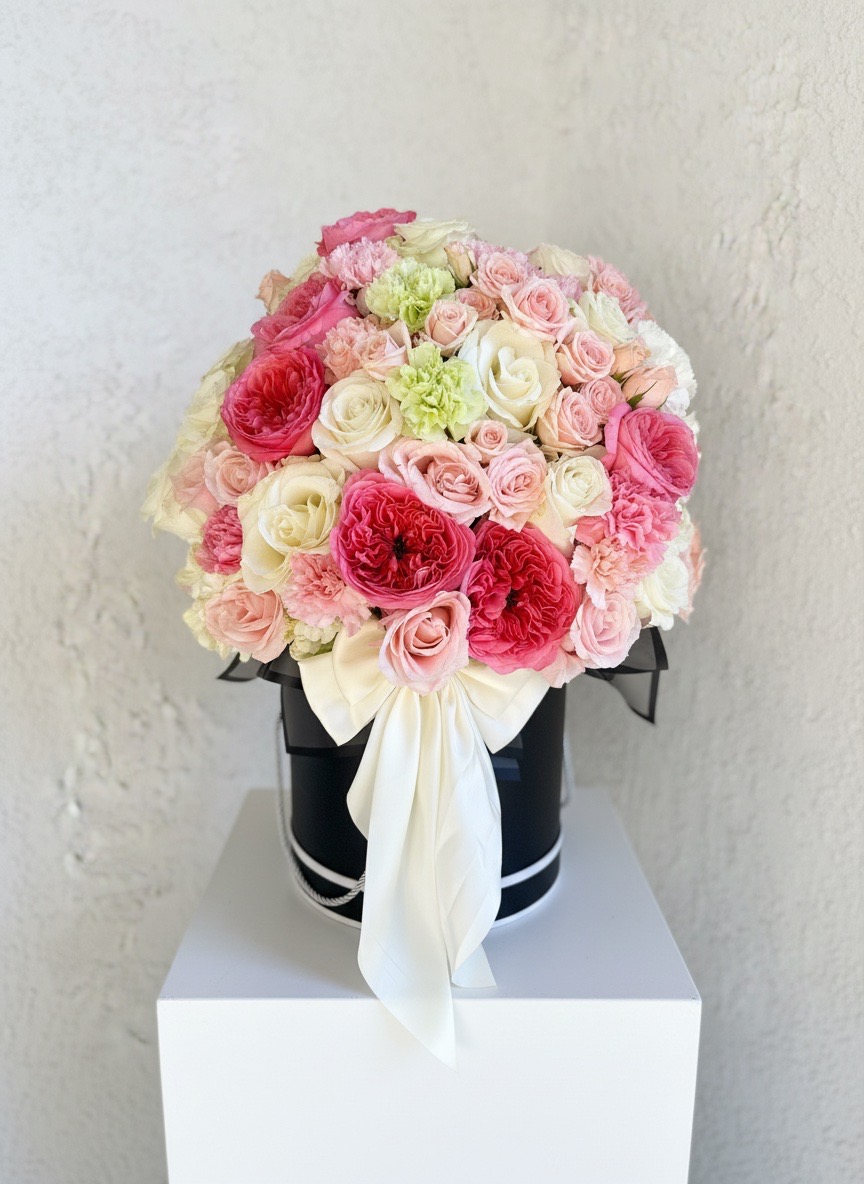
The Craft That Floral Foam Interrupted
Floral foam—the green, water-absorbing brick most people picture when they picture flower arranging—was introduced commercially in the 1950s under the Oasis brand. Before that, every mechanic in a florist's kit was physical: chicken wire crumpled into a cage, a pin frog anchored with clay, a hand spiraling stems against the base of a bouquet until the tension itself held the shape. These were not primitive workarounds. They were the entire discipline.
Foam solved a real problem—speed. A block of soaked foam lets an inexperienced hand place a stem anywhere and have it stay. That made large-scale, fast-turnaround floristry possible at a volume the old mechanics could not match. But foam does not drain, does not biodegrade, and restricts how much water a stem can actually draw compared to an open vessel. An arrangement built in foam often looks correct at 9 a.m. and shows its limits by the toast.
What we are seeing now is not nostalgia for its own sake. It is a return to mechanics that were simply better suited to an eight-hour wedding day, rediscovered by a generation of florists trained mostly on foam. Our own approach to timeless floral composition starts here, at the mechanic, before it ever reaches the question of which bloom goes where.
Spiral Hand-Tying: The Bouquet Method That Never Left the Workroom
Spiral binding is the oldest continuously practiced technique in Western floristry, and it is still, by a wide margin, the strongest way to build a hand-held bouquet. The method is simple to describe and difficult to execute well: each stem is added at a consistent angle, rotating around a central axis, until the stems themselves form a natural, self-supporting cone at the base. Bound with twine or ribbon at the point where the spiral locks, the bouquet needs no internal wire, no foam handle, no adhesive.
A well-spiraled bouquet of two dozen garden roses—Mondial for depth, Vendela for a cooler ivory, Quicksand for the warmer edge—will hold its shape through a ceremony, a receiving line, and four hours of photographs without the stems shifting inside the hand tie. That is not a claim we make lightly; it is the reason the technique survived a century of design trends that tried to replace it.
The failure mode is common and easy to spot. A rushed spiral, bound too high or too loosely, will loosen mid-reception and the face of the bouquet will flatten. We train every apprentice in this studio on spiral binding before they touch a wedding order, the same sequence documented in our note on building bouquets meant to last. It takes most hands eight to ten months of repetition to bind a twenty-stem bouquet correctly in under fifteen minutes.
Wire and Tape: A Specialty Skill Worth Asking About Directly
Boutonnieres and corsages were, until recently, the most reliably wired pieces in any florist's repertoire, and the technique has not changed much since the early twentieth century. A stem is cut short, a fine gauge wire is threaded and wrapped, and the whole assembly is bound in floral tape to seal in what little moisture the stem can hold without a water source. Done correctly, a wired boutonniere will hold through a twelve-hour wedding day without wilting past recognition.
What has changed is who still knows how to do it well. Wire work is slow, fussy, and easy to teach badly—a poorly wired stem snaps at the boutonniere pin, or the tape unravels by the first dance. Many studios now outsource this work or skip wiring altogether, pinning a fresh stem directly and accepting a shorter working life.
We would encourage any couple, at the consultation stage, to ask a direct question: how are the boutonnieres constructed. A studio still training in wire-and-tape will answer with specifics—gauge, wrap, tape brand—rather than a general description of the finished look. It is a small test, but a reliable one, for whether the atelier behind the arrangement still practices the older mechanics or has quietly let them go.
Chicken Wire and the Case Against Floral Foam
For centerpieces and larger structural work, the traditional alternative to foam is a cage of chicken wire, crumpled loosely and set into the vessel, sometimes anchored with waterproof tape at the rim. Stems are threaded through the mesh rather than pushed into saturated foam, which means every stem sits in open water and drinks at its natural rate for the full duration of the event.
The practical difference shows up on day two. A foam-free centerpiece, refreshed with water, will often still be presentable the morning after a wedding—useful for a couple who wants the flowers at brunch, or a donation to a local hospital or shelter the next day. A foam-built arrangement, by contrast, is usually finished the moment the foam dries out, typically within twenty-four hours.
There is also a straightforward environmental case. Floral foam is a phenol-formaldehyde plastic that does not break down; it persists in landfills and, when handled, sheds microplastic particles. A growing number of ateliers, including this one, now build the large majority of wedding work—arches, low centerpieces, cascading installations—entirely foam-free, a shift we discuss at more length in our overview of atelier process and consistency.
The Compote and the Low Centerpiece, Reconsidered
Before the tall, foam-topped centerpiece became a wedding standard, the compote—a low, footed bowl, often silver or ceramic—was the dominant vessel for table florals. It sits closer to the guest, allows conversation across the table, and, built on a pin frog or chicken-wire base, holds a loose, garden-gathered shape that a tall arrangement cannot replicate.
We have watched demand for the compote return steadily over the past three seasons, largely from clients who want their reception to feel like a set table rather than a staged one. A compote arrangement built with peony, clematis, and trailing eucalyptus, anchored on a pin frog, typically uses thirty to forty percent fewer stems than an equivalent tall centerpiece—because the mechanic rewards restraint rather than volume.
The technical requirement is precision. A pin frog holds far fewer stems securely than a block of foam, so every stem placed has to earn its position. That constraint is, in our experience, exactly what produces a better composition—it forces the discipline we describe at length in our piece on centerpiece composition for high-elegance tables. The eleventh stem, on a pin frog, simply will not stay.
Sourcing as a Traditional Practice, Not a Trend
Local and seasonal sourcing gets discussed as a modern sensibility, but it is in fact the oldest sourcing model in floristry. Before international flower auctions and overnight air freight, every florist worked from what a regional grower could produce that week. A June wedding in the Sierra foothills would have used peony and garden roses because that is what was blooming, not because a mood board called for it.
We still build our sourcing calendar this way for a large share of our seasonal work, coordinating with growers across our service regions—from the coast to the foothills—so that a client's wedding date determines the material list as much as their palette does. Couples planning in the Lake Tahoe region, for instance, work within a shorter, higher-elevation bloom window than clients closer to the San Francisco coast, and the material list changes accordingly.
The trade-off is one every couple should understand early: a fixed request for a specific bloom on a specific date, regardless of season, usually means flying it in—at a real cost premium, and with a shorter vase life on arrival. The traditional approach trades some control over the exact palette for material that is fresher, less expensive per stem, and closer to how the craft was practiced for most of its history.
What Old Techniques Mean for Preservation
The technique used to build a bouquet on the wedding day has a direct effect on whether it can later be preserved—pressed, dried, or cast in resin. A spiral-bound bouquet, free of wire and foam residue, dries far more evenly than one built with internal mechanics, because the stems were never holding moisture unevenly against a foam core to begin with.
We ask every bride who mentions preservation, even in passing, to flag it before the wedding rather than after. It changes small decisions at the build stage: which stems we treat as the visual anchors worth drying whole, how tightly we bind the base so the bouquet can be hung upside down without collapsing, and which blooms—garden roses and lisianthus dry more predictably than ranunculus—we recommend featuring toward the front.
A traditionally built bouquet, dried within forty-eight hours of the wedding in a dark, dry space, will typically hold its color and form for years rather than months. This is the heritage argument in its most literal form: the same hand-tying method that carries a bouquet through a wedding day is what makes it possible to keep.
Training the Hand: How an Atelier Passes Down Technique
None of this survives without deliberate training, and it does not happen quickly. Our apprentices spend their first several months on mechanics before they are given creative latitude on a wedding order—spiral binding, wire gauges, chicken-wire tension, pin-frog placement—the same sequence a florist would have learned fifty years ago, before any of it was optional.
We measure the training in repetitions, not weeks. A new hand will bind roughly two hundred practice bouquets before touching a client order, and will build foam-free centerpieces for in-studio work for a full season before being trusted with one for an event. It is slower than hiring for speed alone, and it is the reason a studio can still answer a bride's question about her mother's bouquet with a demonstration rather than an apology.
The process side of this—the actual bench work behind a finished arrangement—is something we try to make visible to clients rather than keep behind the workroom door, as we've written about in our guide to bespoke floral arrangements and the work behind them. A couple who understands the mechanic tends to trust the result more, not less.
Choosing a Florist Who Still Works This Way
For a couple evaluating studios, the honest signal is rarely in the portfolio photograph—foam and foam-free arrangements can look nearly identical in a still image. It is in the questions a studio can answer without hesitation: how the bouquets are bound, whether the centerpieces use foam, how long the flowers are expected to hold, and what happens to the bouquet if preservation is requested.
A short list worth bringing to a consultation:
These are not trick questions. A studio that trains in traditional mechanics will have specific, immediate answers, because the technique is not incidental to the work—it is the work. Couples planning events in our service areas, from El Dorado Hills to the broader Tahoe basin, are welcome to ask us these same questions directly during a first consultation.
The old methods were never lost, exactly. They were set aside for a faster substitute, and are now being picked back up by hands willing to spend the extra hour. A bouquet built this way does not announce the difference. It simply holds, through the day and sometimes long after it.
Considered
What are traditional floral arranging techniques?
Traditional techniques predate floral foam and modern adhesives: spiral hand-tying, wire-and-tape corsage and boutonniere work, chicken-wire and pin-frog mechanics for structural arrangements, and water-tube support for installations. They rely on the stem, the hand, and mechanical support rather than saturated foam blocks.
Why are florists moving away from floral foam?
Floral foam is a single-use plastic that does not biodegrade, and it restricts how much water a stem can actually draw. Arrangements built without it, using chicken wire or a pin frog, tend to hold hydration longer and hold their shape through a full event day.
Is a hand-tied bouquet stronger than a wired one?
For bridal bouquets, yes—a properly spiraled hand-tied bouquet distributes weight through the stems themselves and needs no internal wiring, which makes it more resilient to a full day of handling. Wiring is generally reserved for boutonnieres, corsages, and pieces that must hold a fixed shape away from water.
Can traditional techniques handle a large wedding installation?
Yes. Chicken-wire armatures and structural mechanics have supported arches, chandeliers, and cascading installations for over a century—longer, in fact, than floral foam has existed. The technique requires more build time but scales to any size an atelier is prepared to engineer.
How do I know if a florist still uses traditional methods?
Ask directly during a consultation: how the bouquets are bound, whether foam is used in centerpieces, and how boutonnieres are constructed. A studio that trains in these methods will answer specifically, often naming the mechanic—chicken wire, pin frog, spiral bind—rather than describing the finished look alone.
Do traditional techniques cost more?
Often, modestly. Foam-free and hand-bound work takes longer to build and requires more skilled labor per arrangement, which can show up as a slightly higher line item for mechanics-intensive pieces like large installations. The difference is measured in hours, not in the flowers themselves.