Reviving the Art of Floral Composition for Luxury Events
A bride once stood at our worktable in the atelier, watching us build the arrangement meant for her reception's center table, and asked why we kept a full bucket of garden roses sitting untouched to the side. The arrangement in front of her held eleven stems. The bucket held forty more. She wanted to know why we weren't using them. We told her the truth: the composition was finished at eleven, and the twelfth stem would have ruined it.
13 min read · Les Fleur Company
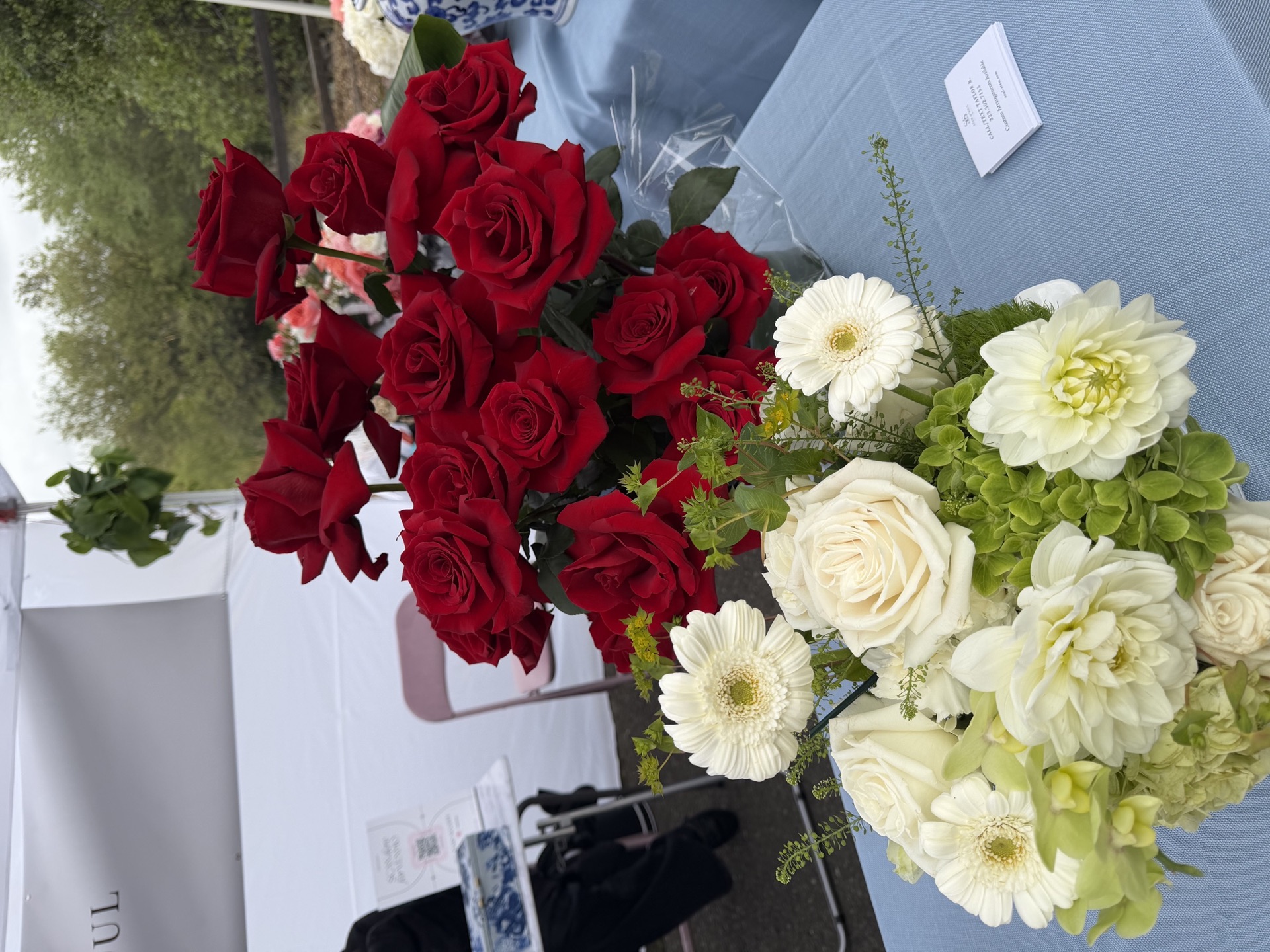
Composition Is a Discipline, Not a Style
At the studio, we treat every arrangement the way a painter treats a canvas — proportion first, material second. A silhouette either works from thirty feet or it doesn't, and no amount of additional stems fixes a shape that was wrong from the start. This is the part of the trade clients rarely see, because it happens before a single flower goes into water: the sketch, the stem count, the argument at the table over whether the piece needs one more clematis vine or none at all.
The habit that separates considered work from crowded work is knowing where to stop. A large-format piece anchoring a fifty-top reception rarely needs more than fifteen stems of its primary material. Beyond that number, the eye stops reading individual stems and starts reading mass — and mass is not composition. It is inventory.
Negative Space Is a Material
Clients ask us, often gently, why an arrangement they're paying for has gaps in it. The gaps are the point. Negative space carries as much weight in the final shape as the flowers themselves — it is what allows a silhouette to be read at a glance rather than decoded up close.
We think of it in three working rules at the studio:
This is where the eleventh stem problem shows up most often. A designer under time pressure, six arrangements still to build before a five o'clock delivery, reaches for one more stem out of nerves rather than need. The negative space closes. The composition stops being a shape and becomes a pile.
The Mechanics Nobody Photographs
The part of atelier work that never makes it into a wedding gallery is the mechanics — the structure holding the flowers in place and keeping them hydrated across a full event day. We stopped using floral foam in the studio's large-format work years ago. Chicken wire, built into a dome inside the vessel, combined with floral frogs at the base, holds water longer and gives stems more room to breathe than foam ever did.
For a reception running from a five o'clock ceremony through an eleven o'clock exit, that difference matters. An arrangement built on foam will show stress by hour four — drooping lisianthus, a peony head beginning to close. The same materials on wire mechanics, properly hydrated, hold through the night and into the next morning's teardown. Clients rarely ask about mechanics. They notice, without knowing why, when an arrangement still looks composed at the end of the night instead of tired.
Material, Named and Sourced
We do not describe flowers by adjective. We describe them by variety, because the variety is the information that actually predicts how a piece will perform. A Mondial garden rose holds its structure under heat in a way a more delicate variety will not. Vendela, a warmer, ivory-toned rose, reads differently in photographs than Quicksand's dustier blush. Lisianthus, dusty miller, and eucalyptus do the quieter work of texture and movement around a focal bloom, and clematis supplies the trailing line a composition needs to avoid looking static.
Sourcing shapes what is possible more than budget does. We work with three growers for garden roses and one Oxnard grower for the greenery we use most — dusty miller and eucalyptus both hold better when they haven't spent four days in transit. A Vendela rose cut at peak and in the atelier within forty-eight hours looks nothing like the same variety pulled two weeks past its prime. Clients who ask for a specific look sometimes need to hear that the calendar, not the mood board, decides what the flower can do.
Building the Timeline Backward From the Occasion
Luxury event work runs on a different clock than most people expect. Grower orders for a spring wedding are typically placed twelve to sixteen weeks out, with final stem counts locked two to three weeks before the date once headcounts and table plans are settled. Peony and garden roses, the two materials most sensitive to timing, are cut and shipped as close to the event as the growing season allows — sometimes within four days of the ceremony.
Build day itself is its own discipline. A six-arrangement reception order, each piece holding forty to sixty stems total across primary and secondary materials, takes a two-person team roughly eight to eleven hours from unpacking to final placement, including conditioning time for the more delicate stems. None of that is visible in the finished room. It is the difference between an arrangement that was rushed and one that wasn't, and it shows by the second hour of the reception whether or not the work was given the time it needed.
What Lasts Beyond the Day
Every arrangement we build is designed with an end point in mind, even the ones that will only exist for six hours. Some clients ask us to press a bloom from the day, or preserve a full arrangement in wax for the mantle — a practice with a longer history than most people realize, documented well in horticultural archives on preservation technique. The instinct behind that request is the right one. A composition worth building is a composition worth remembering past the night it was made for.
The bride with the untouched bucket of roses kept a single stem from her centerpiece, dried, in a drawer for two years before she told us. She never asked why we left the other forty roses aside. She understood, eventually, that the arrangement she remembered wasn't the one with the most flowers in it.
Considered
What makes floral composition different from regular flower arranging?
Composition treats an arrangement as a structure with a silhouette, a focal point, and deliberate negative space, rather than a container filled with flowers. It borrows from painting and architecture — proportion and restraint over volume. The goal is a shape that reads correctly from across a room, not a bucket that looks full up close.
How many stems should be in a luxury floral arrangement?
For a large-format piece meant to anchor a room, nine to fifteen stems of the primary material is typical, supported by secondary textures like lisianthus, dusty miller, or eucalyptus. The number is less important than the discipline of stopping before the shape gets crowded. Most compositions fail from one or two stems too many, not too few.
What is the eleventh stem problem in floral design?
It refers to the moment a composition tips from considered to full — the stem added out of habit or nerves rather than need. Once negative space closes up, the silhouette stops reading and the arrangement becomes a mass of flowers instead of a shape. Experienced designers learn to recognize that point and stop before it.
How far in advance should luxury wedding florals be designed?
Material sourcing and mechanics planning typically begin twelve to sixteen weeks out, with final stem counts and grower orders locked two to three weeks before the event. Build day itself runs the day before or the morning of, depending on the material — peony and garden roses are cut close to the date to hold their form.
Why do some floral arrangements last longer than others?
Longevity comes from mechanics chosen at the design table — chicken wire and floral frogs hold hydration better than foam, and stems cut and conditioned properly outlast ones rushed into a bucket. Material choice matters too: garden roses like Mondial hold structure longer under heat than more delicate varieties.
What flowers are considered timeless for luxury event florals?
Garden roses (Mondial, Vendela, Quicksand), peony, lisianthus, and clematis appear consistently in enduring compositions because their form holds under structure and their color reads well against greenery like eucalyptus and dusty miller. Timeless in this context means the material photographs and ages well over the course of a full event day, not that it trends.