Reviving Ancient Floristry Techniques for Unique Wedding Bouquets
A bride arrived at the atelier last spring holding her grandmother's wedding photograph—black and white, 1958, a small tight nosegay gripped at the waist. She did not want a reproduction. She wanted the same discipline: a bouquet that stood on its own, that did not sprawl, that looked as composed at the end of the night as it had at the start of it. That request is not nostalgia. It is a specification, and it happens to describe a technique that predates the modern flower market by three centuries.
34 min read · Les Fleur Company
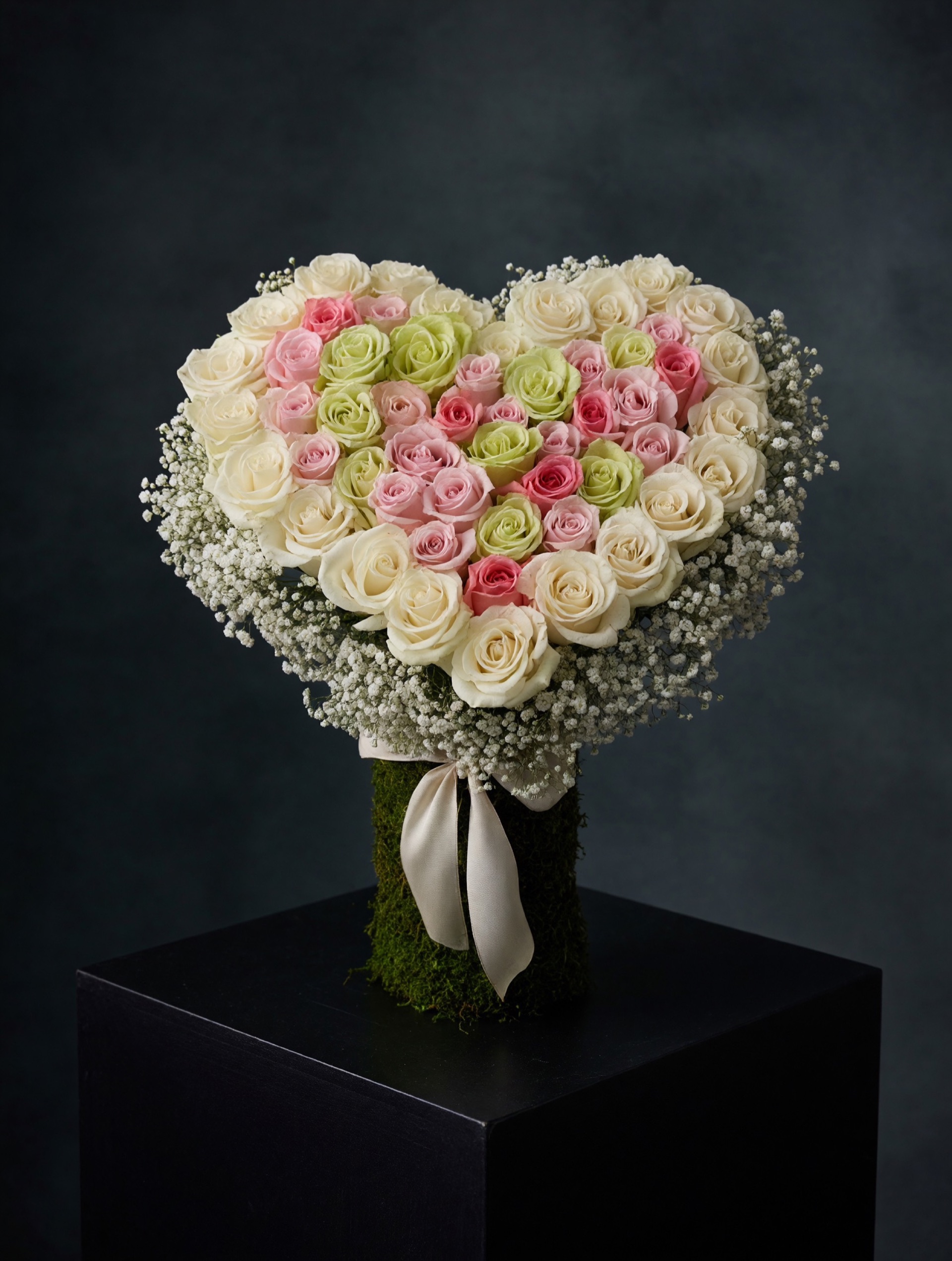
A Bouquet That Has Done This Before
A bride arrived at the atelier last spring holding her grandmother's wedding photograph—black and white, 1958, a small tight nosegay gripped at the waist. She did not want a reproduction. She wanted the same discipline: a bouquet that stood on its own, that did not sprawl, that looked as composed at the end of the night as it had at the start of it. That request is not nostalgia. It is a specification, and it happens to describe a technique that predates the modern flower market by three centuries.
Most contemporary bouquets are built to survive a photograph, not a wedding. They are wired for a single held pose, taped at the stem, and left to wilt visibly by the reception's second hour. Ancient floristry technique—the hand-spiraled nosegay, the pillowed Victorian posy, the pressed keepsake—was built for handling: carried through a ceremony, passed to a mother, set down and picked back up. Reviving it is not a design trend. It is a return to construction methods that were simply built to last longer than an afternoon.
What follows is not a history lesson for its own sake. It is a working account of which pre-industrial techniques still hold up under a modern wedding's demands, which materials they require, and where a couple should push back if a florist offers a shortcut in their place.
The Tussie-Mussie: Structure Before Ornament
The tussie-mussie dates to at least the 1600s, when small hand-bound nosegays were carried through London streets to counter the smell of open sewage—herbs like lavender and rosemary bound tight around a central bloom. By the Victorian era the form had been reclaimed for sentiment, each flower chosen for a coded meaning, the whole bundle small enough to sit in a gloved hand.
What survives from that form is not the symbolism. It is the construction logic: a dominant central bloom, a tight supporting collar, and no wire. Every stem does structural work. There is no filler stem included purely for volume, which is precisely where most modern bouquets go wrong—padding a design with stems that add bulk but no shape.
A tussie-mussie-informed bouquet today might center a single garden rose, Mondial or Vendela, ringed by dusty miller for its silvered restraint, finished in a collar of lisianthus. The bundle is small by contemporary standards—rarely more than eight to ten stems—which unsettles clients used to seeing volume equated with value. It is worth saying plainly: a smaller, tighter bouquet built this way photographs with more definition than a larger, looser one, because every stem is doing visible work.
The lesson a modern florist borrows is restraint under a hand's grip, not restraint under wire. A bouquet meant to be held, not merely displayed, is bound differently from the start.
Spiral Binding: The Test a Bouquet Should Pass
Spiral binding is the actual mechanical ancestor of the hand-tied bouquet, and it is worth explaining because most clients have never seen it demonstrated. Each stem is added at a consistent diagonal angle, rotating around a single binding point, so the stems cross like the spokes of a folded fan rather than stacking parallel. Done correctly, the bouquet opens naturally at the top and narrows to one point at the hand.
There is a test for this, and it is one every couple can ask their florist to demonstrate before the wedding: set the finished bouquet, unwired, directly into a vase of water. A properly spiraled bouquet stands upright and balanced on its own stems. A bouquet reinforced by internal wire or floral tape will often lean, because the true structural weight-bearing has been outsourced to hardware rather than the stems themselves.
This matters beyond craft pride. A spiraled bouquet:
Ask, specifically, whether your bouquet will be spiral-bound or wire-mounted. Most florists can do either. Few volunteer the distinction unless asked.
Victorian Pillowing and the Discipline of One Silhouette
By the mid-1800s, English bouquets had taken on a rounder, more architectural form—flowers arranged in tight concentric rings around a center, often set into a silver posy holder that both supported the stems and displayed them at a fixed height. The effect, sometimes called pillowing, produced a dome so uniform it could look almost upholstered.
The technique is demanding because it punishes inconsistency. Every ring must sit at the same height as its neighbors, every bloom in a ring roughly the same size, or the dome reads as lopsided rather than deliberate. It is, in effect, an exercise in negative space management before that phrase existed—there is no room in a pillowed bouquet for a stem that breaks the line.
Modern florists rarely build a full pillowed dome; it reads as dated to most contemporary eyes. But the underlying discipline—commit to one silhouette and hold it—is exactly what separates a composed bouquet from a crowded one. A bouquet that tries to be round, cascading, and asymmetrical at once satisfies none of the three. The eleventh stem, added because a client worried the bouquet looked sparse, is usually the stem that ruins the line the first ten stems had already established.
The Victorian answer to a bouquet that felt thin was never more stems. It was a tighter ring.
Wire Work: Reinforcement, Not Reconstruction
Wire has a long history in floristry, older than most clients assume—Victorian posy holders used internal wire supports, and 19th-century corsage work relied on wiring individual blooms for placement. The distinction worth preserving is what the wire was for. It reinforced a stem's own natural line. It did not replace the stem's structure entirely.
Contemporary competition-style bouquets sometimes wire every single stem, effectively building a floral sculpture on a hidden metal frame, with the actual flower stems reduced to decoration. This produces a rigid, repeatable shape, but it also produces a bouquet that has no organic movement and, frankly, feels heavier and less alive in the hand.
A heritage-informed approach uses wire selectively: to correct a naturally weak-necked bloom like a garden rose in full bloom, or to fix the angle of a single clematis vine trailing from the base. Most of the bouquet's structural weight is still carried by the stems themselves, bound and spiraled as they would have been before wire was widely available.
Ask your florist how many stems, by count, will be internally wired. A fully wired bouquet and a mostly hand-bound bouquet can look nearly identical in a photograph. They do not feel the same in the hand, and they do not age the same over six hours.
Foraged and Seasonal: Sourcing Before the Global Market
Before refrigerated air freight made peonies available in December, every bouquet was, by necessity, seasonal and regional. A June wedding in the English countryside meant garden roses and clematis, cut that morning, arranged that afternoon. A wedding in October meant dusty miller, eucalyptus, and whatever the hedgerows still offered.
That constraint produced a kind of coherence that is difficult to manufacture with a year-round global market at one's disposal. A bouquet built entirely from what is in season in a given region tends to hold together visually, because the palette was never assembled from disparate growing climates in the first place.
Reviving this means asking a florist what is actually in season locally during the wedding month, rather than defaulting to a fixed mental image—peony in October, for instance, has to be flown in and will cost more, arrive less fresh, and hold up for less of the day than a stem cut regionally in its own season. A bride set on peony for an autumn wedding is better served choosing a variety like Quicksand garden rose, which echoes peony's fullness without the sourcing strain.
Foraged material—eucalyptus, trailing clematis, garden-cut lavender—also tends to be less uniform than commercially grown stock, and that irregularity is precisely the character clients are usually describing when they ask for something that does not look like every other bouquet that season.
Pressing and Preservation: The Bouquet That Outlasts the Day
Flower pressing predates photography as a memory-keeping method—herbaria and pressed botanical collections go back centuries, kept as records rather than decoration. Applying that method to a wedding bouquet is a preservation choice, not a craft trend, and it has to be planned before the flowers are ordered, not after the reception.
Not every stem presses well. Flatter blooms—garden roses, lisianthus, individual clematis blossoms, dusty miller foliage, eucalyptus—hold their shape and color reasonably well under pressure and time. Full, water-dense blooms like peony tend to brown and flatten unevenly, losing the very fullness that made them appealing in the arrangement.
A few practical notes worth relaying to any couple asking about preservation:
The point is not to preserve everything. It is to choose, deliberately, what is worth keeping.
Heirloom Varieties and the Case for the Rose That Keeps
Not every garden rose is bred for the same purpose. Many hybrid tea varieties sold commercially are bred first for shipping durability and uniform bud shape, with fragrance and longevity as secondary concerns at best. Heirloom and garden rose varieties—Mondial, Vendela, Quicksand among them—are bred closer to older standards, where scent, petal count, and how the bloom opens over several days mattered as much as how it traveled.
Vendela, a creamy ivory rose, opens slowly and holds its form through a full day's handling, which is precisely the quality a hand-spiraled bouquet needs from its central stem. Mondial offers a fuller, more classically rounded bloom that suits Victorian pillowing far better than a tighter hybrid tea bud. Quicksand, with its warm blush tones, is often the answer for a client requesting peony outside its season.
These varieties cost more per stem, typically, than standard commercial roses, and the difference is not markup. It reflects slower growing cycles and lower yield per plant. A client choosing between forty commercial roses and twenty-eight heirloom stems is usually better served by the smaller number, since the heirloom stems will still look composed at the end of the night while the larger quantity of standard stock may already be dropping petals.
What the Atelier Keeps, and What It Lets Go
Reviving a technique is not the same as refusing every modern convenience. Floral preservative, professional refrigeration, and reliable global sourcing for out-of-season material are conveniences worth keeping; none of them existed for a Victorian florist and none of them compromise the structural techniques described here.
What is worth letting go of is the assumption that more stems, more wire, and more volume automatically read as more considered. A twelve-stem, hand-spiraled tussie-mussie in Vendela and dusty miller can carry a room more convincingly than a forty-stem cascading arrangement wired into a fixed shape. The discipline is in knowing which technique a given bouquet actually calls for, rather than defaulting to whichever method photographs largest.
A working atelier keeps a short list of questions for every heritage-informed order: what silhouette is being committed to, which stems are load-bearing and which are ornamental, what will be pressed and what will not, and whether the sourcing is seasonal or asked to travel. Answered honestly, those four questions do most of the design work before a single stem is cut.
The bride with her grandmother's photograph got her nosegay—eight stems of Vendela, dusty miller, and a single trailing clematis, spiral-bound, no wire. It stood in water on the morning table exactly as the 1958 photograph suggested it would. That was the whole of the brief.
Considered
What is a tussie-mussie bouquet?
A tussie-mussie is a small, hand-bound nosegay dating to the 17th century, originally carried to mask street odors and later adopted as a coded floral message. It is built without wire, gathered stem by stem, and remains the closest living ancestor of today's hand-tied wedding bouquet.
What is the spiral technique in bouquet making?
Spiral binding arranges stems at a consistent diagonal angle around a central axis so the bouquet fans open at the top and gathers at a single binding point. Done correctly, the bouquet balances and stands upright in a vase without support—a structural test that predates florist's wire and tape.
Which flowers hold up best for a bouquet meant to be pressed or kept?
Flatter, sturdier blooms press and dry with the least distortion—garden roses, lisianthus, dusty miller, and eucalyptus foliage among them. Fuller, water-heavy blooms like peony tend to lose shape. Discuss preservation intent with your florist before the order is placed, not after the wedding.
Do heritage floristry techniques cost more than modern arrangements?
Hand-spiraling and minimal-wire construction take longer per bouquet, which shows in labor cost, not material cost. Many clients find the total comparable, since heirloom construction typically calls for fewer stems and less mechanical hardware than a heavily wired competition-style bouquet.
Can a wired bouquet still be considered heritage-style?
Some wire work is itself centuries old—Victorian posy holders and collar work used it structurally. The distinction is degree: heritage technique uses wire sparingly, to reinforce a stem's natural line, rather than to force a shape the flower would not otherwise hold.