On the discipline of restraint in a wedding bouquet.
A bouquet is one of the few objects asked to look effortless while doing the most. The discipline isn't in how much you can fit. It's in what you remove before the bride walks down the aisle.
4 min read · Les Fleur Company
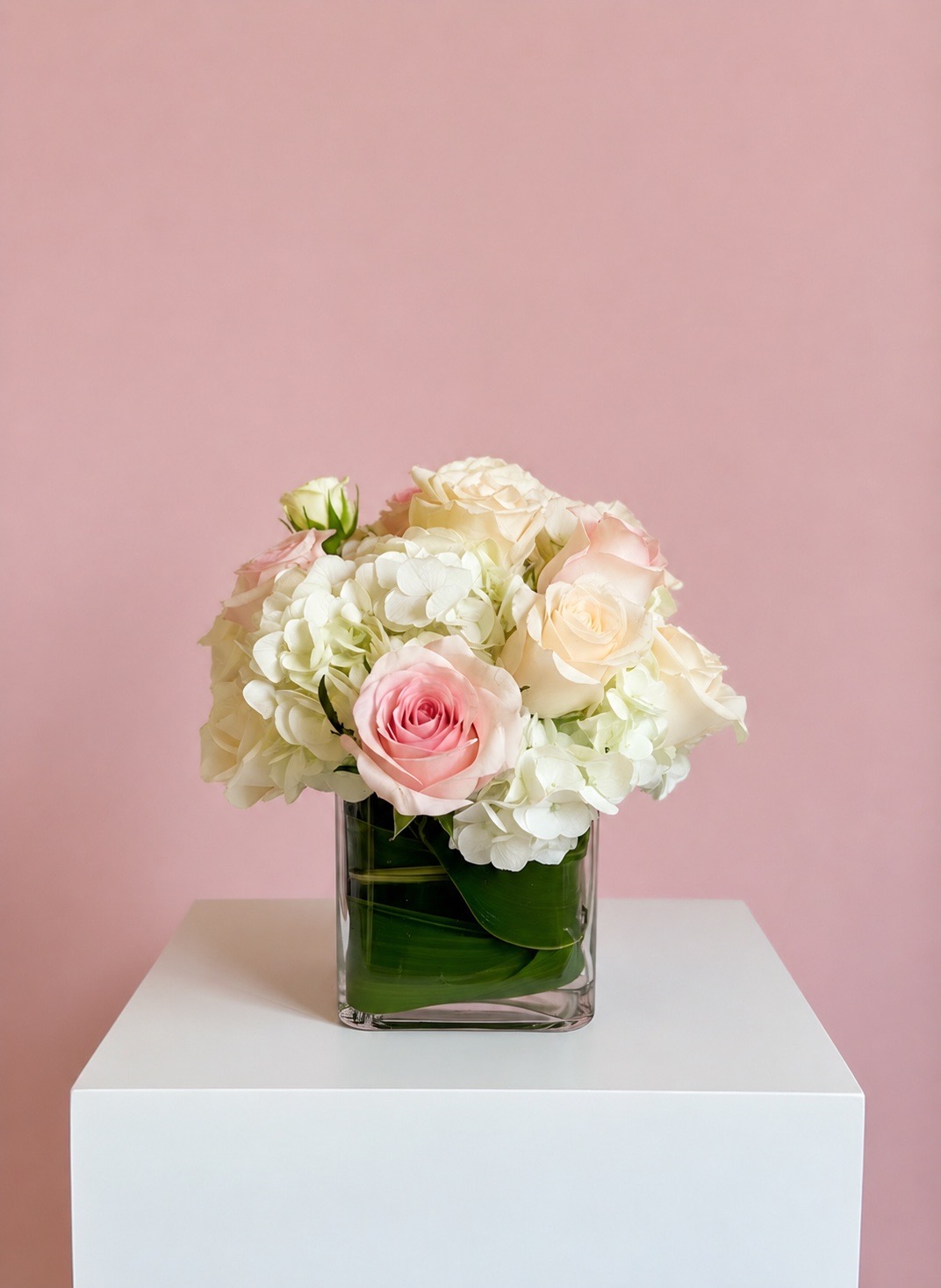
The eleventh stem.
Most bouquets fail at the eleventh stem. Ten is the threshold where a composition becomes a crowd — texture and intent collapse into volume.
We compose with two restraints. The first is silhouette: every bouquet has a shape it wants to settle into, and additions past a certain point fight the shape instead of finishing it. The second is breath: negative space inside the bouquet, the gap between a peony and a stem of clematis, is the place the eye rests.
What a wedding bouquet is for.
It is not a centrepiece. It is held against the body of someone who has spent six months considering everything. It needs to read clearly in low light, photograph clean against any backdrop, and survive the walk without shedding.
The materials we trust for that work — garden roses with thicker laterals, lisianthus that holds head shape past noon, clematis on stiffer vine — are the ones we know will still look composed at the reception.
A composition, then.
The bouquet is finished when nothing else can be added without subtracting from what is already there. That is also when it is most quiet — and a quiet bouquet, in the right hands, is the most considered thing in the room.
Considered
How many stems do you compose with?
Between seven and ten focal stems, with the rest as quiet supporting work. The number is determined by silhouette, not by a count.