Heritage Floristry: Tradition in Every Petal
A mother calls in March asking for the same lisianthus her own mother carried in 1994. She does not remember the variety name. She remembers the color — a blush gone slightly grey at the edge, nothing like the department-store pink sold under the same name now — and she wants her daughter to carry something close to it in June. This call comes to us three or four times a season. It is the clearest evidence we have that a wedding bouquet is not disposable by nature. It is disposable by default, when no one keeps a record of what was in it.
27 min read · Les Fleur Company
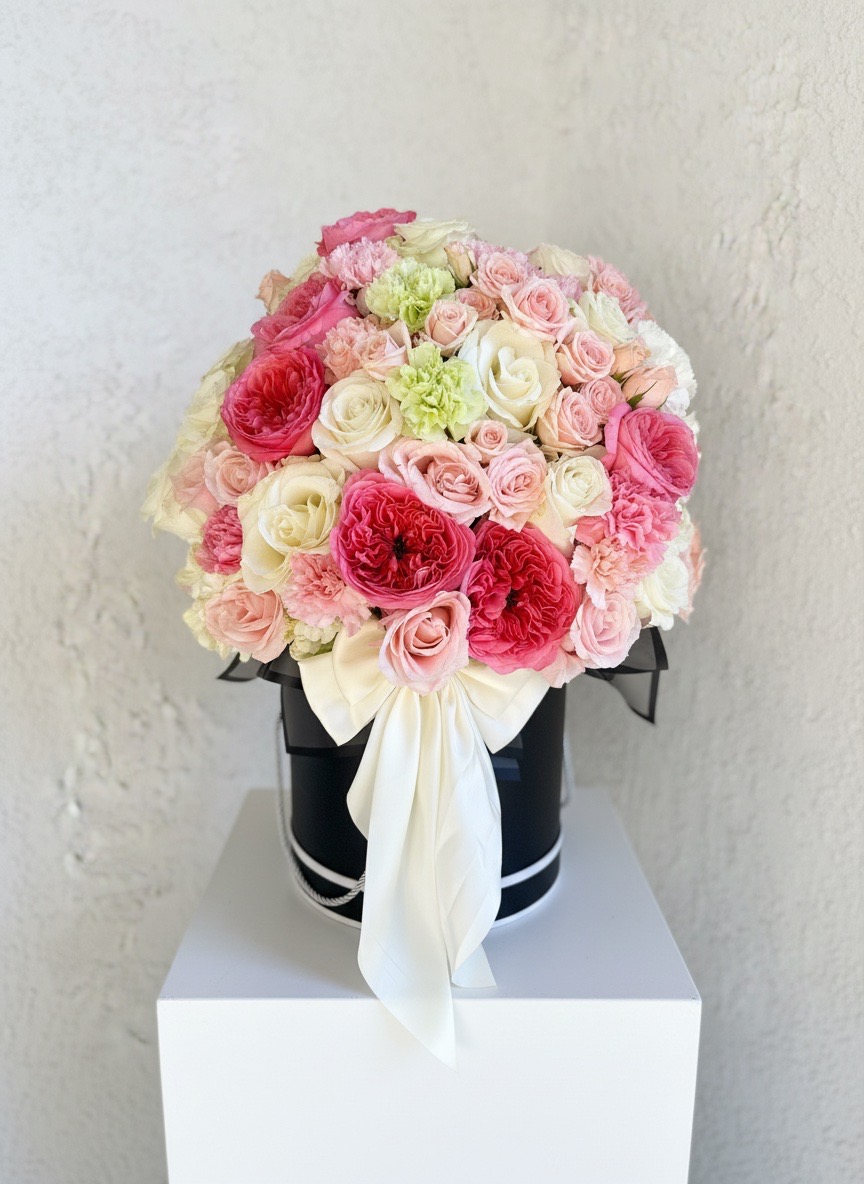
What Heritage Means, Precisely
The word gets used loosely in floristry — anything with a garden rose or a muted palette gets called heritage. We use it more narrowly. A heritage approach treats three questions as load-bearing before a single stem is cut: will this variety hold its form for the length of the event, can it be preserved if the client wants that, and is the combination specific enough to be sourced again on request.
That third question is the one most florists skip. A bouquet built from whatever the wholesale market has that week cannot be recreated, because the market will not have the same mix in five years. A bouquet built from three named varieties — a Mondial garden rose, lisianthus, dusty miller — can be ordered again almost exactly, because the request is specific rather than impressionistic.
Heritage floristry, in other words, is a records practice disguised as a floral one. The arranging still matters — silhouette, negative space, the restraint of leaving a stem out rather than adding an eleventh — but the record is what lets the work outlive the day it was made for.
The Roses Built to Keep
Not every garden rose behaves the same way in water, and the differences matter more than most clients realize when they are choosing from a mood board. Mondial, a dense, ruffled white-to-blush rose, typically holds seven to ten days in a well-maintained arrangement. Vendela, a warmer ivory with a tighter bud, runs a similar range and opens more slowly, which makes it useful for anything shipped or held before an event. Quicksand — the smoky, tea-toned variety that shows up in almost every heritage-leaning palette we build — is slower still to fully open and can extend past ten days with a clean water change every two to three days.
Compare that to a commodity rose pulled from a standard wholesale mix, which commonly runs three to five days before the petals start to soften and drop. The difference is not marketing. It is breeding — David Austin's garden rose program, and the growers who license those varieties, select for bloom form and vase life specifically, the same way a vineyard selects for a grape's behavior over its yield.
For a family that wants a bouquet a daughter might reference again, we build around two or three of these named varieties rather than filling the arrangement out with whatever else is available that week. Fewer, sturdier stems compose better and last longer than a fuller arrangement built from mixed sources.
Preservation as a Second Craft
Preservation is not an extension of arranging. It is a separate trade with its own timeline, and the two most common failures we see come from treating it as an afterthought. First: bloom stage. A peony pressed at full, open bloom will brown and flatten unevenly. The same peony pressed at 60 to 70 percent open holds its shape and color for decades. Second: timing. Flowers need to reach the preservationist within 24 to 48 hours of the ceremony — not after a week on a mantle, and not after sitting through an eight-hour reception in a warm room.
We now build preservation into the order at the same time as the live arrangement, precisely so the two don't compete. A portion of the bridal bouquet — usually six to ten stems — is set aside before the ceremony, kept in water and out of heat, then delivered same-day. Drying and pressing typically take four to six weeks; resin casework can run twelve. The finished piece is not a keepsake in the vague sense. It is the same rose, sixteen years later, in a frame instead of a hand — which is the entire argument we make in our guide to building a floral legacy meant to outlast the wedding day.
Clients occasionally ask why we don't preserve the whole bouquet. Volume is the honest answer — a full bridal bouquet dries unevenly, and a smaller, deliberate selection preserves better than an attempt to save everything.
The Atelier's Record
Every wedding we build produces a written order: variety names, farm of origin, stem counts, color notes, and a hydration schedule specific to that combination. This is not paperwork for its own sake. It is the only mechanism by which a palette survives past the people who remember it.
We keep these records the way a tailor keeps a pattern. When the mother who called in March eventually finds her 1994 lisianthus — we did, after two seasons of checking farm catalogs, land on a close match — the daughter's order sheet becomes the reference for a future request, whether that's a tenth-anniversary arrangement or a sister's wedding. The workspace where this record-keeping happens is not incidental to the craft; we've written before about how an atelier's physical layout shapes the consistency of its work, and the same principle applies to the paper trail behind each order.
Without this record, a heritage request becomes guesswork — a photograph, a half-remembered color, no supplier name attached. With it, the request becomes a specification. That difference is the whole of what separates heritage floristry from floristry that simply photographs well.
Heirloom Palettes, Passed Down
The palettes that survive across a family's weddings share a structural trait: restraint. Three or four anchor varieties, not eight or nine. A garden rose for structure, lisianthus for volume, one textural note — dusty miller, eucalyptus, or a trailing clematis — and stop there.
Restraint isn't an aesthetic preference in this context. It's a sourcing constraint. A palette built from four named varieties can be requested again from a grower fifteen years later with reasonable confidence. A palette assembled from nine different stems, several of them whatever the market happened to carry that week, cannot be reconstructed with any precision — there's no anchor to search for.
We covered the mechanics of building a considered palette, and why the color relationships hold up better with fewer components, in our piece on color theory in wedding floral composition. The heritage application of that discipline is simple: a palette a family can return to is one that was disciplined enough to write down.
The Bouquet That Outlives the Day
Occasion work and heritage work are not opposed, though they're sometimes treated that way — as if a flower chosen for the ceremony can't also be chosen for what comes after. The better bouquets we've built do both. They hold their composition through a full day of handling, photographs, and heat, and they're specific enough in variety and sourcing to be revisited.
A bride married at a lakeside property, for instance, carried a bouquet of Quicksand and Vendela garden roses with a single trailing clematis — chosen as much for how the arrangement would read against granite and pine as for how it would hold up over a ten-hour day that started at altitude and ended at a reception well past sundown. The venue mattered to the choice of variety; a Lake Tahoe wedding in September, at elevation, dries flowers faster than a coastal ceremony, and the varieties selected accounted for that.
Two years later, that same bride asked for the identical combination for a christening arrangement. The order sheet made the request a five-minute conversation instead of a guessing exercise.
Where Families Get Heritage Florals Wrong
The most common error is choosing a flower for a single photograph without asking what happens to it afterward. Full-bloom peonies are the frequent offender — extraordinary in a portrait at ten in the morning, and largely unrecoverable by the time a preservationist sees them at nine that night.
A shorter list of what we see repeated, and what we tell clients instead:
None of these mistakes are about taste. They're about sequencing — decisions made in the wrong order, or not documented at all.
Sourcing for the Long Season
Heritage varieties are not universally in season, and treating them as if they were is the fastest way to disappoint a client working toward a specific date. Garden roses like Mondial and Vendela peak from late spring through early autumn in most of the growing regions we source from; ordering them for a January wedding means flying stems in from farther south, at a cost premium of roughly 30 to 50 percent over in-season pricing.
We work with named growers rather than general wholesale distributors specifically because named growers can tell us which farm, which field, and which cutting date a stem came from. That traceability is what makes a reorder possible later — a wholesale lot has no such record once it's sold.
Cold-chain handling matters just as much as the source. A garden rose held at 34 to 36 degrees Fahrenheit from cutting to delivery will outlast one that spent even a few hours at room temperature during transit. We build shipping schedules around that fact, which sometimes means ordering ten days ahead of an event rather than the standard three or four — a scheduling cost that same-day florists rarely absorb, and one more reason heritage work moves at a slower pace than a typical order.
What Heritage Costs, and Why
Clients occasionally ask why a heritage-style order runs higher per stem than a standard arrangement pulled from a wholesale mix. The honest answer is labor, not markup. A named-grower order takes longer to place, ships under tighter temperature control, and arrives with documentation that has to be filed and referenced later. None of that shows up in the flower itself, but all of it shows up in the hours behind the order.
Preservation is typically billed separately from the live arrangement — we see finished pieces run $350 to $900 depending on scale and method, with resin casework at the higher end because of the longer cure time and the more exacting bloom-stage requirements. A family choosing between a $180 preserved bouquet shadow box and a $650 resin piece is really choosing between a keepsake for a shelf and an heirloom meant to survive a move, a divorce, a fire.
The economics only make sense if the family actually wants the second thing. Not every wedding needs a record this exact. But for the ones that do, the flower that keeps is rarely the most expensive stem in the order — it's the one someone bothered to write down.
Considered
What is heritage floristry?
Heritage floristry is an approach that treats a floral arrangement as an object with a life beyond its event day. It favors durable varieties, documents sourcing and composition in detail, and often pairs the live arrangement with a preserved counterpart, so a bouquet or palette can be recreated, referenced, or kept intact for years.
How long do garden roses like Mondial or Vendela actually last?
In a well-hydrated arrangement kept out of direct heat, Mondial and Vendela garden roses commonly hold seven to ten days, and Quicksand can extend past that with a clean water change every two to three days. Commodity roses from a grocery cooler typically last three to five days by comparison.
Can any wedding bouquet be preserved after the fact?
No. Preservation depends on bloom stage at pickup. Flowers cut and delivered to a preservationist within 24 to 48 hours, at roughly 60 to 70 percent open, hold their shape through drying or pressing. Fully open peonies, hydrangea past their peak, and flowers that sat in a warm reception room for six or eight hours often will not survive the process intact.
Why do heritage-style arrangements cost more?
The cost sits in labor and sourcing, not markup. Named growers, cold-chain shipping, and a written order record — variety, farm, stem count, hydration schedule — add hours a florist working from a wholesale mix does not spend. Preservation work is typically billed separately, often $350 to $900 depending on scale and method.
What flowers are best suited to a multi-generational palette?
Palettes built to be repeated lean on three or four anchor varieties rather than a wide mix — a garden rose, lisianthus, and a single textural note such as dusty miller or eucalyptus. Fewer, well-documented varieties are easier to source again a decade later than an eight-flower combination assembled from whatever was available.
Should I choose flowers for how they photograph or how they last?
Both can be true if the selection is deliberate. Garden roses, lisianthus, and clematis photograph well and hold structure over days rather than hours. The compromise usually happens when a bouquet is built around a flower chosen for a single photograph — full-bloom peony, for instance — with no plan for what happens to it after.