Heritage Wedding Florals: Ancient Rites Revived
A bride called the atelier three weeks before her wedding holding a photograph of her grandmother's 1958 bouquet — garden roses, a sprig of myrtle, nothing else. She did not want a replica. She wanted to understand why that bouquet, carried for one afternoon, had survived sixty-eight years in a shoebox well enough that she could still name every stem. That question is the whole of heritage floral work. Not nostalgia. Not a color palette called "vintage" on a mood board. A set of decisions — about variety, about symbolism, about what happens to the flowers after the ceremony ends — that were made with permanence in mind.
24 min read · Les Fleur Company
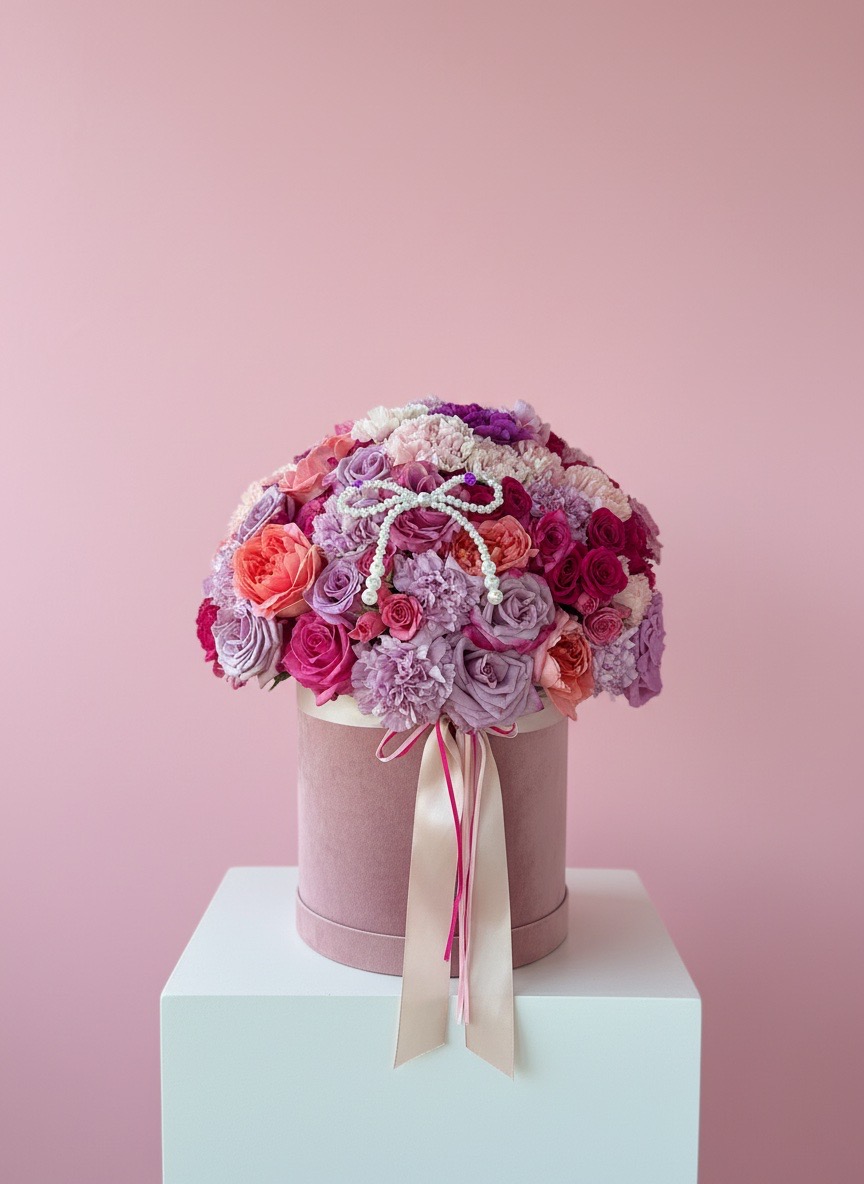
What "Heritage Florals" Means in the Atelier
Inside the atelier, heritage is not a mood. It is a sourcing discipline. A heritage composition uses varieties with a documented history — garden roses bred decades ago, lisianthus cultivated for its papery, peony-like bloom, dusty miller for its old-garden silver cast — rather than whatever hybrid happens to ship well that week.
This distinction matters because the market conflates "heritage" with "antique-looking." The two are not the same. A heritage arrangement can be structurally contemporary — architectural, asymmetric, built around negative space — while still drawing every stem from a lineage a client could trace if she asked.
We have found that clients planning in Lake Tahoe often arrive with a family connection to the region already in hand — a grandparent's cabin, a decades-old ceremony site — which makes the heritage conversation easier to start. The flowers are simply the part of the inheritance that gets to be touched.
The Victorian Language of Flowers, Reconsidered
Floriography — the Victorian practice of assigning meaning to individual blooms — is the most commonly cited heritage tradition, and the most commonly misapplied. Ivy meant fidelity. Myrtle meant marriage itself, carried by Queen Victoria and nearly every English royal bride since. Lavender meant devotion; clematis, mental beauty. The full vocabulary ran to hundreds of entries, cross-referenced in pocket dictionaries sold specifically for the purpose.
Reviving the entire system today is a costume, not a composition. What works is restraint: one stem chosen for its documented meaning, placed where it will be noticed by the person who knows to look for it. A single sprig of myrtle tucked against the handle. A ring of lavender at the base of a centerpiece, invisible in photographs, present at the table.
We treat this the way we treat any reinterpretation of vintage material — as a reference, not a script. The composition still has to hold its own silhouette. Symbolism earns its place in the arrangement; it does not replace the discipline of building one.
Varieties With a Past: Mondial, Vendela, Quicksand
Heritage is a claim that has to be backed by the stem itself, which is why variety names matter more in this work than almost any other decision. Mondial carries a dense, old-rose bloom structure that reads as formal without trying. Vendela, a creamy ivory-to-blush garden rose, has been a staple of European bridal work for long enough that its performance under heat and transport is well understood by growers. Quicksand, a muted taupe-rose variety, has become shorthand in the trade for the exact tone clients mean when they say "antique" without being able to name it.
Peony belongs in this conversation too, though its season is short and its heritage claim depends heavily on where it was grown. Clematis, used sparingly as a trailing element, references cottage-garden traditions older than most wedding customs currently in practice.
Knowing these names — and asking for them by name — is the single most practical thing a client can do to move a heritage conversation past vague reference.
The Case for the Rose That Keeps
The argument for heritage floral design is, at its center, an argument about permanence. A bouquet that lasts one evening is décor. A bouquet built with preservation in mind — pressed, dried, or cast — becomes an object the household keeps for generations, the way that 1958 bouquet survived in its shoebox.
Four methods dominate the practice. Pressing works best on flat-faced blooms and foliage — garden roses, clematis, eucalyptus — and produces the flattened, archival image most associated with heirloom keepsakes. Air-drying preserves dimensional form and suits lavender, roses, and dusty miller particularly well, though color shifts toward sepia over months. Freeze-drying is the most faithful to the original color and shape but requires specialized equipment and typically costs several hundred dollars more than air-drying for a full bridal bouquet. Resin casting locks the arrangement permanently but changes its texture entirely, trading softness for permanence in the most literal sense.
We raise preservation with every client who mentions heritage, because it reframes the entire design brief. The bouquet is no longer judged only by how it photographs at 4pm. It is judged by what it becomes at year ten. That shift in thinking is the one we return to in our longer account of composing for endurance.
From Archive to Arrangement: Our Process
A heritage brief begins the same way most of our work begins — with restraint. We ask for one reference, not a folder of them. A photograph. A single remembered variety. A story about where a family's flowers came from, if one exists.
From there the work is translation, not reproduction. We source the variety that matches the reference as closely as growers can supply it, then build a silhouette suited to the current ceremony — its light, its room, its number of guests — rather than the room the original photograph was taken in. The eleventh stem still ruins the composition, heritage or not; history is not an excuse for excess.
We document the sourcing decisions for every heritage commission — variety, grower, and the preservation method recommended for that specific bloom structure — so the client has a record to hand down with the flowers themselves. This is the part of the process we think of as closest to the atelier's broader relationship with impermanence: building something precise, knowing exactly how it will age, and choosing the materials accordingly.
Heritage Across the Table: Weddings, Galas, and Private Dinners
Heritage composition is not confined to the ceremony aisle. A gala table benefits from the same material discipline — heirloom varieties, documented symbolism used sparingly, an eye toward what guests will remember rather than only what they will photograph. A milestone anniversary dinner, built around flowers that echo the couple's original wedding varieties, carries weight that a generic centerpiece cannot.
We have built heritage-informed work for clients across San Francisco gala events and for private dinners in El Dorado Hills, where the brief is less about reviving a specific custom and more about carrying the same restraint into a different occasion entirely. The materials shift with the room. The discipline does not.
This is also where heritage work earns its keep commercially. A couple who preserved their wedding bouquet often returns for the fifth anniversary, the christening, the parents' fortieth — each occasion an opportunity to extend the same material language rather than starting from nothing.
Where Couples Go Wrong Chasing "Vintage" — And What To Do Instead
The most common mistake is treating heritage as a color story. Dusty rose, sage, and cream do not make an arrangement heritage; they make it a palette currently popular on wedding boards. Heritage is a claim about the stem's origin and the method of its preservation, not its hue.
The second mistake is mixing eras. A Victorian mourning-black ribbon tied around a 1970s macramé vessel, next to a modern geometric arch, reads as costume rather than inheritance. Pick one reference and let the rest of the design support it.
The third mistake is skipping the preservation conversation entirely, then regretting it eighteen months later when the bouquet has already been discarded. Our standing advice: decide on a preservation method before the wedding, not after, since pressing and freeze-drying both require the flowers within 24 to 48 hours of the ceremony to hold their color.
Clients working with our San Francisco wedding team are now asked about preservation during the first consultation, precisely because the window to do it well is so short.
A Quiet Closing
The bride with the shoebox photograph did not get a replica of her grandmother's bouquet. She got Mondial roses in a tighter, more architectural hand-tie, with a single sprig of myrtle against the ribbon, pressed four days later and framed by autumn. It will not look like 1958. It will last the same way.
Heritage, in the end, asks very little of a couple beyond specificity — one variety named correctly, one symbol chosen deliberately, one plan for what happens after the toasts end. The rest is restraint, which was always the discipline underneath the arrangement to begin with.
Considered
What are heritage wedding florals?
Heritage wedding florals are arrangements built from documented traditions rather than a loosely defined vintage look. This includes Victorian flower symbolism, heirloom rose varieties with traceable breeding lines, and preservation methods that let the bouquet outlive the day it was carried.
What is the Victorian language of flowers?
The Victorian language of flowers, or floriography, assigned specific meanings to individual blooms — ivy for fidelity, myrtle for marriage, lavender for devotion. Couples today borrow from it selectively, choosing two or three symbolic stems rather than reconstructing the full nineteenth-century vocabulary.
Which flowers are considered heirloom or heritage varieties?
Garden roses such as Mondial, Vendela, and Quicksand, along with lisianthus, peony, and clematis, are frequently cited as heritage varieties because their breeding lines and historical use in European and American garden traditions are well documented, unlike many modern hybrid cultivars.
Can a bridal bouquet be preserved after the wedding?
Yes. Pressing, air-drying, freeze-drying, and resin casting are the four common preservation methods. Each suits different stem types — garden roses and peonies press and dry well, while softer blooms like lisianthus are better candidates for freeze-drying to retain color.
How do I ask my florist for a heritage-inspired arrangement without it looking costumed?
Bring one or two specific references — a family photograph, a particular rose variety, a preservation method you want to use — rather than the word "vintage" alone. A considered florist will translate that single reference into a modern silhouette instead of layering on antique props.
Is heritage floral design only appropriate for traditional weddings?
No. The same principles — material history, restraint, preservation — apply to galas, milestone anniversaries, and private dinners. Heritage is a set of choices about composition and permanence, not a theme restricted to one type of ceremony.