Crafting Signature Florals: A Step-by-Step Guide to Bespoke Bouquets for Luxury Events
A client called in April for a June wedding, asking for a bouquet identical to one she had seen carried by a bride in Provence — full clematis, a trailing line, garden roses in a shade the photograph did not actually name correctly. She wanted it built in six weeks. The clematis alone, sourced properly, needed eight.
27 min read · Les Fleur Company
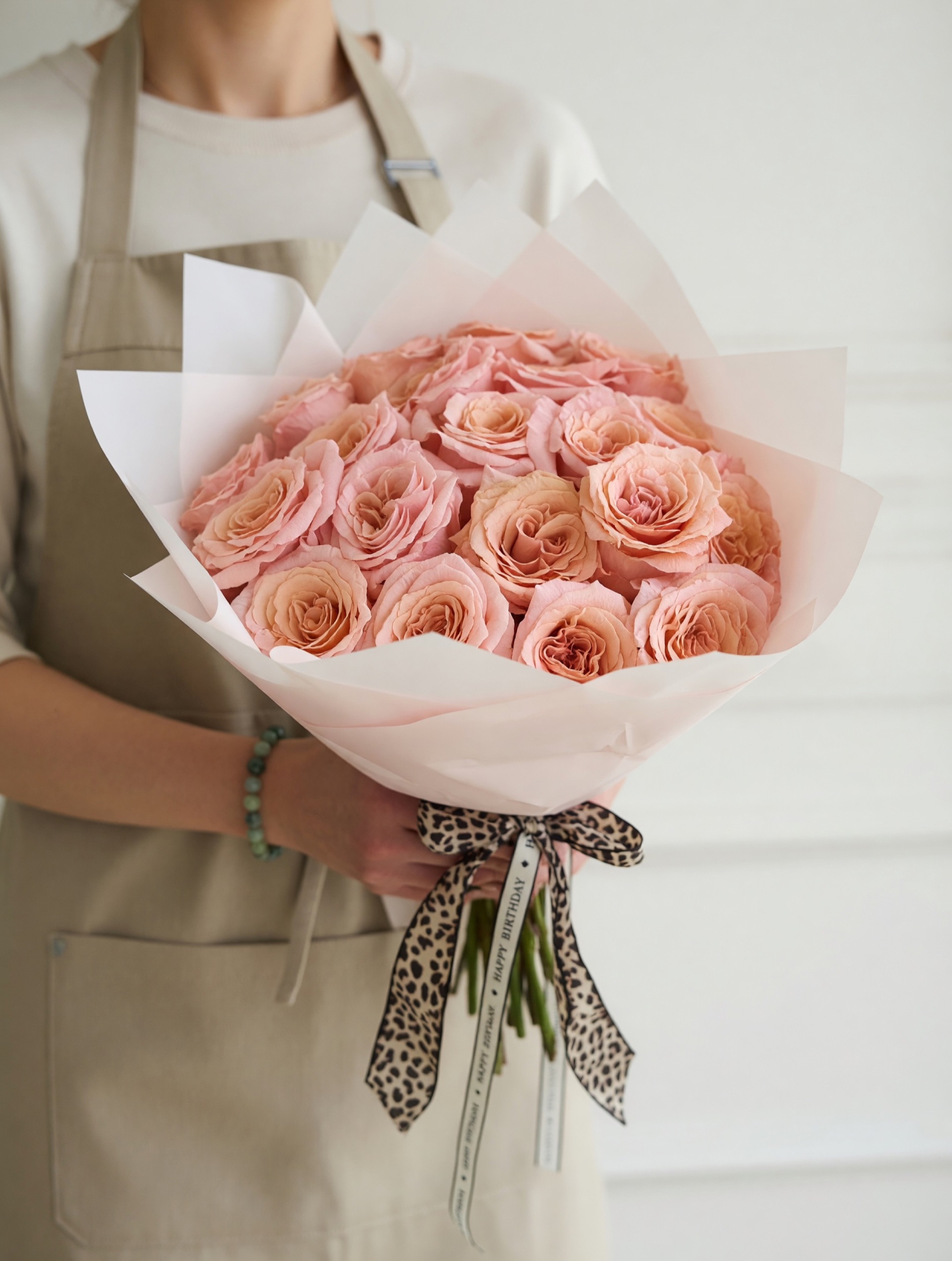
The Call That Comes Six Weeks Out
A client called in April for a June wedding, asking for a bouquet identical to one she had seen carried by a bride in Provence — full clematis, a trailing line, garden roses in a shade the photograph did not actually name correctly. She wanted it built in six weeks. The clematis alone, sourced properly, needed eight.
This is the call every atelier gets in some form, and the answer is never simply no. It is an explanation of what bespoke actually requires: time for sourcing, time for a mockup, and time for the hands doing the wiring to do it without rushing a stem that will be photographed for forty years.
What follows is the process itself, the one that runs behind a bespoke bouquet for a luxury event — not the finished object a guest sees carried down an aisle, but the six stages of work that produce it, with the real numbers attached to each.
What "Bespoke" Actually Means in the Atelier
Bespoke, in floral work, means the bouquet is designed against a specific person, dress, and venue — not selected from a lookbook and reproduced. It starts with measurements that have nothing to do with flowers: sleeve length, dress silhouette, hand size, and the color the photographer has flagged as difficult under the venue's particular light.
A catalog bouquet is built to a template and adjusted for availability. A bespoke bouquet is built in reverse — the client's specifics are fixed first, and the stem list is chosen to answer them. A bride with a fitted, unadorned gown generally needs a more structured, compact bouquet to avoid visual competition with the dress line; a bride in a fuller silhouette can carry a looser, trailing shape without it reading as excessive.
This is also where the atelier voice differs most from a retail floral order: the conversation about restraint happens before the invoice, not after. A client asking for six varieties is usually asking for the wrong thing — variety reads as busy, not considered, in a piece meant to be photographed for a lifetime and handled for one exhausting day.
The Consultation: Reading a Client Before Reading Flowers
The first meeting runs 60 to 90 minutes and produces almost no flowers at all — instead it produces a short, specific brief: three fabric swatches, two reference photographs (used to identify what the client actually likes, not to be copied), and a description of the hand carrying the bouquet through an eight-hour day.
Questions that matter more than color: Will the bouquet be set down during the ceremony? Does the reception include a bouquet toss, which changes the mechanics needed for a second, disposable piece? Is there a receiving line, meaning the bouquet gets held for two additional hours past the ceremony photographs?
Each answer changes a material decision. A bouquet set down and picked back up needs a stronger internal wire structure than one carried continuously. A bouquet held through a receiving line needs a hydration source built in, not just a wrapped stem end, because two extra hours without water shows in wilted petal edges by the reception's first toast.
The consultation closes with a written material list — not a mood board — naming exact stems and approximate counts, because vague language at this stage becomes an expensive miscommunication six months later.
Sourcing: The Stem List and the Lead Time
Sourcing is the stage clients see least and underestimate most. Named garden rose varieties — Mondial, Vendela, Quicksand — are grown to order at specific farms, and a request placed inside of six weeks often means settling for whatever is already in the general market pipeline rather than the exact variety requested.
Typical lead times, by material:
A bespoke commission ordered inside of four weeks of the event is, in practice, a request to substitute rather than source — the atelier can still build a considered piece, but the specific variety named in the consultation may not be the one that arrives. This is the single most common cause of disappointment in rushed commissions, and it is avoidable entirely by locking the material list 8 to 10 months out.
The Build: Structure, Focal, Filler in Practice
Construction follows the same three-role material logic as any composed arrangement: structure stems establish the outer line, focal stems carry the eye, and filler closes the gaps between them. In a hand-tied bouquet, this typically breaks down to 12 to 18 total stems for a compact design, or 24 to 30 for a fuller, trailing one.
The build itself proceeds in a fixed order: structure stems first, to set the silhouette and confirm the bouquet's final diameter before any focal bloom is added. Focal stems go in next, spaced with the negative space discussed in composition work generally — a garden rose crowded against another garden rose loses its individual shape entirely. Filler goes last, closing gaps rather than filling volume.
A build done out of order — filler first, focal added last to fit whatever space remains — is the fastest way to produce a bouquet that looks accidental rather than considered. The sequence matters as much as the material list.
Construction time for a compact 12 to 18 stem bouquet runs 2 to 3 hours; a fuller 24 to 30 stem piece with trailing elements runs 4 to 6 hours, largely due to the additional wiring needed to support a longer cascading line without drooping by the ceremony's second hour.
Mechanics That Hold: Wire, Tape, Water Sources
A bouquet that looks correct in the workroom at 8 a.m. and looks correct again at a 6 p.m. reception has internal mechanics doing quiet work the whole day. Stems that will bear weight or bend — clematis vine, top-heavy peony — get 22-gauge floral wire inserted along the natural stem line, taped over with waterproof floral tape to prevent the wire from showing or corroding against handling.
Hydration is handled through a taped, water-soaked cotton or a small hidden water tube at the base of the bound stems, refreshed once between the ceremony and reception if the timeline runs past four hours. Skipping this step is the single most common reason a bouquet photographs well at 10 a.m. and looks visibly wilted in the reception photographs eight hours later.
The stem wrap itself — ribbon, twine, or fabric pulled from the dress hem — is functional as well as decorative: it compresses the bound stems enough that the bouquet holds its shape under a tight grip through a full day of handshakes, hugs, and photographs, rather than loosening and splaying by the second hour.
The Timeline: From Order to Delivery
A realistic bespoke timeline runs on five checkpoints. At 8 to 10 months out: consultation and material list. At 6 to 8 weeks out: material list locked and grower orders confirmed. At 4 to 6 weeks out: mockup bouquet built and reviewed against the actual dress or a close substitute. At 1 week out: final stem confirmation with the grower or wholesaler. On delivery day: construction begins 12 to 18 hours before the ceremony, refrigerated, and delivered within 2 hours of first hold.
The mockup stage is the one clients most often try to skip to save cost, and it is the one that most reliably prevents a costly surprise — a bouquet that reads correctly on a stand in the workroom but overwhelms a narrow-shouldered dress, or a color that shifts under the venue's specific lighting. A 30-minute mockup review avoids a same-week rebuild that no atelier can absorb gracefully three weeks out.
Pricing the Bespoke Bouquet — Real Numbers
Bespoke bouquets generally price between $350 and $1,200, and the range is driven by labor and stem rarity far more than by visible size. A compact 12-stem bouquet built entirely of named garden rose varieties can run $600 to $900, while a larger 30-stem bouquet built on seasonal, market-available lisianthus and eucalyptus can come in under $400.
A rough cost breakdown for a mid-range $650 bouquet: 40 percent stem cost, 35 percent labor (construction, mechanics, consultation time), 15 percent mockup and revision, 10 percent delivery and day-of handling. Rush orders inside of four weeks typically carry a 15 to 25 percent premium, reflecting the sourcing risk the atelier absorbs to secure stems on short notice.
Clients budgeting for a full wedding party — bridal bouquet, 4 to 6 bridesmaid bouquets, 2 to 4 boutonnieres, a few corsages — should expect the full personal-flowers line to run $1,800 to $4,500 depending on party size and stem selection, a figure worth setting early so the bridal bouquet itself does not absorb the whole budget.
Common Mistakes in Bespoke Floral Commissions
The failures that recur most often in custom bouquet work are avoidable at the planning stage, not the workroom stage.
A Quiet Note to Close
The bouquet that photographs well at 10 a.m. and still holds its shape at the last dance is not the one with the most stems in it. It is the one built with the day's full length in mind — the wire no guest ever sees, the water source hidden under the ribbon, the eleventh variety left out because the tenth already said enough. That is the work behind the arrangement, and it is most of what an atelier actually does.
Considered
How long does it take to make a custom bridal bouquet?
Construction itself takes 3 to 6 hours per bouquet in an atelier, depending on stem count and mechanics. The full process — consultation, sourcing, mockup, and final build — spans 8 to 10 months from first meeting to delivery, driven mostly by lead times on specific stem varieties.
How much does a bespoke wedding bouquet cost?
Bespoke bouquets generally run $350 to $1,200, tracking labor and stem rarity rather than size. A compact bouquet built around rare garden rose varieties can cost more than a larger one built on seasonal, market-available filler.
What flowers are used in luxury bridal bouquets?
Garden roses (Mondial, Vendela, Quicksand), peony in season, and clematis serve as focal and structural stems; lisianthus, dusty miller, and lavender fill and texture the piece. The atelier typically limits a bouquet to three or four named varieties, not more.
When should I order a custom bouquet before my wedding?
Most ateliers ask for a consultation 8 to 10 months out and lock the final material list 6 to 8 weeks before the date, since specific garden rose varieties carry their own grower lead times and are not always available on short notice.
What is a mockup bouquet and do I need one?
A mockup is a trial build made 4 to 6 weeks before the event to test scale, weight, and color against the actual dress and lighting. It is not optional for a bespoke commission — it is the stage that catches a sizing or palette problem before the final flowers are cut.
Why do bespoke bouquets need internal wiring?
A hand-tied bouquet held for six or more hours through a ceremony, photographs, and a reception needs internal mechanics — wire support and a hydration source — to hold its shape and keep stems from wilting under handling. Without it, the bouquet degrades visibly by the reception.