Crafting Custom Floral Arrangements for an Atelier Wedding
A bride sat across the consultation table with forty Pinterest boards open on her laptop. Peonies from one wedding, a stone archway from another, a bridesmaid bouquet lifted from an entirely different season. None of it belonged in the same room. This is where most conversations about custom floral arrangements for weddings actually begin — not with inspiration, but with the work of narrowing it. Custom does not mean more references. It means fewer, chosen with discipline, and built into a single composition that can carry a room without shouting for attention.
28 min read · Les Fleur Company
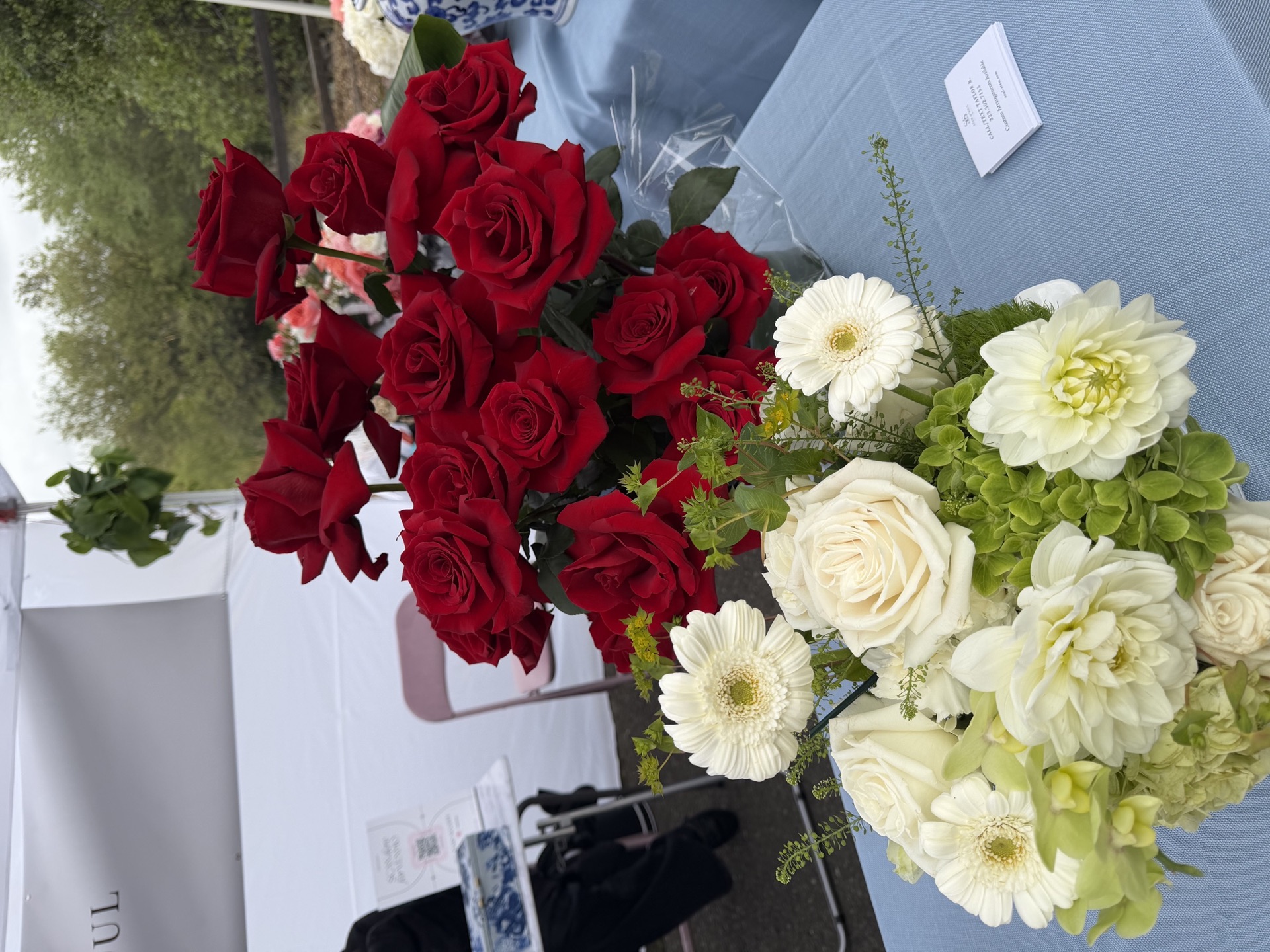
The Problem With a Forty-Board Mood Board
Couples arrive with abundance. Screenshots, magazine tears, a cousin's wedding from three years ago. The instinct is generous — they want the day to feel like everything they love. But a composition built from forty references has no spine. It reads as decoration rather than design.
The first job of an atelier consultation is subtraction. We ask which single image, if the couple could keep only one, they would choose. From there we build a silhouette — tall and airy, low and gathered, asymmetric and trailing — and every material decision afterward is tested against it. A garden rose earns its place only if it serves that silhouette; if it doesn't, it stays off the order.
This is uncomfortable for some clients at first. Saying no to a flower they love, because it fights the shape of the composition, can feel like a loss. In practice it is the opposite. A narrowed palette of three to five core varieties reads as considered. Ten varieties in one arrangement reads as unresolved, no matter how expensive each stem was. Our approach mirrors the thinking laid out in the essential elements of a timeless floral composition — restraint first, abundance second.
What "Custom" Actually Means Inside an Atelier
Custom is a process, not a catalog. It means the arrangement did not exist before the consultation and will not exist again after the wedding. That distinction matters because it changes how time gets spent.
A standard order — a dozen roses, arranged and delivered — takes perhaps twenty minutes of a designer's hands. A custom bridal bouquet, built to a specific silhouette with sourced garden rose varieties like Mondial or Quicksand, conditioned lisianthus, and trailing clematis, takes closer to two to three hours once sourcing, conditioning, and mechanics are counted. Multiply that across ten centerpieces, an arch, and a welcome installation, and the labor total for a single wedding can run past 150 person-hours.
That time buys specificity. The bridal bouquet's stem lengths are cut to the bride's own height and hand size. The arch mechanics are built to the exact dimensions of the ceremony structure, measured on-site or from architectural drawings, not estimated from a photo. This level of detail is what separates an atelier program from a rental-style order, and it's the reason a custom quote and a wholesale-flowers-plus-labor estimate rarely land on the same number.
The Design Principles That Hold a Composition Together
Composition is discipline applied to material. The most common failure in wedding florals isn't a bad flower choice — it's excess. An arrangement built for a sweetheart table can hold ten stems of focal bloom comfortably; the eleventh stem, added because it was available or because the client asked for "a little more," is usually the one that ruins the silhouette.
Negative space does real work here. A composition with visible air between stems reads as intentional. One packed edge-to-edge with bloom reads as anxious — as though the arrangement doesn't trust itself to be seen. We train designers to build the frame first: the line work of eucalyptus or dusty miller that establishes height and movement, then the focal blooms placed with deliberate gaps, then the smallest accent stems added last and sparingly.
Color follows the same logic. A palette built around two or three tones, with texture doing the rest of the work, holds up better across a ten-hour wedding day and shifting light than a palette built around six competing hues. We walk through this in more depth in our piece on color theory in wedding floral composition, but the short version is this: restraint reads as intention, and intention is what a guest remembers, even if they can't say why.
Reading the Room: Venue, Season, and Light
A composition that looks correct in a photo studio can fail entirely inside a venue. Light, architecture, and existing material in the room all change what a floral arrangement needs to do.
A ceremony at Lake Tahoe, framed by granite and pine, calls for a different material language than a ballroom reception in downtown San Francisco. The mountain setting already carries texture and scale; an arrangement there benefits from restraint and natural line — garden foliage, unstructured movement, fewer hard edges. A ballroom with gilt trim and low ceilings can support denser, more architectural centerpieces because the room itself is already ornamented and needs the florals to hold their own visually.
Season narrows the material list further before color ever enters the conversation. A late-October wedding won't have peony available at any price worth paying; a designer who insists otherwise is selling a fantasy, not a flower. Better to build the palette around what late-season dahlia, garden rose, and lisianthus can actually deliver, and let color follow material rather than the reverse. Venue walkthroughs — ideally scheduled 3 to 4 months before the wedding — let a designer measure light direction, ceiling height, and existing fixtures before finalizing the order.
The Process, Start to Finish
A serious atelier program follows a fairly fixed timeline. Understanding it helps a couple know what to expect and when.
The gap between "design concept" and "final stem count" — often four months — is intentional. It gives the studio time to confirm seasonal availability with growers rather than promising a flower that may not exist in the right quality that week. For an inside look at how this unfolds in practice, our behind-the-scenes guide to bespoke arrangements walks through a single wedding order from consultation to strike.
Material Selection and Sourcing
Custom work depends on being specific about variety, not just flower type. "Garden rose" is a category; Mondial, Vendela, and Quicksand are decisions, each with a different bloom size, petal count, and color drift as it opens. A designer who can name the variety on the order form is a designer who has thought about how that stem will behave three days after it's cut.
Sourcing runs through a mix of channels — direct grower relationships for garden rose and peony, wholesale auction flowers for volume items like eucalyptus and dusty miller, and local growers when the season allows for lavender or clematis grown within driving distance. Each channel has a different lead time; grower-direct orders for a specific rose variety often need to be placed 3–4 weeks ahead, while wholesale volume stems can be ordered within a week of the event.
Conditioning is where a lot of unseen labor lives. Stems arrive dry-packed from distant farms and need 24–48 hours of hydration in cool, clean water before they're workable. Garden roses in particular are prone to bent-neck if rushed through this stage. A studio that skips proper conditioning to save a day of turnaround is the same studio whose centerpieces wilt by hour six of the reception — a detail the postharvest research from university extension programs backs up consistently: hydration protocol affects vase life more than almost any other single factor.
Budget, Stem Counts, and the Math Behind a Quote
Couples are often surprised that labor, not flowers, is the larger line on a full-service quote. On a program that includes an installation — an arch, a hanging piece, a large-format welcome arrangement — labor commonly runs 40–60% of the total, covering design time, conditioning, mechanics construction, delivery, installation, and strike at the end of the night.
A useful way to think about budget is per-guest-table cost rather than per-stem cost. A centerpiece built around 15–25 stems of mixed focal and textural material, plus greenery, typically lands in a mid-range price point once labor and mechanics are included — but that number swings widely with container choice, install height, and whether the arrangement needs to survive a full outdoor day in heat.
Full-service wedding floral budgets, across the range of scale we see, generally fall between roughly 8% and 12% of total wedding spend for couples prioritizing florals as a design pillar rather than an afterthought. Within that, an arch or ceremony installation alone can represent 15–25% of the floral budget on its own, simply because of the structural mechanics required to make it safe and photograph well from every angle.
Common Mistakes Couples Make
A few patterns show up often enough to be worth naming plainly.
The fix for most of these is the same: bring the florist in early, and let the venue and season set the boundaries before the mood board does.
What the Client Never Sees
The visible arrangement is the smallest part of the work. Behind it sits chicken wire and pin-frog mechanics built into the container days ahead, taped grids for volume, and — for anything foam-free, which most serious ateliers now prefer for both longevity and environmental reasons — a structural cage the flowers are set into rather than simply arranged.
An arch installation might take two designers six hours to build in the studio, then another ninety minutes to install on-site, secured with weighted bases and rigging tested for wind. A hanging installation over a dinner table adds a rigging conversation with the venue's facilities team weeks in advance, because weight limits on old plaster ceilings are not negotiable after the fact.
None of this shows up in a photograph. What shows up is a room that feels resolved — flowers that seem to belong exactly where they're standing, doing their work without asking to be looked at. That is the actual measure of a successful composition, more than any single bloom in it.
Working With Your Florist — A Timeline for Booking
If a wedding date is set, the concrete next step is straightforward: reach out to a florist 9–12 months ahead, particularly for a Saturday in May, June, September, or October, when atelier studios booking one wedding per weekend fill first. Bring venue details if they're confirmed, and a single reference image if one exists — not forty.
Expect a deposit to hold the date, a design consultation 6 months out, and a final walkthrough with stem counts locked 6–8 weeks before the wedding. Studios serving El Dorado Hills and the surrounding region often coordinate venue site visits directly with the property, which is worth requesting if it isn't offered.
A composition, in the end, is a set of decisions made early and held to under pressure on the day itself. The flowers are simply where those decisions become visible.
Considered
How far in advance should I book a florist for a wedding?
Most atelier studios that take one wedding per weekend book 9–12 months out, with peak months (May, June, September, October) filling first. A deposit — typically 25–50% — secures the date; final stem counts and design details are usually locked 6–8 weeks before the event.
What makes floral arrangements 'custom' rather than off-the-shelf?
Custom work is built from a consultation-driven silhouette and material list specific to the couple's venue, season, and scale — not chosen from a fixed catalog. It includes bespoke mechanics (chicken wire, pin frogs, foam-free structures), sourced varieties, and a design that accounts for the room's light and architecture.
How many flower varieties should a wedding composition use?
Three to five core varieties, with one or two supporting textures, generally reads more cohesive than ten. Restraint in variety count is what allows a composition to hold its silhouette rather than looking assembled from a mixed bouquet.
What percentage of a wedding floral budget goes to labor versus flowers?
On a full-service program with installations, labor commonly accounts for 40–60% of the total quote, covering conditioning, mechanics building, transport, installation, and strike. Flowers and hard goods make up the remainder — a reason itemized quotes rarely match a per-stem price found online.
Should I choose my wedding venue or my florist first?
Venue first. Light, architecture, and existing color (stone, wood, brass fixtures) determine what a floral composition needs to do in the room. A florist can then design around fixed elements rather than fighting them.
How do florists preserve flowers so they last through a full wedding day?
Proper hydration and cool conditioning 24–48 hours before the event, correct stem cuts, and clean water with floral preservative extend vase life. Garden roses and lisianthus in particular benefit from a slow hydration period before transport and installation.