The Art of Impermanence in Floral Atelier Design
A bride called the studio on a Monday, two days after her wedding, to ask why the garden roses on her arch had already browned at the edges by the time her photographer caught the last dance. It is a fair question, and an uncomfortable one for anyone selling flowers to answer honestly. The truth is that nothing in the arrangement was meant to survive the week. Impermanence in floral design is not a flaw the industry quietly manages around — it is the premise the entire craft is built on. An atelier does not fight the fact that a peony opens and falls within days. It designs around the exact hours that matter and treats everything else as outside the brief.
30 min read · Les Fleur Company
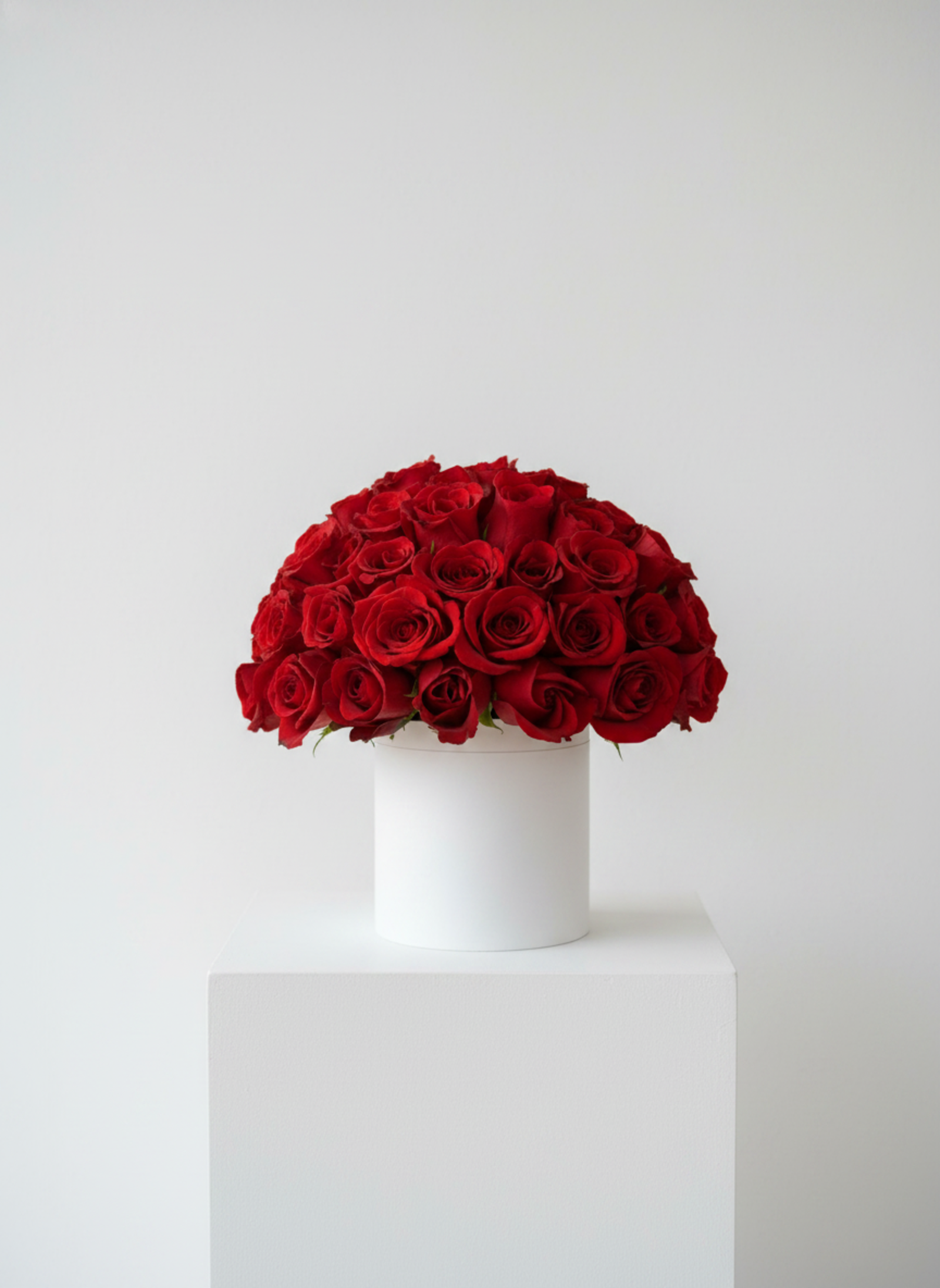
The Flower That Will Not Keep
Cut flowers begin dying the moment the stem separates from the root system. There is no conditioning technique, no additive, no cooler setting that reverses this. What conditioning does — and does well — is control the rate. A garden rose such as Mondial or Quicksand will typically move from tight bud to full, loose bloom within 24 to 36 hours once it reaches room temperature. Peony follows a similar arc, often faster in warm rooms. This is not a defect to manage away. It is a clock the designer is working against and with, simultaneously.
Most clients assume flowers are purchased, then simply last or do not. In practice, an atelier is running a timed production: stems are sourced on a schedule that accounts for transit days, conditioning hours, and design time, all calculated backward from a single fixed hour — the ceremony processional, the gala entrance, the dinner's first course. Miss that math by even a day and the composition the client approved in the mockup is not the composition they see.
We've learned to say this plainly to clients rather than let them discover it on their own. An arrangement delivered Friday for a Saturday wedding is not failing if it looks fuller and looser by Sunday. It was built to peak Saturday afternoon. The work succeeded exactly as designed, and the client's expectations were calibrated in the proposal meeting, not left to chance on the day.
What Decay Teaches the Hand
Working daily with material that is actively changing shape teaches a different kind of attention than working with anything static. A designer conditioning three hundred stems for a Saturday wedding is not simply arranging flowers — they are reading each stem's particular rate of change and placing it accordingly. A dusty miller, which holds its silvered leaf for a week or more, can sit at the base of a composition and do quiet structural work for days. A garden rose at full bloom, by contrast, needs to land where its openness is the intended effect, not an accident discovered two hours before guests arrive.
This is a skill built through repetition and loss, not instruction. Our own design team learned to recognize a bent neck — the collapse of a rose's head on its stem from a cell-wall failure near the bloom — by ruining enough stems to know the warning signs: a slight softening at the base of the head, a stem that no longer snaps but bends. Catching it at intake rather than at the venue is the difference between discarding one stem and rebuilding a quarter of a composition the morning of an event.
The studio's approach to this process is detailed further in our piece on the behind-the-scenes work of bespoke floral arrangements, which walks through how a design team reads material before it ever reaches the table.
The Life Cycle of a Stem: Hours, Not Days
Every stem that enters the atelier carries a working lifespan measured in hours, and that number changes the entire production schedule. Lisianthus, prized for resembling a rose while holding considerably longer, can remain presentable for 10 to 14 days under good conditions — a rarity among the materials we favor. Garden roses, by contrast, are closer to 5 to 7 days total, with perhaps 36 hours at the bloom stage most clients picture when they approve a proposal. Peony sits even tighter, often fully open and past its ideal stage within 3 to 4 days of cutting.
This means a single centerpiece can contain materials with wildly different clocks running simultaneously. A designer builds in buffer by choosing which flower carries the visual weight of the piece at its peak hour and which flowers are structural, filling space without needing to be perfect at any single moment.
A rough breakdown we use internally when scheduling a wedding week:
Getting this sequence wrong is the single most common cause of an arrangement that looks wrong on the day — not poor design, but poor timing against material that was never going to wait.
Composing for the Hour It Will Be Seen
Every proposal begins with a single question that has nothing to do with color or flower choice: what hour does this need to be correct for. A ceremony arch needs to hold its shape for perhaps 45 minutes before it is dismantled. A reception centerpiece needs to hold through a four-hour dinner under warm string lighting, which accelerates bloom considerably faster than the cool chapel air the arch sat in that morning. These are different design problems even when the flowers are identical.
Our design team builds a written timeline for every wedding that functions less like a delivery schedule and more like a call sheet — because that is closer to what it is. It notes not just drop-off times but the specific hour each piece needs to look its best, and works backward from there to determine when each material is cut, conditioned, and assembled.
The same discipline shows up in our work outside weddings — galas, anniversaries, landmark dinners — where the single-night nature of the event makes the hour-by-hour thinking even more pronounced. We've written about how this translates across occasion types in our piece on floral design beyond weddings, which covers how a one-night event changes the calculus entirely compared to a wedding weekend that needs to hold across two or three days.
The Discipline of Letting Go
Composition and impermanence share an uncomfortable overlap: both are disciplines of restraint. A designer who cannot accept that a flower will fall tends to overcompensate by overfilling an arrangement, packing in extra stems as insurance against the inevitable softening of a few. The result is usually worse, not safer. An arrangement with eleven stems where nine were called for does not read as fuller — it reads as crowded, and it ages worse, because more material means more surface competing for the same water and light.
The restraint we apply to negative space in a composition — leaving room around a central bloom rather than packing it tight — turns out to be the same restraint that extends an arrangement's working life. Stems with room to breathe condition more evenly, open more predictably, and hold their individual shape longer than stems crushed against their neighbors. The discipline that makes a composition look considered is frequently the same discipline that makes it last the length of the event.
This connects directly to principles we've laid out in our guide to the essential elements of a timeless floral composition — silhouette and restraint are not aesthetic preferences alone. They are, in a very literal sense, a lifespan decision made at the design table.
Materials Chosen for Their Particular Impermanence
Not every flower decays the same way, and knowing the particular failure mode of each material is as important as knowing its color or form. Garden roses tend to fail gracefully, their outer petals loosening and softening in a way that can still photograph well for a day past peak. Clematis, with its papery petal structure, fails less gracefully — it bruises visibly and will not recover from rough handling, which means it is placed where it will not be brushed against during setup.
Lavender, used sparingly for scent and texture rather than volume, dries in place rather than wilting, which makes it one of the few materials in a composition that genuinely improves with a few days' age rather than declining. Eucalyptus behaves similarly, which is why it so often forms the structural base of an arrangement meant to be built a day or two ahead of other elements.
A short list of how we think about material by failure mode:
Knowing this list by instinct, not reference, is a large part of what separates a design team with ten years of daily handling from one with two.
The Practical Mechanics: Conditioning, Hydration, Temperature
The craft behind impermanence is mostly unglamorous mechanics, performed the same way every time because the margin for error is thin. Stems arrive from growers wrapped and often dehydrated from transit. The first step is always a fresh cut, typically at a 45-degree angle, to open fresh vascular tissue for water uptake — a cut made days earlier will have already sealed itself with a thin film that blocks hydration. Lower foliage is stripped to reduce bacterial load in the water, since foliage left below the waterline is the single fastest route to a cloudy vase and a stem that declines early.
Stems then condition in a cooler held between 36 and 38 degrees for a minimum of four hours, often overnight, before any design work begins. Skipping this step to save time is the most common shortcut that leads to visible wilting within hours of an event starting — the industry euphemism for it is simply saying a flower "didn't hold," when the real cause was almost always insufficient conditioning time before the stem was asked to perform.
Across a typical wedding week, we expect to discard roughly 8 to 12 percent of incoming stems at intake — bent necks, bruised petals, blooms that opened in transit faster than the schedule allowed for. That percentage is built into sourcing and pricing from the start rather than treated as a surprise, because pretending flowers arrive perfect is its own kind of dishonesty with the client.
What the Client Pays For When They Pay For Flowers That Die
It is worth saying directly: a client commissioning a wedding composition is not purchasing an object meant to endure. They are commissioning labor, timing, and material sourced and handled with enough precision that a specific set of hours looks exactly as intended. The expense reflects a production schedule as much as it reflects the cost of the stems themselves — sourcing from specific growers for Mondial roses or particular lisianthus varieties, conditioning hours, design labor, delivery logistics timed to the minute.
We've found that clients who understand this upfront have a far better experience than clients who assume they are buying something meant to last. A conversation at the proposal stage about exactly how long a piece is built to hold — and why — prevents the Monday-morning phone call about edges browning two days after the fact. It reframes the purchase correctly: not an object, but a performance with a defined run.
This is, in a sense, the atelier's version of a service business built on perishable inventory and fixed deadlines — closer in structure to catering or live event production than to retail. Every studio that works this way eventually builds its own internal language for managing it, which we touch on in our piece on atelier workspace design, covering how the physical space itself is organized around these timing constraints.
The Case for Returning Again
Clients who commission one composition for one occasion often return for another — an anniversary, a gala, a landmark dinner marking a decade since the wedding itself. What brings them back is rarely the memory of flowers that lasted. It is the memory of flowers that were exactly right for a single afternoon, and the trust that the next occasion will receive the same precision.
This is the quieter argument for impermanence as a discipline rather than a limitation: an atelier that designs honestly for the hour in front of it builds a different kind of relationship with a client than one promising durability it cannot deliver. The work does not ask to be remembered for how long it held. It asks to have been correct, once, for the moment it existed to serve.
Our approach to this craft and process is detailed more broadly in our piece on the atelier's approach to curated floral arrangements, which covers how this philosophy carries from a single wedding composition through to a studio's full body of work.
The roses will not keep. They were never meant to.
Considered
How long do wedding flower arrangements actually last?
Most cut-flower arrangements hold their intended form for 24 to 72 hours, depending on the stem. Garden roses and peonies move fastest, often peaking within a day of opening, while lisianthus and eucalyptus hold longer. An atelier times the build so peak form lands on the event itself, not before it.
Why do florists only cut flowers a day or two before the event?
Cutting and conditioning close to the event date keeps stems in the stage of bloom the designer intends for the client to see. Flowers conditioned too early open, droop, or brown before the occasion arrives, which is why atelier timelines work backward from the event hour.
What does conditioning flowers mean?
Conditioning is the process of cutting stems at an angle, stripping lower foliage, and holding them in cold, clean water — typically 36 to 38 degrees — for several hours before design work begins. It determines how well a stem will hold water, shape, and color through the life of the arrangement.
Why do some flowers wilt faster than others in the same arrangement?
Stems differ in cell structure and water demand. A garden rose with a heavy, multi-petaled head often wilts before a clematis or dusty miller because it is carrying more weight on a softer stem. Designers account for this by placing fast-moving stems where early softening will not be noticed.
Is it wasteful to spend on flowers that die within days?
The expense reflects labor, sourcing, and precision timing more than the flower itself. A composition built to hold its exact form for a specific hour — a ceremony, a reception entrance — is closer to a performance than a purchase, and the cost accounts for that precision.
How far in advance should a wedding floral order be placed?
Most ateliers ask for a signed proposal 6 to 12 months ahead for weddings, with final stem counts and sourcing locked 3 to 4 weeks out. The flowers themselves are not cut or conditioned until the final 48 to 72 hours before the event.