Why a Wedding Bouquet Should Be Quiet — Notes on Holding Back
A bride arrives for her final fitting with photographs pulled from three years of saved images. She has found nineteen examples and described them all with the same word: romantic. The bouquets in those photographs span a wide range — some are loose and garden-style, some are tightly composed rounds, some trail clematis nearly to the floor. What she has responded to in each of them, though she has not yet articulated it, is not the flower count. It is the restraint. The arrangements that read as romantic in every one of those photographs are the ones that held back.
28 min read · Les Fleur Company
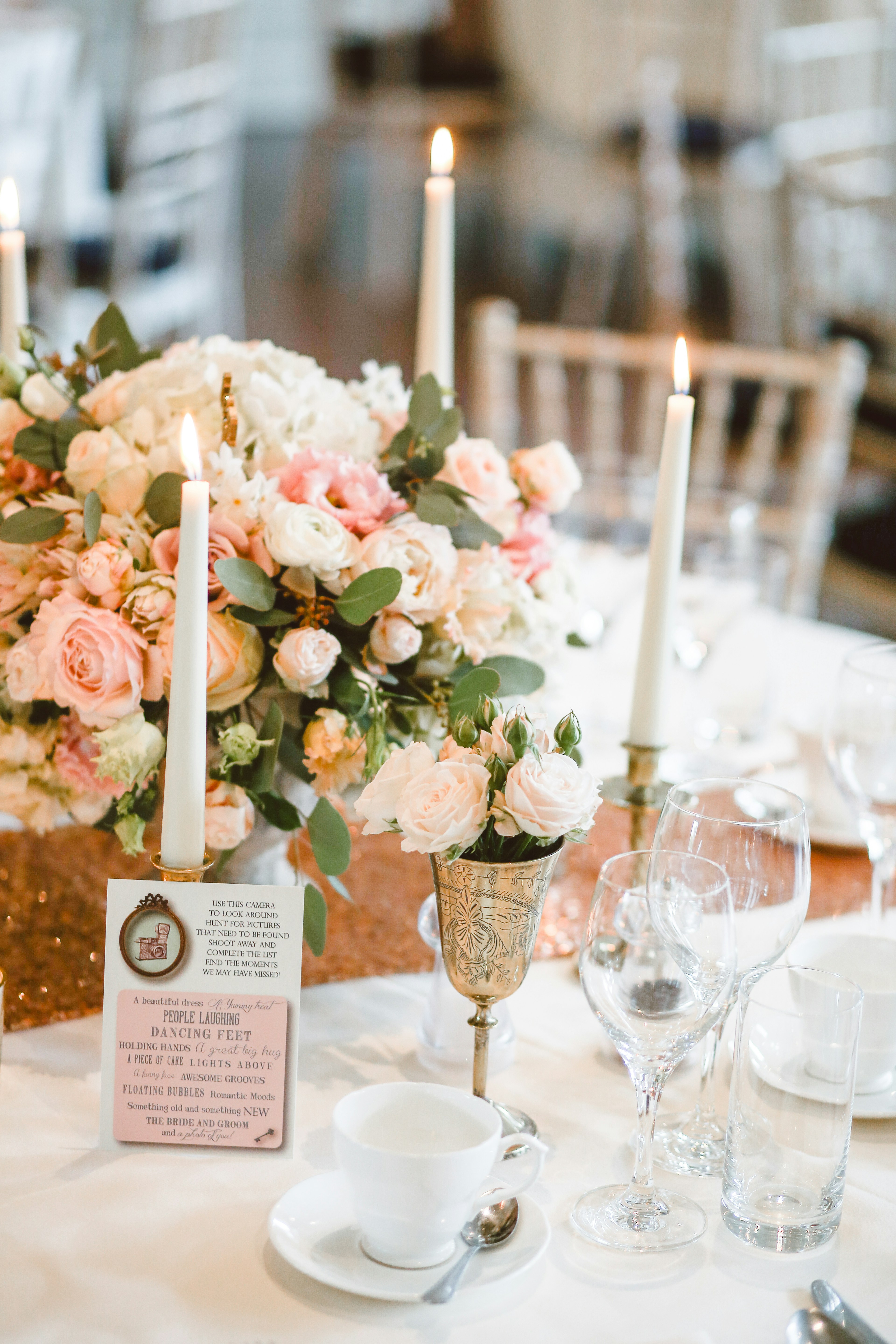
The Composition Problem at the Center of a Bridal Bouquet
A wedding bouquet is a composition problem before it is anything else. It is an object that will be held at the center of a photograph for twelve to fourteen hours. It will be seen from the front, from the side, at waist height against a dress, from forty feet away down a ceremony aisle. It will be photographed in morning light, in the shade of a reception garden, in the flat interior light of a hall. Whatever it looks like in those conditions — cluttered or composed, heavy or held — is what it will look like in every photograph of that day for the rest of the couple's lives.
This is a specific brief. It asks for an arrangement that reads clearly from a distance, that has one dominant element the eye can find, that does not fracture into a dozen competing flowers when compressed into a two-dimensional image. It asks the florist to make decisions the client may not know to ask for. It asks for quiet.
The mistake most often made is treating the bouquet as a curation problem — which beautiful things to include — rather than a composition problem, which asks the harder question: which beautiful things, removed, would make the remaining ones read better.
Why a Wedding Bouquet Should Be Quiet — What the Word Actually Means
Quiet in composition is not a synonym for small, restrained in color, or minimal in the design-school sense. A quiet wedding bouquet can be a full garden-style arrangement with 24 stems. It can carry garden roses, dusty miller, lisianthus, and trailing clematis. What makes it quiet is not the count — it is the discipline in the selection. Every stem is present for a specific reason. Nothing is competing for the position of primary element. The eye enters the arrangement, finds the focal flower, and rests. There is nowhere else it needs to go.
The loud bouquet works by a different logic. Multiple flowers of similar visual weight, each bidding for the position of focal element: the spray rose and the garden rose and the ranunculus and the anemone and the dusty miller and the eucalyptus trailing from the stem ends and the ribbon tied in a bow. Each of those elements is individually considered. Together they produce visual noise. The photograph reads as flowers — as abundance — without reading as an arrangement. The arrangement tells the viewer that many things were present on that day. It does not tell the viewer what to look at.
The case for a quiet wedding bouquet is the case for being seen rather than noticed. The bouquet that holds back gives the person carrying it the room to be the subject of the photograph. The bouquet that does not hold back becomes the subject instead.
Scale, Proportion, and the Silhouette of the Dress
The most common scale failure in wedding bouquet design is not that the flowers are wrong. It is that the bouquet is wrong in proportion to the person holding it and the dress she is wearing. A bouquet that looks generous and well-made on the worktable can read as overpowering against a fitted crepe gown; the same arrangement can disappear against a full ballgown skirt. Scale is always relative, and the relative here is the dress.
The working standard for a round bouquet is 9 to 11 inches in diameter for most silhouettes. Fitted gowns — column, sheath, slip — tend toward 9 to 10 inches; the bouquet finishes the look without competing with the clean line of the dress. Full skirts can carry more width. But these numbers are the start of the conversation, not the answer to it. The real question is whether the bouquet reads as completing the look or as competing with it. When guests comment on the flowers before the dress, the proportion is wrong.
At 12 inches or more in diameter, a round bouquet begins to obscure the waistline of most silhouettes and to compete with the face in photographs taken from the front. It also becomes physically heavy. An arrangement of 22 to 24 full-headed garden roses with light foliage weighs approximately 1 to 1.5 pounds — holdable comfortably through a 45-minute ceremony without fatigue, held naturally at the correct angle. A bouquet exceeding 2 pounds changes how the bride holds it. The arms come up slightly to manage the weight. The posture shifts. The composition in the photograph shifts with it, and the dress — the thing the photograph is supposed to document — disappears behind the effort of holding the flowers.
The bouquet's job is to finish the look. When it requires management, it has stopped doing that job and started asking for attention.
The Case for Three Varieties — Rarely Four, Never Six
The most reliable single principle in wedding bouquet composition: choose three varieties and hold to them. Four is acceptable when the fourth element is clearly subordinate — a trailing vine, a single foliage variety, something that reads as background. Five begins to fracture the hierarchy. Six is almost never resolved in a way that reads as intentional in a photograph.
The discipline is not aesthetic minimalism. It is compositional logic. When there are too many elements at similar visual weight, the eye does not rest — it scans. The photograph reads as abundance without reading as intention. The viewer understands that the arrangement contains many different flowers, but does not understand the arrangement.
Three varieties creates a clear hierarchy. The primary flower — a garden rose like Quicksand or Vendela, a full-headed peony, a lisianthus in full bloom — establishes the tone and the color. It should account for approximately 40 to 50 percent of the stem count, which means it is present enough to be the thing the eye finds first and returns to. The secondary element — dusty miller, a softer lisianthus bud, a low-profile foliage — provides texture and allows the primary to read with more depth against it. The accent or trailing element gives the silhouette its character: a length of clematis vine, a single trailing stem, an irregular foliage that breaks the edge of the round.
A Quicksand rose bouquet with dusty miller and three stems of trailing clematis is not spare. It is specific. It reads as a decision. The specificity is what gives it presence in a photograph rather than simply giving it flowers.
Silhouette — The Shape Before the Flowers
The silhouette of a wedding bouquet is a separate compositional decision from the flower selection, and it receives less deliberate attention than it deserves. The silhouette is what the arrangement looks like from ten feet away, in profile, in the wide ceremony shot where the faces are small and the shapes are what register. It is the first thing the photograph reads before it reads anything about the flowers.
A tight round bouquet has one silhouette: circular, uniform, closed at the edge. It photographs consistently from every angle and reads cleanly at distance. It is a resolved compositional shape — the eye does not have to work to understand the form. The risk is that without a distinctive primary flower, the resolved shape absorbs the variety. The composition becomes a round shape full of flowers rather than a round shape built around a specific rose.
A garden-style bouquet has an irregular silhouette — stems at varied lengths, some foliage breaking the edge, an overall form that reads as gathered rather than constructed. The risk here is the opposite: without discipline, the irregular silhouette becomes simply unresolved. The stems that break the edge of the arrangement should break it intentionally, at specific points, for a specific reason. A stem that is longer than the others because it was not cut shorter is not a compositional choice. It is a mistake that has been kept.
Both silhouettes can carry a wedding. Neither is inherently more suited to the occasion. The question is whether the silhouette was decided before construction began — which makes it a compositional choice — or whether it arrived by accumulation, which makes it something that happened.
Negative Space in a Bridal Bouquet
Negative space is the area in a composition where there is nothing. In painting and photography it is understood as an active element — the space that gives the positive element room to be read. In floral design, and particularly in bouquet construction, it tends to be treated as waste: empty area to be filled, space that indicates the arrangement is not yet finished.
In a wedding bouquet, negative space is most usable at the silhouette edge and between the primary bloom heads. A single stem of lisianthus that extends slightly beyond the body of the arrangement, with open air beside it before the next stem arrives, is doing compositional work. It gives the silhouette a point of entry. It signals that the edge was considered. The space is not absence — it is part of the arrangement's shape.
Between bloom heads, negative space allows each rose to read as its own form rather than as part of an undifferentiated mass. Two Quicksand roses placed with an inch and a half of space between their heads read as two roses. Two Quicksand roses pressed together read as a pink area. The distinction matters in a photograph, where the compression of the lens already removes depth and flattens the distance between stems. Space that seems generous on the worktable often reads correctly at scale.
The impulse in bouquet construction is to fill. An open area in the arrangement reads as incompleteness, as something missing. The discipline is recognizing that the arrangement resolved itself ten minutes before the last stem was added — and that what reads as incompleteness at the worktable is often exactly the breathing room the composition needed.
The Edit — The Last Act of Composition
The final act of composing a wedding bouquet is not the selection of materials and not the construction of the arrangement. It is the edit: the deliberate removal of stems until the composition reads better than it did with them in it. This is the stage that most separates a composed bouquet from an assembled one, and it is the stage most frequently skipped.
The edit asks a specific question: which stem, if removed, would allow the remaining stems to read more clearly? This is different from asking which stem could be removed without the arrangement failing. The first question is compositional — it assumes the arrangement is already functional and asks what would make it better. The second question is correctional — it assumes the arrangement needs to be defended against removal. A composed bouquet is edited from the first position, not the second.
The principle of compositional discipline that applies here is consistent across design practices: the eleventh stem is always the one that looked right at the worktable and reads as noise in the photograph. It is the fourth variety added after the composition was already resolved. It is the trailing ribbon that competes with the clematis for the eye's movement through the lower half of the arrangement. It is the extra ranunculus that pushed the stem count past the point where the primary rose could hold authority over the piece.
Before a bouquet is wrapped and handed to the client, the right question is not: is anything missing? It is: is there anything here that is not pulling its compositional weight? The answer, in most cases, is that there is one stem — sometimes two — that would leave the arrangement better by their absence. Finding and removing that stem is the last act of making the piece.
A bouquet that has been edited down to its correct count reads differently in photographs than one that has not. It reads as a decision. The flowers that remain read as chosen rather than gathered. The person holding it has room to be the subject of the photograph rather than competing with the arrangement for that position.
This is, finally, what the quiet bouquet is for. Not to disappear, but to hold back just enough that the person carrying it is the thing that is seen.
Considered
How many flowers should be in a wedding bouquet?
Twenty to twenty-four stems of full-headed garden roses or peonies is enough for a generously proportioned round bouquet. Beyond thirty-five stems across multiple varieties, compositions begin to lose their dominant focal element and read as abundant rather than intentional. Stem count matters less than material selection: three varieties at twenty-two stems will photograph more clearly than seven varieties at forty.
What size should a wedding bouquet be?
A round bouquet between 9 and 11 inches in diameter works for most dress silhouettes and most body proportions. Fitted gowns tend toward the smaller end of that range; fuller skirts can carry slightly more width. Beyond 12 inches, the bouquet begins to obscure the waistline, competes with the face in photographs, and typically exceeds 2 pounds — heavy enough to alter how it is held across a 45-minute ceremony.
What flowers make the best wedding bouquet?
Garden roses — Quicksand, Vendela, Juliet — are among the most reliable choices: they hold their form across a long day, read clearly in photographs, and carry the color without competing with each other. Lisianthus in ivory or pale rose provides volume without heaviness. Dusty miller grounds a warm palette. The best bouquet is defined by variety discipline — three materials that have a clear relationship to each other — more than by any single flower choice.
Why does my wedding bouquet look cluttered in photos?
Clutter in bouquet photographs almost always comes from too many competing focal elements at similar stem heights. When three or more different flowers of similar bloom size are placed at the same level in the arrangement, the eye scans without resting. The fix is hierarchy: one dominant flower at 40 to 50 percent of the stem count, positioned consistently at the top of the arrangement, with supporting materials receding beneath or around it.
What is the difference between a round bouquet and a garden-style bouquet?
A round bouquet has a uniform circular silhouette with stems cut to a consistent radius — it photographs cleanly from every angle and reads clearly at distance. A garden-style bouquet has an irregular silhouette with stems at varied lengths, some foliage breaking the edge, an overall form that reads as gathered rather than constructed. Both can be quiet compositions; the difference is in which silhouette serves the dress and the event.
How do I make a wedding bouquet look more intentional?
Reduce the variety count to three or four materials and establish a clear dominant flower at 40 to 50 percent of the stem count. Then edit: ask which stem, if removed, would allow the remaining ones to read better. The final act of composition is subtraction, not addition. An arrangement that was resolved at 22 stems is almost never improved by the 23rd.