Crafting Botanical Centerpieces: A Guide to Composition for High-Elegance Weddings
A bride arrived at the consultation with a photograph on her phone: a centerpiece so dense with garden roses that the vessel beneath it had disappeared. She wanted that, times forty tables, and asked for more stems than the picture actually contained. The instinct is common and understandable — abundance reads as generosity. But abundance and composition are not the same thing, and a table set with forty stems per arrangement rarely holds a room the way six well-placed ones do.
27 min read · Les Fleur Company
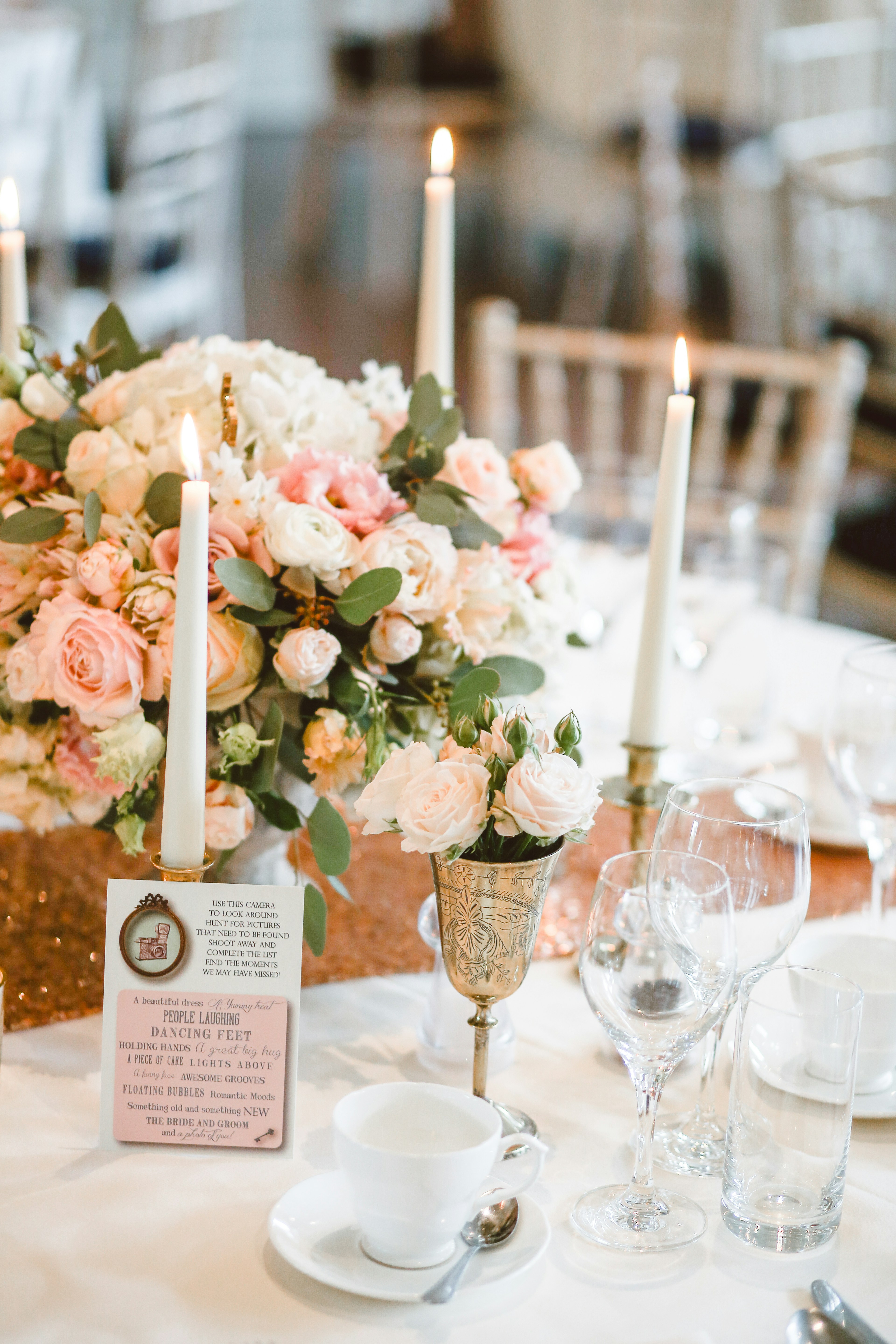
The Table That Asked to Be Looked At
A bride arrived at the consultation with a photograph on her phone: a centerpiece so dense with garden roses that the vessel beneath it had disappeared. She wanted that, times forty tables, and asked for more stems than the picture actually contained. The instinct is common and understandable — abundance reads as generosity. But abundance and composition are not the same thing, and a table set with forty stems per arrangement rarely holds a room the way six well-placed ones do.
What she needed was not more material. It was a silhouette, and the discipline to stop adding once the shape was found. The centerpiece that works does not announce itself; it sits at the center of a table and lets the room happen around it.
This guide is for the couples and planners who want that table — the one built on composition, not accumulation. Every principle below comes from working tables, not mood boards, and every number is one an atelier actually orders against.
What Composition Means at the Table
Composition, in floral design, is the relationship between stems — not the count of them. It is the same principle that governs a painting or a place setting: line, mass, and the space around both. A centerpiece composed well has a clear top, a defined width, and a base that anchors it to the vessel. A centerpiece composed poorly has none of these; it simply has flowers, arranged toward the general shape of a mound.
The distinction matters because guests do not see individual stems. They see a shape, from across a room and from six feet at their own table. If that shape is legible — a soft oval, a loose asymmetric line, a compact dome — the arrangement reads as intentional even before anyone identifies a single rose variety by name.
Restraint is the operating principle, and it is the hardest one for clients to request, because restraint looks, on paper, like less. It is not less. It is edited. An arrangement of eighteen disciplined stems photographs and holds a room better than thirty-five undisciplined ones, and it costs less to produce besides.
Silhouette Before Stem Count
Every centerpiece needs a silhouette decided before a single stem is cut: compact and rounded, low and spreading, or asymmetric with a defined line running through it. The silhouette is chosen against the table's shape and the room's ceiling height, not against a reference photo pulled from elsewhere.
Once the silhouette is set, each stem added either supports it or works against it. This is where most home-assembled and budget arrangements fail — not in material quality, but in the absence of a stopping point. A tenth stem of lisianthus might round out a shoulder of the arrangement correctly. The eleventh, added because there was room in the vessel, is the one that ruins it. It blurs the edge the silhouette depended on.
An experienced designer builds toward a shape and then puts the shears down, even with material left on the table. That unused stem is not waste. It is the difference between an arrangement and a pile.
The Case for Negative Space
Negative space is the visual rest between stems, and it does more compositional work than any single flower in the piece. Without it, a garden rose has no frame; with two inches of clearance around its bloom, the same rose reads as a focal point rather than one unit in a mass.
At a wedding table specifically, negative space also does a functional job: it keeps sightlines open. Guests seated across from one another need to see faces, not foliage, and a centerpiece with breathing room between its stems allows a low arrangement to feel present without becoming a wall.
Clients sometimes read negative space as an oversight, a sign the arrangement is not yet finished. It is worth saying plainly, at the consultation table, that the space is a decision — the same decision that governs why a well-set dining table has empty china between courses rather than every plate stacked at once.
Choosing Materials: Structure, Focal, Filler
A working material list for a centerpiece has exactly three roles, and naming them clearly prevents the drift toward an unfocused arrangement.
The ratio that holds, table after table, runs roughly forty percent structure, thirty-five percent focal, and twenty-five percent filler by stem count. Departing far from that ratio — heavy on filler, light on structure — is the most common reason an arrangement looks soft and shapeless rather than composed.
Seasonal availability changes the specific names in each category, but never the roles themselves. A florist who cannot get peony in October substitutes garden roses as focal and holds the ratio; the composition survives the substitution because the structure underneath it does not change.
Height, Sightlines, and the Conversation Across the Table
Two heights work reliably at a seated dinner, and the ones in between generally do not. A low compote arrangement holds between 10 and 14 inches, sitting well under the natural eye line of a seated guest, roughly 15 inches from the table surface. A raised arrangement, on a candelabra or elevated stand, clears 24 to 30 inches, lifting the mass entirely above where a guest's line of sight would cross it.
Anything between those two ranges — the 16 to 22 inch centerpiece — tends to sit directly at eye level for a seated guest, and it is the height most likely to generate a quiet complaint from a table of ten who spent the reception talking around a floral obstruction rather than across it.
Venue ceiling height factors in as well. A raised arrangement reads correctly in a room with 12-foot ceilings and looks oversized in one with 8-foot ceilings. This is one of the reasons an atelier asks for venue photographs and dimensions before proposing height, rather than defaulting to whatever looked well in a previous, differently proportioned room.
Budgeting the Centerpiece — Numbers That Hold
Centerpiece cost tracks labor, stem rarity, and vessel more closely than it tracks visible size, which surprises clients who expect a larger arrangement to always cost more. A disciplined low arrangement of 18 to 24 stems, built around garden roses and clematis, generally runs $150 to $450 per table depending on market and season. A raised, structural piece — branches, cascading greenery, 35 to 45 stems — runs $600 to $1,200, largely because of the stand rental and the additional hour of build time per piece.
Florals typically account for 8 to 10 percent of total wedding budget, and centerpieces alone often take half of that line. For a twenty-table wedding, that means the centerpiece budget alone can run anywhere from $3,000 to $24,000 depending on the height and material chosen — a range wide enough that the height and silhouette decision, made early, has more budget consequence than any single flower substitution made later.
The cost-saving lever that actually works is repetition, not simplification: building one correct composition and repeating it across every table reduces design hours substantially compared to twenty distinct arrangements, without changing the material list a guest actually sees.
Common Mistakes in Composition — and the Fix
Most compositional failures at wedding tables trace back to a small set of repeated errors.
Each of these is avoidable at the proposal stage, before a single stem is ordered, which is the argument for a firm design meeting rather than a verbal brief passed along secondhand.
Working With Your Florist: The Consultation
A disciplined consultation moves through three stages: a mood conversation grounded in the venue and season, a specific material list with roles assigned per the structure above, and a mockup table built 4 to 6 weeks before the wedding against the actual linen and lighting. Most ateliers ask that centerpiece composition be finalized 8 to 10 months out, since specific rose varieties and vessel rentals have their own lead times.
Clients who bring a single reference photograph and ask for it exactly, without regard for their own venue's ceiling height or table shape, are the ones most often disappointed by the final result — not because the florist executed poorly, but because the photograph belonged to a different room. The American Institute of Floral Designers maintains design education specifically around this gap between reference image and site-specific composition, and it is worth the ten minutes to understand why a florist asks for room measurements before color swatches.
The Society of American Florists also publishes seasonal availability guidance, useful for any couple planning a date more than six months out who wants to know which named varieties will actually be in market by their wedding week, rather than discovering the substitution the week of.
A Quiet Note to Close
The tables that photograph well years later are rarely the ones with the most flowers on them. They are the ones where a guest could still see the person across from them, where the arrangement did its work without asking to be looked at, and where, months on, what anyone remembers is the room — not the count of stems that built it.
Considered
How many flowers do I need for a wedding centerpiece?
A low compote centerpiece typically holds 18 to 24 stems; a raised, cascading arrangement holds 35 to 45. The number depends on stem size — three peonies read differently than three lisianthus. More stems rarely improve a composition past a certain point; they crowd it.
What is the ideal height for a wedding centerpiece?
Two heights work at a seated table: low, between 10 and 14 inches, kept below the sightline for conversation across the table, or raised, between 24 and 30 inches on a stand, clearing the eye entirely. Anything in between blocks the view and interrupts the room.
How much should a wedding centerpiece cost?
Low compote arrangements generally run $150 to $450 per table; raised, structural pieces with branches or cascading elements run $600 to $1,200. Cost tracks stem rarity, vessel, and labor more than size — a compact arrangement of garden roses can cost more than a large one of seasonal filler.
What flowers work best for high-elegance wedding centerpieces?
Garden roses (Mondial, Vendela, Quicksand), peony, and clematis as focal and structural stems; lisianthus, dusty miller, lavender, and eucalyptus as filler and texture. The restraint is in the ratio, not the variety — three or four materials, disciplined, outperform eight.
Why do some centerpieces look crowded even with expensive flowers?
Crowding comes from ignoring negative space — every stem added without a corresponding gap removed collapses the silhouette. The fix is subtraction: pull stems until the shape reads clearly from six feet away, the distance a guest actually sees it from.
When should I finalize centerpiece design with my florist?
Most ateliers finalize centerpiece composition 8 to 10 months before the wedding, with a mockup table 4 to 6 weeks out to confirm scale against the actual linens and venue lighting. Waiting past that window limits access to specific rose varieties and vessel rentals.