The Art of Floral Composition for High-End Events
A bride once stood at a ballroom entrance in Lake Tahoe, looked at a floating centerpiece built from ninety stems of garden roses and clematis, and asked us to add more. We didn't. We removed six stems from each of the eleven tables instead, and she cried at the reveal for a different reason than the one she expected. That is floral composition in practice — the discipline of knowing what a room needs, which is almost never more than what has already been placed in it.
29 min read · Les Fleur Company
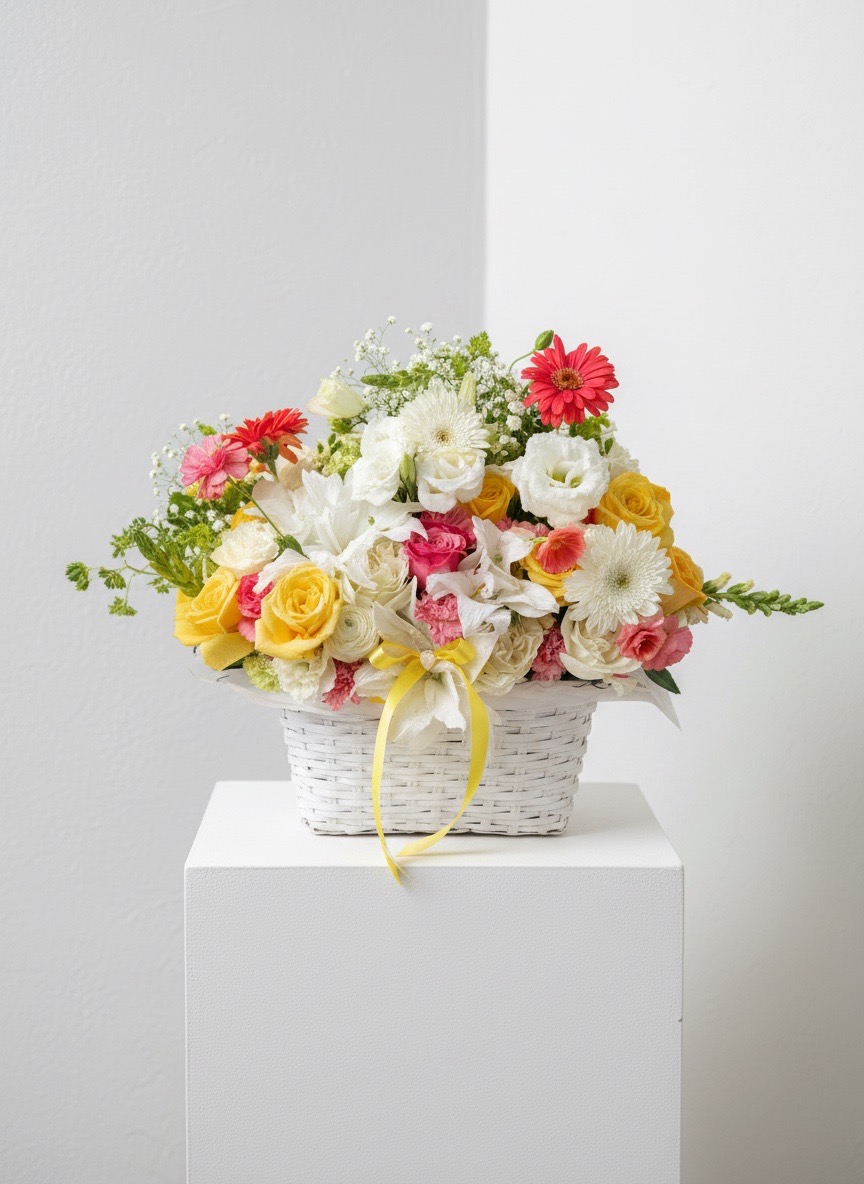
The Eleventh Stem: Why Restraint Is the Hardest Skill in the Room
Every florist who has run a studio for more than a few seasons has a version of this story. A composition is built, photographed, approved — and then, at load-in, someone on the team decides it needs one more stem. The eleventh stem goes in. The silhouette collapses. Not dramatically. Just enough that the arrangement now reads as busy rather than composed, and no one at the reveal can say exactly why.
We track this internally. Across roughly 40 weddings a season, the arrangements that get the most compliments are not the ones with the highest stem counts — they're the ones where the design lead stopped at the point most assistants would call unfinished. That gap between done and looks done is where composition actually lives.
Restraint is trainable, but it takes longer than technique does. A new designer can learn to wire a boutonniere in a week and build a garland in a month. Learning to stop — to leave eight inches of negative space at the top of an arrangement instead of filling it with one more delphinium — takes a full season of being told no by a lead designer, and then another season of telling it to themselves.
What Composition Actually Means at Scale
At the scale of a single bouquet, composition is intuitive — most people can sense when a hand-tied arrangement looks right. At the scale of a 200-guest wedding or a 400-person gala, composition becomes a systems problem. Twenty-two centerpieces, four altar arrangements, a suspended installation, and a gift table display all have to share one visual logic, or the room reads as disjointed no matter how good any single piece looks in isolation.
This is where studios that only do bouquets tend to struggle when they scale into full-event design. The math changes. A silhouette that looks generous on a 24-inch cocktail table becomes visually thin on a 30-foot ballroom sightline. We build a full material and shape plan before a single stem is ordered — a practice we outline in more detail in 5 Essential Elements To Craft A Timeless Floral Composition — because without it, every arrangement gets designed in a vacuum and the event as a whole never resolves into one composition.
The test we use with new clients: stand at the back of the room, not the front. If the arrangement only works from three feet away, it is a bouquet that happens to be on a table, not an event composition.
Silhouette and Negative Space: The Architecture Before the Flowers
Before any stem is chosen, we draw the silhouette — the outer shape the arrangement will occupy in the room. This is graph paper and a pencil, not flowers. A compote centerpiece might get a silhouette of 34 inches wide by 22 inches tall, with a deliberate 6-to-8-inch gap of negative space between the lowest tier of blooms and the base of the vessel.
Negative space is the part of the composition clients almost never ask for and almost always notice when it's missing. An arrangement with no visible air — every inch packed with bloom — reads as effortful. One with defined gaps, where the eye can rest between a cluster of garden roses and a trailing stem of clematis, reads as inevitable, as if it could not have been arranged any other way.
Common mistake we correct at nearly every walkthrough: a client requests the exact stem count from a Pinterest reference photo without accounting for the fact that photo was likely shot from 18 inches away with a long lens compressing the depth. Translating a photograph into a physical silhouette at real scale is a design skill in itself, and it's the first thing we walk new clients through before pricing begins.
Reading the Room: Composition as a Function of the Venue
The same 65-stem composition that looks generous in a barn with 12-foot ceilings will look underscaled in a hotel ballroom with 30-foot ceilings and chandeliers. Composition is never designed in isolation from architecture. Before we finalize a single arrangement, we walk the venue — or review floor plans and elevation photos if it's out of market — and measure sightlines, not just table counts.
This is especially true outside weddings. Galas, anniversaries, and corporate dinners often happen in venues built for something other than florals — museums, private homes, converted warehouses — and the composition has to answer to the room's existing architecture rather than a blank tent canvas. We've written at length about how this shifts the design approach in Beyond Weddings: Luxury Floral Design For Galas, Anniversaries, and Landmark occasions, where the arrangement has to hold its own next to existing art, marble, or millwork rather than a neutral backdrop.
For clients in San Francisco, El Dorado Hills, and Lake Tahoe specifically, this venue-first approach also determines vessel weight, water load, and rigging for suspended work — a hillside estate in El Dorado Hills has different wind and structural considerations than a downtown high-rise, and the composition plan has to account for both before design day.
The Material List: Choosing Stems That Hold Their Shape Under Load
Composition is a structural decision as much as an aesthetic one. A stem chosen purely for color or bloom size that wilts, droops, or opens too fast under a six-hour reception will ruin a silhouette regardless of how well it was designed. This is why our material list is built around known behavior, not just appearance.
Garden roses — Mondial for depth, Vendela for a cleaner ivory, Quicksand for warmth — are chosen partly for their hold time under warm ballroom lighting. Lisianthus gives volume without the weight of a full rose head, useful for maintaining a silhouette's upper third without collapsing it. Dusty miller and eucalyptus do structural work at the edges, holding a shape's outline even as the interior blooms open further over the course of an event. Lavender and clematis, used sparingly, do the work of breaking a silhouette's hard edge without adding bulk.
A short list of what we check before any stem enters a proposal:
This is the same logic behind Crafting Botanical Centerpieces: A Guide To Composition For High Elegance, where material choice and structural hold are treated as inseparable from the final look.
Color Discipline: Palette as a Constraint, Not a Mood Board
Clients frequently arrive with a Pinterest board of 40 to 60 images spanning six or seven distinct color families. Part of the early design work is translating that board into a palette with three tonal anchors and, at most, one point of contrast — not because variety is undesirable, but because a room full of five competing palettes never reads as intentional, no matter how good any single arrangement looks alone.
We build palettes the way a room is lit, not the way a swatch book is organized. Ivory, blush, and a deep burgundy garden rose read as one family under warm ballroom light; the same three colors under cool daylight at an outdoor ceremony can separate and clash. Testing a palette under the venue's actual lighting conditions — or as close an approximation as we can get during a site visit — is a step we do not skip, because it is the single most common source of a client's dissatisfaction after the fact, and it is entirely preventable beforehand.
The deeper mechanics of this — how undertone, saturation, and contrast interact across a full event rather than a single arrangement — are covered in Color Theory In Wedding Floral Composition: Creating Sophisticated Palettes, which is worth reviewing before any client walkthrough where color is still undecided.
The Budget Conversation: Where Composition Meets the Line Item
Every proposal we send breaks cost into three categories: material, labor, and installation. Clients almost always focus on the first line and rarely question the second two, but for high-end composition work, labor is frequently the larger number. A 65-stem centerpiece with a disciplined silhouette can take a lead designer 45 minutes to build correctly; an undisciplined 100-stem version, chasing volume instead of shape, can take 20 minutes and cost more in raw stems while looking less composed.
For a typical 150-guest wedding across our service areas — San Francisco, El Dorado Hills, and Lake Tahoe — floral spend at the high end typically runs 8 to 12 percent of total event budget, consistent with the ranges reported in national wedding-cost surveys. Within that spend, we push clients to weight the budget toward fewer, better-composed focal pieces — an arch, a suspended installation, a handful of statement centerpieces — rather than spreading the same dollar total evenly across every table. A room remembers three arrangements done with restraint far more than it remembers twenty-two identical ones done adequately.
Common Mistakes I See at Walkthroughs (and the Fix)
After roughly a decade of client walkthroughs, the same handful of mistakes recur, almost always from good intentions rather than bad taste.
None of these are failures of taste. They are, almost without exception, failures of sequencing — decisions made in the wrong order, usually under time pressure from a shrinking planning calendar.
Composition Under Time Pressure: The Load-In Clock
The best-composed arrangement on paper can still fail if it cannot be executed within the real load-in window. For a 300-person gala, we typically have a 6-to-8-hour build window before doors open, split across a design team of six to nine people working simultaneous stations. Composition decisions have to account for what is buildable at that speed without sacrificing the silhouette.
This is why we pre-build as much structural framework as possible off-site — armatures, base greenery, foam-free mechanics — and reserve on-site time for the finishing stems that actually determine the final shape: the garden roses at the focal point, the trailing clematis at the edge, the last adjustments to negative space. A composition that requires every decision to be made live, under a countdown clock, is a composition that was under-planned at the proposal stage.
For events with fast turnovers — a ceremony-to-reception flip in under 90 minutes, common across our Lake Tahoe private event work — the composition plan has to build in modularity from the start: arrangements designed to be moved, not rebuilt, between spaces.
The Quiet Test: How to Know a Composition Is Finished
There is a test we use at the end of every build, and it has nothing to do with stem count or budget. Stand back from the arrangement and ask two questions: would removing anything be noticed, and would adding anything go unnoticed. If the answer to both is yes, the composition is finished.
This test rarely aligns with a designer's first instinct, which is almost always to keep going — to add the stem that would make the arrangement feel more finished. The discipline is in recognizing that feeling and stopping anyway. It is the same discipline that separates a florist from a florist who runs a studio: the willingness to say, at the eleventh stem, that the composition was already whole.
The arrangement that does its work without asking to be looked at is, in the end, the only kind worth building for a room that has waited a long time for this particular evening.
Considered
What does floral composition mean in wedding and event design?
Floral composition refers to the deliberate structure of an arrangement — its silhouette, proportion, negative space, and color discipline — as distinct from simply gathering flowers into a container. At the high end, composition is the difference between an arrangement that fills a table and one that holds a room without competing with it.
How many stems does a luxury centerpiece typically need?
For a 30-to-36-inch compote centerpiece, most disciplined compositions run 55 to 75 stems depending on scale and stem size — garden roses and peonies count differently than lisianthus or lavender. Past roughly 80 stems, arrangements tend to lose silhouette and read as dense rather than composed.
Why do florists talk about restraint instead of abundance?
Abundance photographs well in isolation but competes with a room's architecture, lighting, and guests. Restraint — visible negative space, a clear top line, a controlled palette — is what allows an arrangement to do its work at a 60-foot ballroom distance and a 3-foot dinner-table distance at once.
How far in advance should floral composition be planned for a high-end event?
Serious studios begin the design conversation 9 to 12 months out for weddings and 3 to 6 months out for galas and corporate events, with a final walkthrough 4 to 6 weeks before the date. This allows sourcing time for specific rose varieties and buffer for seasonal substitution.
What is the most common mistake in high-end floral design?
Adding a stem to fix a problem instead of removing one. When an arrangement feels unresolved, the instinct is to add more flowers; the correct move, in most cases, is to take one out and let the silhouette reassert itself.
Do high-end florals cost more because of the flowers themselves?
Rarely. The cost differential is mostly labor, sourcing, and design time — a disciplined 65-stem composition from Ecuadorian garden roses can cost less in raw material than an undisciplined 120-stem arrangement from mixed sources, but require three times the design hours.