Seasonal Blooms: Florals for Formal Occasions
A planner calls in February with a wedding date in November and a single request: peonies, the way she saw them at a May wedding two years ago. It is a reasonable thing to want and the wrong flower for the date. Peonies have a bloom window of roughly six to eight weeks, typically April through June depending on region and variety. By November, what she is asking for does not exist in the field — only in cold storage, flown from a grower in the southern hemisphere, at a cost and a quality that rarely survives the trip intact.
31 min read · Les Fleur Company
The Call That Starts With a Wrong Assumption
A planner calls in February with a wedding date in November and a single request: peonies, the way she saw them at a May wedding two years ago. It is a reasonable thing to want and the wrong flower for the date. Peonies have a bloom window of roughly six to eight weeks, typically April through June depending on region and variety. By November, what she is asking for does not exist in the field — only in cold storage, flown from a grower in the southern hemisphere, at a cost and a quality that rarely survives the trip intact.
This is where the conversation about season actually starts, and it is rarely the conversation a client expects. The instinct is to ask for a flower. The better question is to ask for a feeling, a palette, a hand — and let the atelier translate that into whatever is at its peak on the date in question.
Formal occasions are scheduled far enough in advance that this is never a constraint. It is simply a matter of sequencing the conversation correctly, before a single stem is sourced.
Why the Growing Calendar Dictates the Composition
Every flower has a window. Garden roses, lisianthus, and clematis each have a point in the year where the stem is strongest — fuller bloom, deeper color, longer vase life — and a point where it is simply unavailable at any price that makes sense for a formal event. Building a composition around the calendar, rather than against it, is the difference between an arrangement that holds through a six-hour reception and one that wilts before the toasts.
A stem forced out of season has usually traveled further, been held longer in cold chain, and been cut earlier than its natural maturity. It arrives technically alive and functionally compromised — thinner petals, a shorter bloom life, a color that reads flat under evening light. None of this is visible on a sourcing sheet. It becomes visible three hours into the reception.
The essential elements of a timeless floral composition rest on this groundwork. Silhouette, texture, and restraint all depend on the stem actually performing as it should — and that performance is seasonal before it is anything else.
Spring: The Season Most Clients Picture
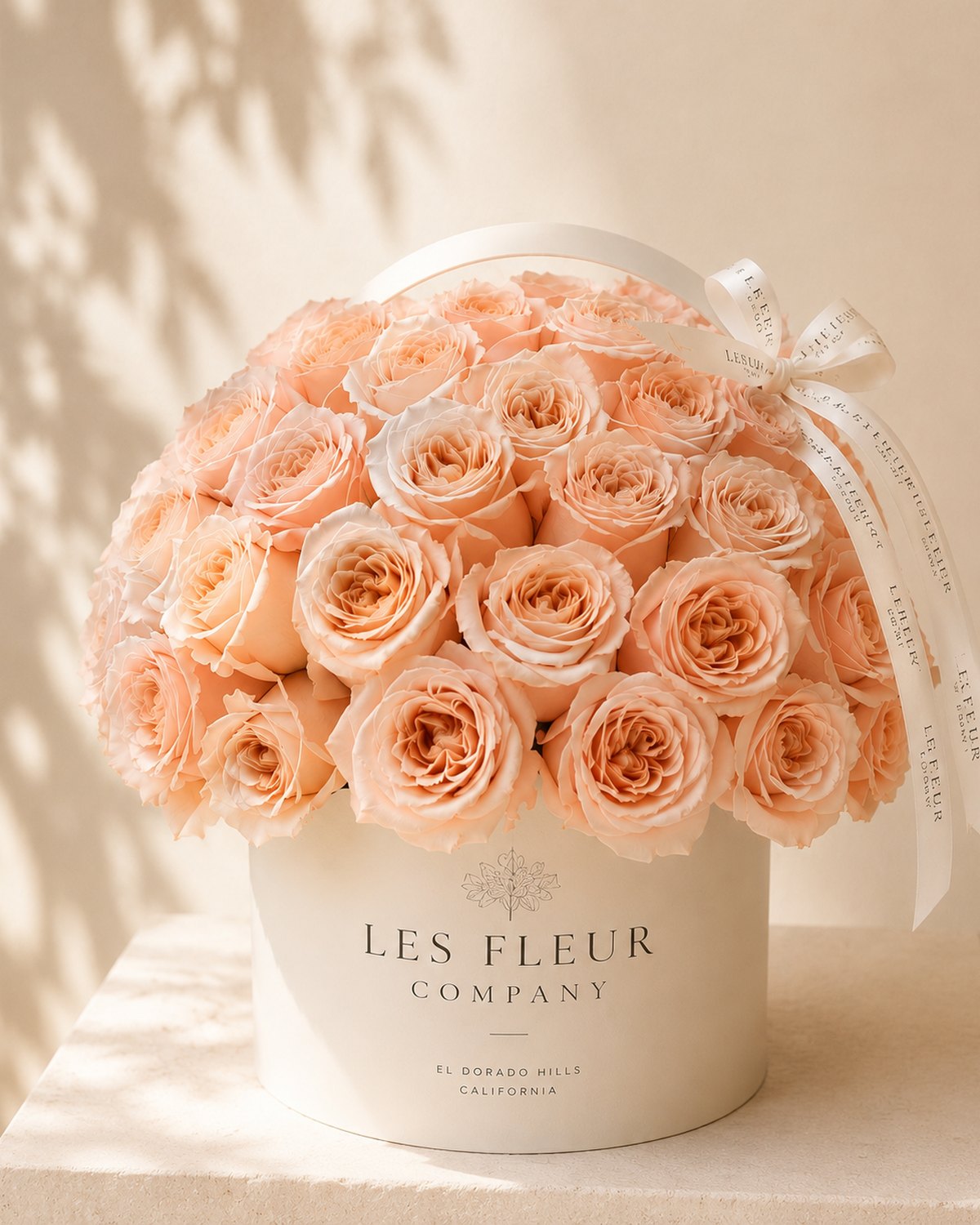
Spring carries the flowers most associated with formality — garden roses in Mondial and Vendela, peonies, ranunculus, clematis, sweet pea. This is the season the industry is built around, and it shows in both the depth of available stock and the price. A late-May wedding can draw on nearly the full seasonal palette: soft pastels, blush, ivory, structured green from eucalyptus and dusty miller.
Spring stock also tends to be forgiving. Garden roses open gradually over several days, which gives the composition a longer working life across rehearsal, ceremony, and reception. Ranunculus, by contrast, is more delicate — layered petals that bruise under heat or handling, which is why spring installations are often built and transported in the cooler hours of the morning.
Clients planning a spring event should expect to confirm their palette by late winter. Peony allocations in particular are reserved months ahead; a client calling in April for a May wedding will find the best varieties already committed to earlier bookings.
Summer: Structure Through the Heat
Summer brings dahlias into their early season, alongside a continued run of garden roses, lisianthus, and the last of the sweet pea. This is the season of volume — more stems, more varieties, more color saturation — but also the season that punishes a poorly built composition. Heat shortens vase life across nearly every variety, which means summer work depends more heavily on hydration discipline and cooler staging than any other part of the year.
Dahlias deserve particular attention here. A well-grown dahlia in its early summer window carries a dinner-plate fullness that reads as formal without reaching for size as a substitute for restraint. Paired with eucalyptus for structure and a close, disciplined palette, a dahlia-led composition can carry a reception table without competing with the room.
Summer is also the season most requested for outdoor formal events — galas on terraces, corporate dinners with a view, hospitality events built around daylight. An atelier working a summer date for a client in Lake Tahoe or along the coast will often shift the palette slightly cooler and the mechanics slightly sturdier than a spring brief would call for, anticipating heat rather than reacting to it.
Autumn: Depth Over Pastel
By September, the palette moves away from blush and toward depth — garden roses in deeper tones, dahlias at their fullest, dusty miller and eucalyptus doing more of the structural work as flowering stems begin to thin. Autumn compositions tend to read warmer and heavier, which suits a formal dinner or a gala more naturally than it suits a bridal bouquet, though both are built from largely the same stock.
This is also the season where a client's instinct to chase a spring flower out of its window becomes most expensive. A September or October request for peonies is possible only through import, and the cost — often three to four times the in-season rate — rarely buys back the quality lost in transit. The better brief asks what autumn actually offers: dahlia, garden rose, clematis seed heads, the last lisianthus of the year.
Corporate events booked for fall, such as those run through El Dorado Hills venues, often lean into this depth deliberately — using the season's natural saturation rather than fighting it with imported pastel.
Winter: The Season That Rewards Restraint
Winter is the thinnest season for flowering stock and the season where restraint matters most. Amaryllis, anemone, ranunculus from greenhouse growers, and a long run of garden roses carry most of the formal work. Evergreen foliage — cedar, pine, magnolia leaf — fills the structural gap left by a shorter list of flowering varieties, and does so without apologizing for being foliage rather than bloom.
A winter composition built well tends to be quieter than its spring counterpart, and that quiet is not a compromise. A single disciplined stem of amaryllis against dusty miller and eucalyptus can carry more formality than a crowded arrangement of flowers chosen for abundance rather than fit. The restraint winter imposes is often the best teacher a composition gets all year.
Holiday galas and year-end corporate dinners — the kind booked through San Francisco venues in December — depend on this discipline, since the flowering stock available simply will not support an abundant brief. The work becomes about proportion rather than volume.
The Atelier Case for Working With the Calendar
Working within season is not a limitation placed on the atelier from outside. It is closer to the discipline the composition itself asks for — the same logic that governs the eleventh stem ruining an otherwise correct arrangement. A stem sourced in its own season behaves predictably: it opens on schedule, holds its color, and carries its structure through the hours a formal event actually requires.
This process starts long before the event date. A florist building toward a formal occasion is tracking growers, confirming allocations, and watching bloom reports from the farms months in advance — the kind of process detailed in the atelier's approach to curated floral arrangements. None of it is visible to the client until the stems arrive, but all of it determines whether the composition holds.
There is also a quieter argument here, closer to heritage than to logistics: flowers grown in their own season, from growers working their own land through their own cycle, are part of a case for permanence rather than spectacle. The arrangement that keeps is rarely the one assembled against the calendar.
Formal Occasions Have Different Seasonal Tolerances
Not every formal occasion carries the same seasonal flexibility. A wedding date is usually fixed a year or more ahead, chosen for reasons that have nothing to do with bloom calendars — a venue's availability, a family's schedule, a season the couple simply prefers. A gala or corporate dinner, by contrast, is often scheduled with more room to move, which gives the florist more leverage to recommend a date that favors the intended palette.
Hospitality work — the ongoing floral program for a hotel lobby or restaurant, like the installations built for San Francisco hospitality clients — operates on a different rhythm again, rotating with the season rather than building toward a single date. This is where seasonal sourcing is least negotiable and most visible, since the arrangement changes every few weeks rather than once.
Editorial and brand events, by contrast, often chase a specific visual regardless of season, which is the one category where imported or forced stock is sometimes the only path — and where the cost of that choice should be stated plainly to the client up front, not discovered on the invoice.
Common Mistakes in Seasonal Briefs
The most common mistake is naming a flower instead of a feeling. A client who says peonies has given the florist one data point and removed every other option from the table, even when the date makes peonies a poor fit. A client who says soft, romantic, pale has given the florist a palette that can be built from whatever the season actually offers.
The second mistake is booking too late to allow for substitution planning. A formal wedding briefed four months out, in a flower that is out of season, leaves little room for the atelier to source, test, and confirm an alternative that still reads as intended. Nine to twelve months is the standard window for a reason.
A short list of what tends to go wrong:
Each of these is avoidable with an earlier and more open first conversation.
How to Brief a Florist for a Formal Occasion
The strongest brief a client can bring to an atelier includes the date, the room, the hour of day, and the feeling wanted — in that order, before any specific flower is named. From there, the florist can map what the season actually supports and present two or three directions rather than a single rigid request.
A practical sequence: confirm the date and venue first. Share photographs of rooms or past events that capture the feeling, not necessarily the flower. Ask the florist directly what will be at its best on that date, in that region — the answer will differ for a wedding in Lake Tahoe in September versus one in the same region in February. Then let the composition be built from that list.
This is not a loss of control. It is the handoff that produces the better result — a composition that holds its color and its shape through the full length of a formal evening, because it was never asked to perform outside its season in the first place. The flower that keeps its structure through the final toast was never the rarest one on the list. It was simply the one grown to be ready on that date.
Considered
What are seasonal blooms for formal occasions?
Seasonal blooms are flowers sourced at the point in the year when they grow naturally — garden roses and peonies in late spring, dahlias in late summer, anemones and ranunculus in winter. For formal occasions, building the composition around the season means the florist works with stems at their peak rather than stems forced through storage to meet an unrelated date.
Can you get peonies for a November wedding?
Imported peonies can sometimes be sourced for a November date, but the quality, color depth, and vase life are compromised compared to a May or June stem. An atelier will usually recommend a November-appropriate substitute — dahlias, garden roses in deeper tones, or ranunculus — that carries the same formality without the compromise.
Why do seasonal flowers cost less than out-of-season flowers?
In-season stems are grown closer to the event date and often closer to the region, which reduces the cold-chain freight, the forcing, and the loss rate that out-of-season sourcing requires. A peony flown in during November can cost three to four times what the same stem costs in May.
How far in advance should I tell my florist about a formal event?
Most ateliers ask for a minimum of nine to twelve months for a wedding and three to six months for a gala or corporate event, particularly if the date falls outside a flower's natural season and substitutions need to be planned and sourced.
What flowers are in season in winter for formal events?
Winter brings amaryllis, anemone, ranunculus, camellia foliage, and a long season of garden roses from greenhouse growers. Dusty miller and eucalyptus extend the palette where flowering stems thin out, giving the composition texture without relying on scarce blooms.
Does seasonal flower sourcing affect the look of a wedding composition?
Yes. A composition built from in-season stock tends to hold its silhouette through a full event — ceremony, cocktail hour, reception — because the flowers were not weakened by cold storage or early forcing. The arrangement looks the same at the final toast as it did at first look.