Les Fleur's Heritage: Reviving the Art of Floristry
A bride called the studio fourteen months after her wedding, not to plan another event, but to ask whether the eucalyptus in her bridal bouquet — the one she had asked us to press the morning after — had survived the process. It had. Framed, it hangs in her hallway now, the Vendela roses gone the color of parchment, the lavender still holding its violet at the edges. This is the premise behind heritage floral design at Les Fleur: an arrangement is not finished when the reception ends. It is finished when it has done its work for years, not hours.
31 min read · Les Fleur Company
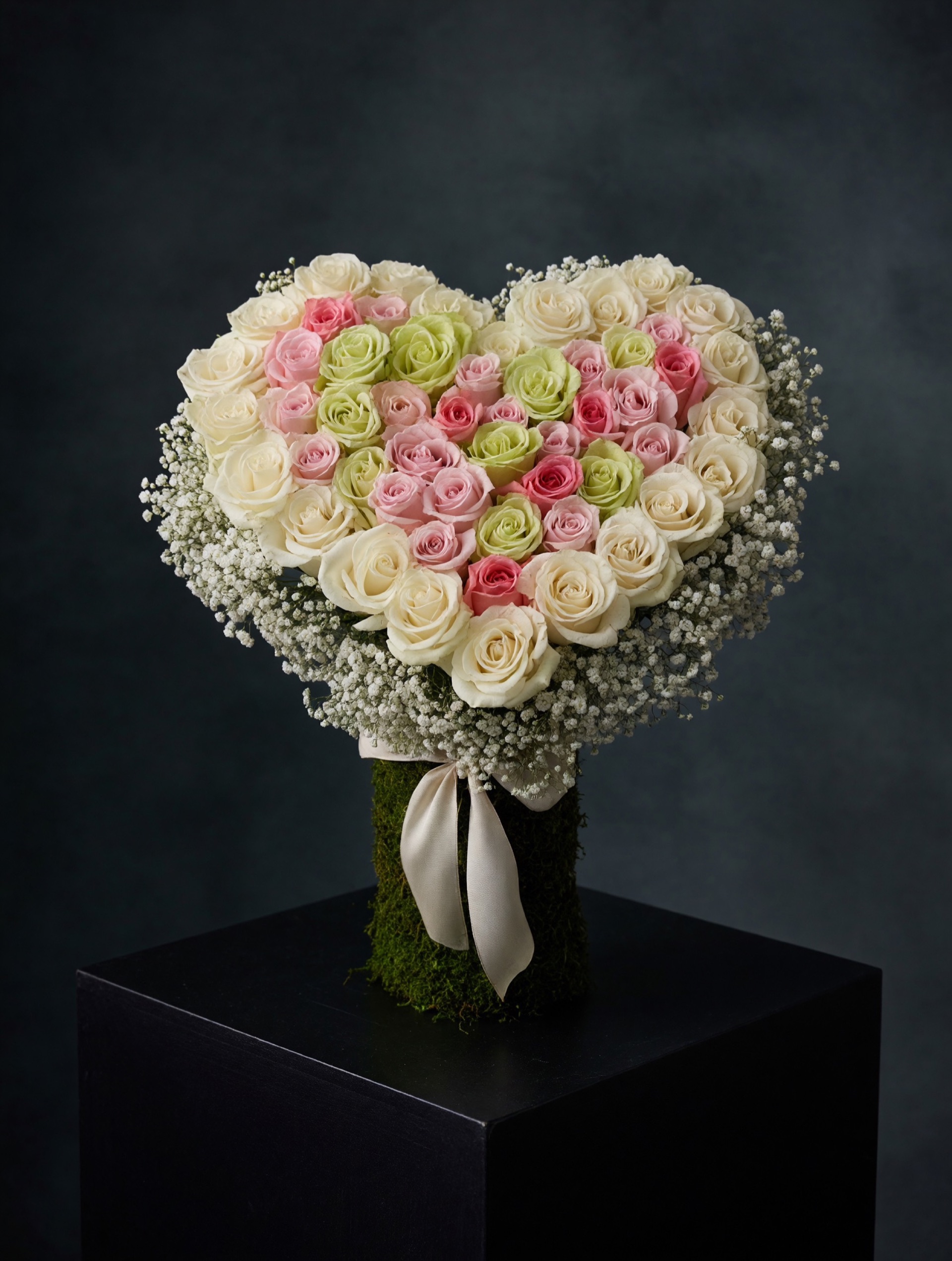
The Bouquet That Outlived the Wedding
A bride called the studio fourteen months after her wedding, not to plan another event, but to ask whether the eucalyptus in her bridal bouquet — the one she had asked us to press the morning after — had survived the process. It had. Framed, it hangs in her hallway now, the Vendela roses gone the color of parchment, the lavender still holding its violet at the edges. This is the premise behind heritage floral design at Les Fleur: an arrangement is not finished when the reception ends. It is finished when it has done its work for years, not hours.
Most floral work in weddings is built for a single afternoon. Volume matters, color matters, the photograph matters. Heritage floral design asks a different question at the outset — which of these stems will still mean something in a decade — and composes accordingly. That question changes sourcing, changes structure, and changes what gets left out of the arrangement entirely.
What Heritage Floral Design Means at Les Fleur
The term gets used loosely across the industry, often to describe anything with a muted palette or a garden-rose bouquet. At Les Fleur it has a narrower meaning: work built with materials and methods that hold their form after the event, composed with the discipline of a piece meant to be kept rather than consumed.
This is not nostalgia. It is a set of practical decisions made at the design table, before a single stem is cut. Which roses will press without browning at the petal edge. Which greenery holds structure once the water is gone. Which arrangements can be photographed at their peak and still be recognizable, pressed, a year later.
Three things distinguish heritage work from standard event floristry:
Our approach to this thinking is laid out more fully in our guide to building a floral legacy that outlasts the day, which walks through the sourcing decisions behind a bouquet meant to be kept.
The Case for the Rose That Keeps
Not every rose is built the same way, and the difference matters more after the wedding than during it. A loosely petaled bloom, striking at full flush, tends to shatter within days of cutting and presses into something formless. A denser variety — Mondial, Vendela, Quicksand — holds its structure through the drying process and keeps its silhouette recognizable months later.
This is the practical argument for restraint in variety selection. A bouquet built entirely for the eye at 4pm on a Saturday, with blooms chosen for maximum openness, is often a poor candidate for preservation by design. The flower that photographs best in the moment is not always the flower that survives it.
We select roses the way a cabinetmaker selects wood grain — for how the material behaves over time, not only for its appearance on delivery day. Garden roses with tighter petal counts, cut slightly before full bloom, dry with less shrinkage and hold color longer under glass. This is a sourcing decision made weeks before the wedding, in conversation with growers who can confirm variety and cut stage, not a last-minute substitution at the market.
The rose that keeps is, more often than not, the quieter rose in the room. It rarely competes for attention on the day. It earns its place afterward.
Inside the Atelier: Where the Work Happens
The preservation conversation begins long before the wedding date, usually at the first consultation. We ask which stems the client intends to keep — the bridal bouquet, a boutonniere, a single stem from a parent's corsage — and build the order to account for that intention. A bouquet meant for pressing is wired and hydrated differently than one meant only for the ceremony aisle.
On the wedding morning, a second, smaller cutting is often taken specifically for preservation, timed to bloom stage rather than to the ceremony hour. This detail is easy to miss and difficult to correct after the fact — a rose photographed at full bloom on Saturday is frequently past its ideal preservation window by Sunday morning.
Our process for this kind of custom, client-specific planning is described at greater length in our notes on atelier consistency across a wedding composition, which covers how a single studio carries decisions from first sketch to final delivery.
The work is unglamorous in practice — stems laid flat between blotting paper, silica gel measured by weight, a freezer reserved for flowers rather than food. None of it photographs well. All of it determines whether the bouquet exists in five years or in a compost bin by June.
Preservation as Practice: Methods and Timelines
Preservation is not one process but several, and the right one depends on the flower and the client's intention for the final object.
Clients are often surprised that preservation takes months, not weeks. A freeze-dried bouquet ordered the week of the wedding typically arrives in early winter for a summer ceremony. We tell clients this at contract signing, not at pickup, because the disappointment of a slow timeline is entirely avoidable with early planning.
Composition and Restraint: The Discipline Behind Permanence
A crowded arrangement is difficult to preserve cleanly. Overlapping stems press into each other, losing individual form. This is one of the quieter arguments for restraint in composition — the same discipline that makes an arrangement read as considered rather than busy also makes it survive the preservation process intact.
We think of negative space as functional here, not only aesthetic. A bouquet with fewer stems, each given room, dries with cleaner separation between blooms. The eleventh stem, added for volume rather than intention, is usually the first thing removed when a piece is prepared for pressing.
This philosophy is detailed further in our piece on the essential elements of a timeless floral composition, which addresses silhouette and restraint as design principles independent of preservation, though the two are closely related in practice.
Composition built for permanence tends toward asymmetry over uniform fullness, toward a defined silhouette over a rounded mass. It is, in the end, the same restraint that governs any well-made arrangement — the difference is only that heritage work must hold that restraint through drying, framing, and years of display, not just through a single evening.
Weddings, Galas, and the Weight of Occasion
Heritage floral design is most closely associated with weddings, but the same principles apply to any event where an object is meant to be remembered rather than simply displayed — an anniversary gala, a landmark birthday, a fiftieth wedding celebration built around flowers chosen decades earlier.
We have prepared heritage arrangements for milestone anniversaries where the brief was explicit: reproduce, as closely as the season allows, the bouquet from the original wedding day. This requires records — variety names, color notes, sometimes a pressed original kept by the family — and a willingness to work backward from an old photograph rather than forward from a mood board.
Our broader work across galas, anniversaries, and landmark events beyond the wedding day is covered in our notes on floral design for galas and landmark occasions. For couples marrying near Lake Tahoe, where the surrounding landscape often informs material choice — pine, dusty miller, a cooler palette that presses well against the region's light — our regional planning notes are gathered at our Lake Tahoe wedding page.
The occasion sets the brief. The material and the method of keeping it are decided separately, and usually earlier than clients expect.
Common Mistakes Couples Make When Planning for Permanence
After enough weddings, the same avoidable errors surface. Most are timing errors, not material errors.
None of these mistakes are about taste. They are about sequencing — decisions made too late to matter.
Sourcing: The Varieties That Hold
Heritage work depends on knowing which materials behave predictably over time, which means sourcing relationships matter more here than in standard event floristry. We work with growers who can confirm variety name and cut stage precisely, because a Quicksand rose cut two days early behaves differently under silica than one cut at full stage.
Materials we return to for heritage work, and why:
None of this is exotic sourcing. It is attentive sourcing — knowing the grower, confirming the variety, timing the cut. The materials that hold are, almost without exception, the ones chosen with their second life already in mind.
A Quiet Observation
Most of what a florist builds for a wedding is gone within a week — composted, discarded, forgotten in a vase on a kitchen counter until it wilts. Heritage floral design is, at its core, a refusal of that outcome for the pieces that matter most. Not every stem needs to be kept. But the ones a couple will still be looking at on their tenth anniversary deserve to be chosen, and handled, with that decade already in mind.
If preservation matters to you, raise it at your first consultation, not your last fitting. The flowers that keep are chosen weeks before the wedding, not saved after it.
Considered
What does heritage floral design mean?
Heritage floral design refers to arrangements composed and sourced with permanence in mind — flowers chosen for how they age, dry, or press, and structures built to be preserved after the event rather than discarded. At Les Fleur it also means drawing on traditional composition techniques rather than trend-driven volume.
Can any wedding bouquet be preserved?
Most can, but results vary by flower. Dense garden roses, lisianthus, and eucalyptus press and dry well. Ranunculus and dahlias are more delicate and require freeze-drying rather than air-drying to hold their color and shape. Discuss preservation with your florist before the wedding, not after.
How long does flower preservation take?
Air-drying typically takes two to three weeks. Pressing for framed keepsakes takes four to six weeks. Freeze-drying, which holds color and dimension best, generally takes eight to twelve weeks. Plan for the finished piece to arrive three to four months after the wedding.
What is the difference between preserved and dried flowers?
Dried flowers are air-dried, which shrinks them and deepens their color toward sepia and rust tones. Preserved flowers are typically freeze-dried or treated with a glycerin or silica process that retains closer-to-fresh color and dimension, at a higher cost.
How much does floral preservation cost?
Pressed, framed keepsakes generally run $150 to $400 depending on size and framing. Freeze-dried bouquet preservation in a display case runs $400 to $900. Resin casting of individual stems or a full bouquet section runs higher, often $500 to $1,200.
Which flowers hold up best over time?
Garden roses (particularly dense varieties like Mondial and Quicksand), lisianthus, dusty miller, lavender, and eucalyptus are among the most forgiving for both drying and long-term display. Their structure and lower water content mean less shrinkage and color loss.