Designing Your Wedding Bouquet: A Step-by-Step Guide to Mastering Composition with Fresh Florals
A bride once arrived at our studio holding a photograph torn from a magazine — a bouquet dense with peony, garden rose, ranunculus, sweet pea, astilbe, and three kinds of greenery, all crowded into a single fistful. She wanted more. More texture, more color, more of everything the picture promised. What she did not know, and what no one had told her, was that the bouquet in the photograph had been styled for a lens, not for a hand — shot wide, lit soft, never meant to be carried down an aisle at eye level for guests to study. The work of wedding bouquet composition is not addition. It is the opposite. It is deciding, stem by stem, what a bouquet can hold before it stops being a bouquet and becomes a bundle.
27 min read · Les Fleur Company
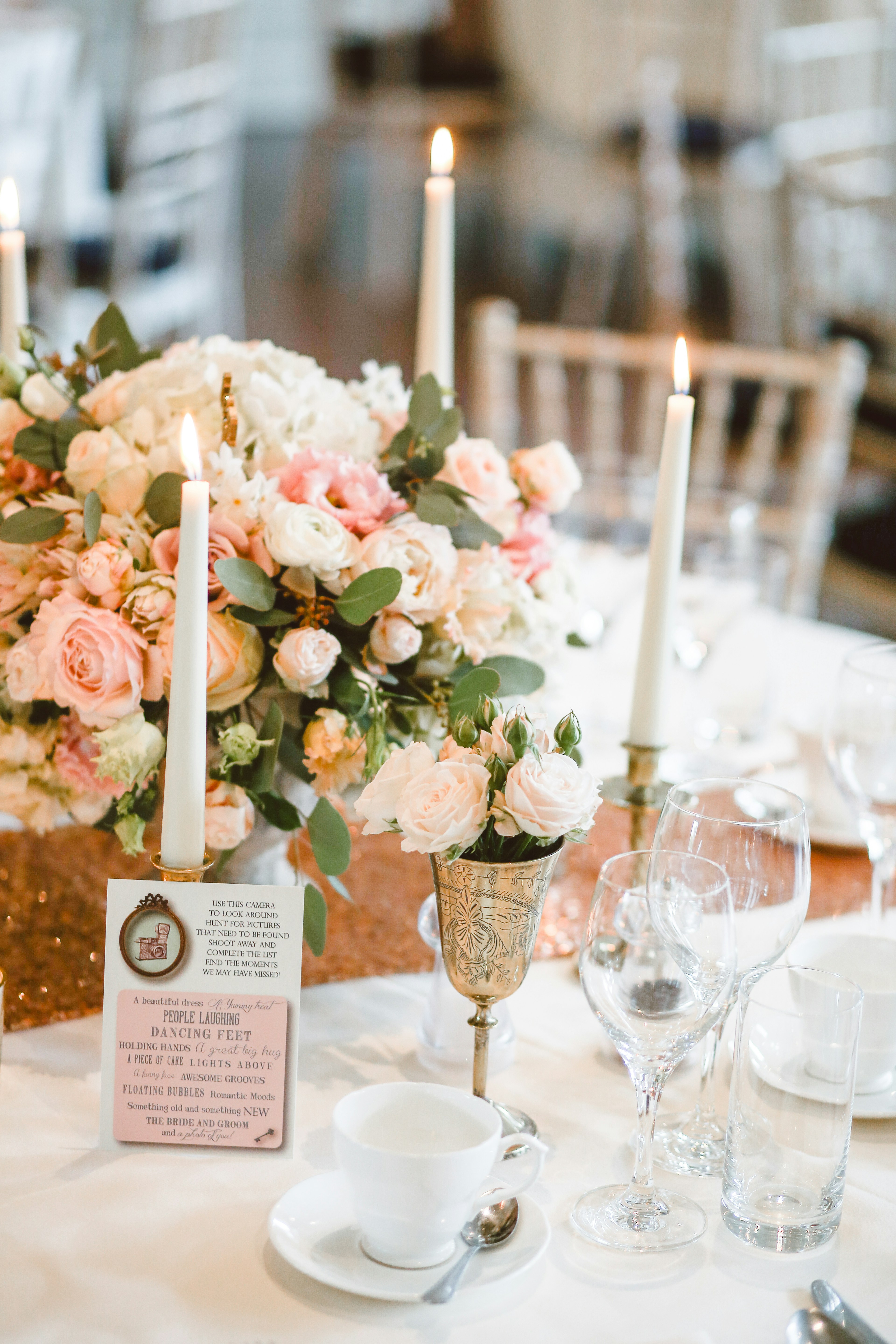
The Problem With the Twelfth Stem
Every bouquet has a point at which it stops improving. In our experience, that point arrives sooner than most clients expect — often around the ninth or tenth stem, depending on scale. The eleventh stem does not add fullness. It removes the negative space that let the first ten breathe, and the composition collapses into mass.
This is the central tension in bridal bouquet design: clients equate volume with value, and more flowers with more effort. The opposite is usually true. A twenty-eight-stem bouquet built without a plan takes less skill than an eighteen-stem bouquet built with one, because restraint requires knowing what to leave on the worktable.
The fix is procedural, not aesthetic. Before a single stem is cut, decide the final stem count as a range — say sixteen to twenty for a hand-tied round bouquet — and hold to it. Every stem added past that range should replace one already in hand, not join it.
Start With Silhouette, Not Stems
The most common mistake in designing a wedding bouquet is starting with the flowers. Silhouette comes first — round, cascade, hand-tied loose, or structured posy — because it determines everything downstream: stem length, the ratio of focal to filler, even which varieties will physically cooperate.
A round bouquet asks for stems that build outward evenly from a center, which favors garden roses and ranunculus with straight, sturdy stems. A cascade asks for movement — jasmine vine, clematis, trailing amaranthus — material that a round silhouette has no use for. Choosing flowers before shape is choosing ingredients before the recipe.
We ask every client to commit to a silhouette in the first consultation, using two or three reference images maximum. More references than that tend to average out into no clear shape at all, which is its own kind of failure — a bouquet trying to be three photographs at once instead of one considered form.
Choosing Your Palette: Restraint as a Design Tool
A palette of three tones reads as composed. A palette of seven reads as decoration without discipline. This is not an aesthetic preference so much as a mechanical one — the eye can track a limited range of hue and value across a moving bouquet; past a certain point it simply stops distinguishing one bloom from the next and perceives noise.
We typically build a palette in three layers: a dominant tone (ivory, blush, or wine, depending on season), a supporting tone one or two shades removed, and a single accent — often a deep burgundy lisianthus or a stem of chocolate cosmos — used sparingly enough that it reads as intentional rather than as its own competing idea.
Dusty miller and eucalyptus do quiet work here. Their gray-green cast does not compete with the palette; it lowers the temperature of the whole composition by half a step, which is often exactly what an otherwise warm-toned bouquet needs to avoid looking saccharine.
The Anatomy of a Composed Bouquet
Every stem in a bouquet plays one of three roles, and confusing them is where most home arrangers and inexperienced florists lose control of the composition.
When a bouquet feels chaotic, the cause is almost always a broken ratio — too many focal stems competing for the same attention, or filler used at a volume that buries the focal work entirely. Counting stems by role, not just by total, catches this before the bouquet is finished.
Material Selection: Fewer Varieties, Chosen Well
Three to five varieties is the range we hold to for nearly every bridal bouquet, regardless of size. Garden roses do the structural work — Mondial for its deep, saturated red-plum tone, Quicksand for a warm blush that photographs honestly in daylight, Vendela for a clean ivory that reads as neither stark white nor cream.
Lisianthus earns its place because a single stem can carry three or four blooms at different stages of opening, giving a bouquet visual rhythm without adding stem count. Clematis, used sparingly, introduces movement at the bouquet's edge — a single trailing stem does more than a dozen would.
The mistake we see most often from clients sourcing their own flowers is buying by the bunch rather than by the role. A dozen peony and a dozen ranunculus, both focal-weight blooms, produce a bouquet with no supporting structure — all climax, no build. Buy in ratio, not in bulk.
The Discipline of Negative Space
Negative space is the part of bouquet composition clients rarely ask about and almost never notice until it is missing. It is the small gap of visible stem or air between blooms that lets each flower register as its own form rather than dissolving into a single mass of color.
A bouquet gripped too tightly at the binding point loses this space entirely — every stem forced to the same height, every bloom crushed against its neighbor. We bind loosely at first, let the natural bend of each stem find its own reach, and only tighten the binding point once the shape has settled into itself.
This is also where restraint pays its dividend. A bouquet with eighteen well-placed stems and visible air between them will photograph — and carry — better than one with twenty-eight stems packed shoulder to shoulder. The gap is not empty. It is doing the work of letting the eye land somewhere before moving on.
Building the Bouquet by Hand: A Step-by-Step Process
We build in a fixed sequence, and the order matters more than most clients assume. First, the focal stems go in at the center, angled slightly outward from a single point rather than held vertically — this is what gives a hand-tied bouquet its dome rather than a flat, pinned-down look.
Second, transitional stems are added in a spiral, each new stem crossing the last at roughly the same angle, rotating the bouquet in hand as you go rather than holding it still and reaching around it. This spiral is what allows the bouquet to be set down and stand on its own stems — a detail photographers notice even when clients do not.
Third, filler and textural stems fill the remaining negative space, added last and in smaller quantity than either of the first two steps. Finally, the binding point is secured with waxed floral tape roughly one inch below where the stems naturally cross, then wrapped in ribbon only after the tape has set — ribbon over loose tape will slip within the hour.
Common Mistakes That Ruin Composition
The single most frequent error is what we call scope creep by committee — a bride, her mother, and a bridesmaid each adding one more flower they love to the original plan, until a sixteen-stem bouquet has quietly become twenty-six. Each addition seems small. The cumulative effect is a bouquet with no clear focal point left.
The second is mismatched stem maturity — combining fully opened garden roses with tightly closed buds of the same variety produces an uneven, unfinished look rather than the layered depth clients are usually hoping for. Buds belong in bouquets built a day ahead, so they have time to open under conditioning; same-day builds call for blooms already at 70–80 percent open.
The third is over-wiring. Wiring every stem for control is a habit inherited from older bridal traditions, and it produces a stiff, artificial hand-feel that reads as dated in photographs. We wire only what genuinely needs support — a heavy dahlia head, a fragile clematis bloom — and leave the rest on its natural stem.
Conditioning and Timeline: What Happens Before the Wedding Day
Composition is decided at the worktable, but it is protected — or lost — in the 48 hours before. Stems arrive from the grower dry from transit and need a hard recut, at an angle, underwater, before they go into a clean bucket with flower food at the ratio printed on the packet, no more.
Foliage below the waterline is stripped entirely; leftover leaves in the bucket water are the single most common cause of bacterial bloom and early wilting, more so than temperature. Buckets are held at 38–40°F where refrigeration allows, or in the coolest, darkest room available, for at least 24 hours before the bouquet is built.
Bouquets built the morning of a wedding are misted lightly, given a fresh water tube at the stem base if there is a gap before the ceremony, and kept out of direct sun and car heat — a bouquet left on a dashboard for twenty minutes in July will wilt faster than four hours of normal handling. According to floral care guidance from the Society of American Florists, most cut stems lose measurable vase life for every hour spent above 75°F without water access, which is the reasoning behind holding bouquets in coolers until the last possible moment.
The Bouquet as the Quiet Center of the Day
A well-composed bouquet is rarely the thing a guest remembers by name. It is the thing that made every photograph work, the weight that sat correctly in the hand through five hours of standing, sitting, and walking, the color that never once clashed against a changing light. For varietal reference on garden roses like Mondial and Vendela, the Royal Horticultural Society maintains detailed growing and bloom-form records worth consulting when selecting stock for a season.
Considered
How many flower varieties should be in a wedding bouquet?
Three to five is the range most composed bouquets hold to. Each variety should serve a distinct role — focal, transitional, or textural — rather than repeating what another stem already does. Beyond five, the eye stops resting anywhere and the bouquet reads as busy rather than full.
What is bouquet composition in floral design?
Composition refers to how stems are arranged in relation to silhouette, weight, and negative space, rather than simply how many flowers are used. It is the discipline of deciding what stays out as much as what goes in, so the finished shape holds together as one form.
How far in advance should a wedding bouquet be assembled?
Most ateliers build bouquets the day before or the morning of the wedding, but conditioning starts 24 to 48 hours earlier — stems recut underwater, foliage stripped below the waterline, and buckets held in a cool, dark space before the arranging begins.
What flowers hold up best in a wedding bouquet?
Garden roses such as Mondial and Quicksand, lisianthus, and ranunculus condition well and hold their form through a full day when properly hydrated. Softer stems like sweet pea or poppy are better suited to bouquets built the same morning, close to the ceremony hour.
Why does my bouquet look messy even with expensive flowers?
Cost has little to do with cohesion. A messy bouquet is usually the result of too many varieties competing for attention, insufficient negative space, or a silhouette that was never decided before the stems were gathered. Restraint, not expense, produces the composed result.
Should a wedding bouquet match the ceremony florals exactly?
It should relate, not repeat. A bouquet built from the same three or four materials as the ceremony arrangements — in a tighter, more concentrated form — reads as intentional. An exact match in every stem tends to flatten both pieces.