Creating a Timeless Floral Composition: 5 Essential Principles for Eternally Elegant Wedding Arrangements
A bride stood in our atelier last October holding two photographs of the same style compote, one from a wedding in 2011 and one from a shoot last spring. She could not tell them apart. That was the point of the exercise, though she did not know it yet. The arrangements that endure are not the ones built around a season's palette or a moment's trend — they are built on principles that do not expire. Most couples arrive with a mood board full of color. Few arrive asking about stem count, silhouette, or what happens to a peony forty-eight hours after it leaves the cooler. This is the difference between an arrangement that photographs well on a Saturday and one that still reads as considered a decade later.
37 min read · Les Fleur Company
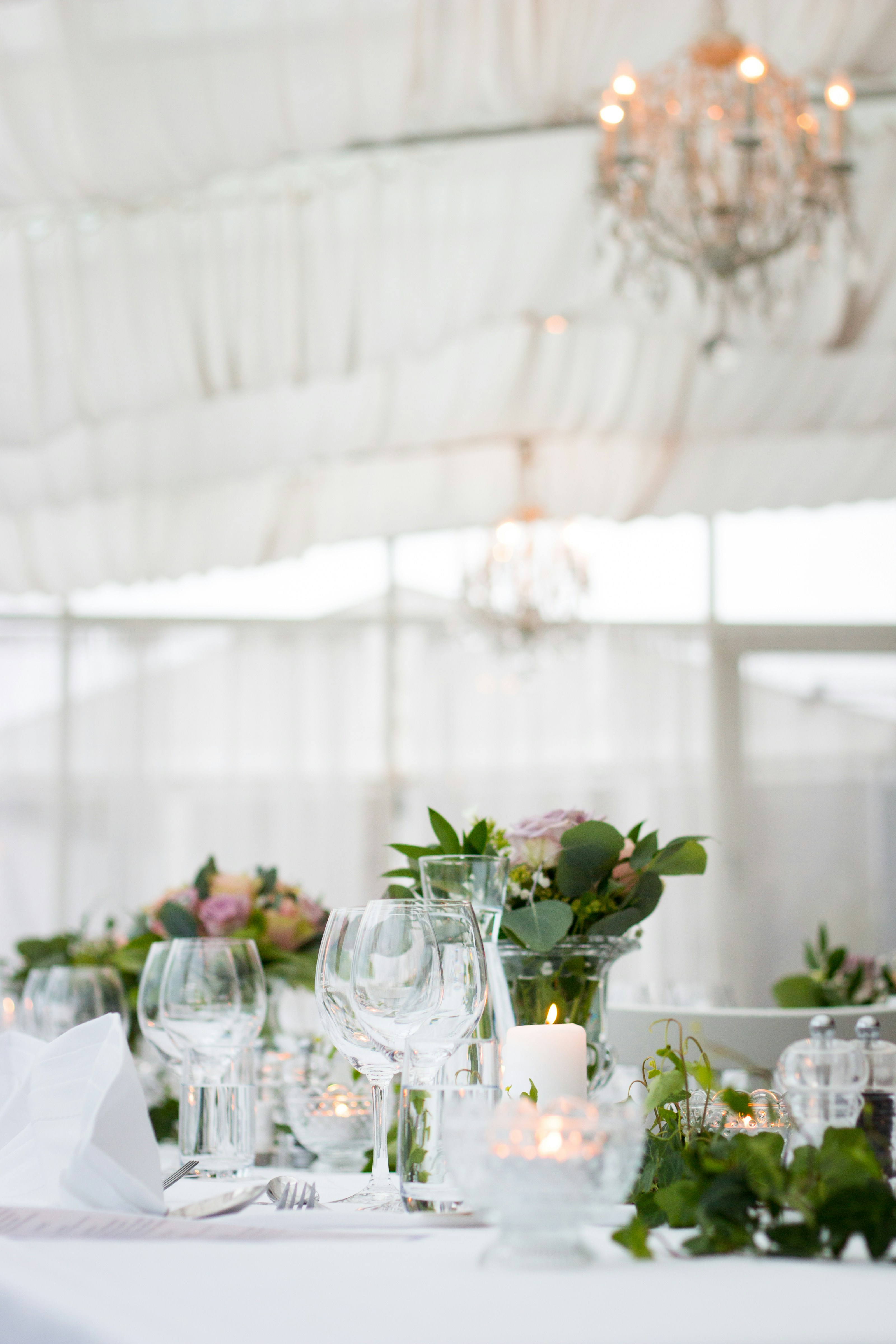
Why Trend-Driven Arrangements Age Poorly
Every few years a color story moves through weddings the way a hemline moves through fashion — dusty blue, then terracotta, then whatever comes next. An arrangement built to satisfy that season's palette dates the same way the photographs around it date. Look at a wedding album from 2015 and the florals often place it more precisely than the dress does.
A timeless floral composition is not colorless or safe. It simply does not depend on trend to carry it. The structure — silhouette, proportion, restraint — is what a viewer registers first, before they register whether the palette was fashionable that year. Color and variety shift within that structure; the structure itself does not.
We tell clients this plainly in the first consultation: if the arrangement's only strength is its color story, it has a shelf life measured in seasons. If its strength is composition, it has no shelf life at all. That distinction is worth the extra hour we spend on mechanics before we ever discuss which garden rose variety to source.
Principle One: Stem Count Has a Ceiling
The eleventh stem ruins the composition. This is not an aphorism — it is a measurable point at which a bouquet or compote stops reading as composed and starts reading as crowded. A hand-tied bridal bouquet built for a silhouette of nine to eleven focal stems collapses under its own density if a twelfth is added without restructuring the frame around it.
In practice, we count. An 18-inch low compote for a reception table typically holds twelve to sixteen stems well — garden roses, lisianthus, and a supporting structure of dusty miller or eucalyptus. Push past sixteen in that same vessel and the negative space that gave the arrangement its shape disappears, replaced by mass.
Common mistake: couples ask for arrangements to look "fuller" by adding stems rather than by increasing bloom size or adjusting the vessel's mouth width. The fix is almost never more material. It is choosing a larger-headed variety — a Mondial rather than a smaller spray rose — or widening the container so the existing stem count has room to breathe.
A useful discipline for any couple reviewing a proposal: ask the florist what the stem count is per arrangement, and ask why. If the answer is "as many as it takes to look full," that is a composition without a ceiling, and it will not hold.
Principle Two: Silhouette Is Decided Before Color
Color is the part clients arrive wanting to discuss first, and it is the last decision we make. The silhouette — round, cascading, asymmetric, architectural — is fixed before a single stem is cut, because everything after depends on the shape it is filling.
Consider two bouquets built with an identical palette of ivory, sage, and blush: one round and compact at nine inches across, the other loose and asymmetric with trailing clematis extending eighteen inches below the hand. Same flowers, same colors, entirely different compositions. The color did not determine the outcome. The silhouette did.
We ask three questions before discussing a single bloom: What is the dress silhouette — will a round bouquet compete with a fitted gown, or complement it? What is the ceremony's architecture — does the space call for height or for a low horizontal line? What is the client's own bearing — some carry an architectural, structured shape; others are overwhelmed by it.
Only once the silhouette is set do we discuss variety and color, because at that point every choice is filling a shape that already exists rather than inventing one as we go. This ordering is the single largest predictor of whether a composition reads as intentional or improvised.
Principle Three: Negative Space Is a Material
Negative space is treated by most as an absence — the parts of the arrangement where nothing was placed. In a disciplined composition it is treated as a material in its own right, chosen and shaped with the same intention as a garden rose or a stem of lavender.
A compote with no negative space reads as a solid mass, regardless of how fine the individual blooms are. The eye has nowhere to rest, and the arrangement tires quickly — both visually and, often, literally, as overcrowded stems compete for water and wilt sooner. A compote with generous negative space around three or four focal blooms reads as considered even from across a room.
Our rule of thumb in the workroom: for every focal stem — a garden rose, a peony — plan for roughly one stem-width of open space around it before adding the next. This is not a formula so much as a check against the instinct to keep adding until a gap looks "empty." Empty is doing work.
Couples often ask why a proposal sketch looks sparse compared to reference photographs pulled from social media. Frequently those reference photographs were shot within an hour of construction, before gravity and heat had settled the arrangement into its final, denser form. Building in negative space from the start accounts for that settling rather than fighting it later.
Principle Four: Choose Materials for How They Age, Not How They Photograph
Longevity is a design decision, not an accident of luck. Garden rose variety matters enormously here — a Mondial, properly conditioned, holds structure and color for five to seven days from delivery. A supermarket-grade rose selected for color match alone can brown at the petal edge within thirty-six hours, regardless of how carefully it is arranged.
We keep a working list of what holds and what does not: Vendela for a warm ivory that does not yellow under tent lighting, Quicksand for depth without the bruising some deeper reds show by hour six, lisianthus for volume that outlasts the ceremony and the reception both. Clematis and dusty miller are chosen as much for their structural resilience as their texture — they do not droop the way some greenery does under four hours of July heat.
Postharvest handling is where most of this is won or lost, long before a client sees the finished arrangement. Stems are cut at an angle, conditioned in cool water with the correct hydration solution, and stored at the right temperature for the specific variety — details covered well by Cornell Cooperative Extension's guidance on cut flower postharvest care. Skip this step and even the best variety underperforms.
The lesson for a couple selecting a florist: ask what happens to the flowers between delivery and the ceremony, not just what varieties are proposed. A studio with a conditioning process is choosing longevity as deliberately as it chooses color.
Principle Five: Proportion Belongs to the Room
An arrangement is not composed in isolation. It is composed against a room's ceiling height, a table's width, a doorway's scale. A twenty-four-inch arrangement that reads as generous on a six-foot farm table disappears entirely at the base of a twelve-foot ballroom arch, and the reverse mistake — oversized arrangements on intimate tables — crowds out conversation and the meal itself.
We measure before we design: table width, chair height, sightlines from the head table, ceiling height at the ceremony arch. A centerpiece built to sit at eye level when guests are seated works against conversation; one built twelve to fourteen inches above the table line, on a raised compote or riser, allows sightlines underneath while still registering as substantial from a standing view.
Common oversight: couples price a florist by comparing arrangement cost across venues without accounting for scale differences. A ballroom centerpiece built to hold its own against eighteen-foot ceilings costs more not because the studio is charging a premium, but because the stem count and structural support required to maintain proportion at that scale is genuinely greater.
Proportion, more than any other principle, is where reference photographs mislead. A composition photographed beautifully in one room can fail entirely in another if it is copied without adjusting for scale.
Where We See Composition Break Down in Consultations
After years of proposals and installations, certain patterns repeat. Naming them plainly saves clients money and disappointment both.
Each of these is correctable before the wedding date, but only if identified during the consultation rather than the week of installation, when material has already been ordered and conditioning has already begun.
What Disciplined Composition Actually Costs
Clients are often surprised that a restrained, twelve-stem compote can cost more than a visually "fuller" arrangement built on twenty-two stems of lesser-grade material. The reason is straightforward: fewer, better stems at a higher grade — Mondial or Quicksand garden roses rather than standard hybrid tea roses — carry a higher per-stem cost, often two to three times as much.
Labor is the other variable clients rarely see itemized. A disciplined low compote with negative space built in typically takes ninety minutes to two hours of a designer's time to construct and check for balance from every angle. A dense, high-stem-count arrangement can, counterintuitively, take less time — density forgives asymmetry in a way restraint does not.
For a full wedding order — bridal bouquet, six to eight bridesmaid bouquets, boutonnieres, and twelve to twenty reception centerpieces — this discipline adds up to real hours: we typically budget thirty-five to fifty studio hours across a design and production team for a wedding of that scale, spread across the week leading into the event.
The return on that investment is not measured in the wedding-day photographs alone. It is measured in whether the arrangement still looks considered in the album a client opens on a fifteenth anniversary, rather than dated the way a trend-driven palette inevitably will.
A Working Process, From Consultation to Installation
The process that produces a timeless composition follows a consistent order, and skipping steps in that order is the most common cause of a design that underdelivers.
First, a walkthrough of the venue itself — measurements of tables, ceiling height, natural light at the hour of the ceremony. Second, a conversation about silhouette, informed by the dress and the couple's own bearing, before any color is discussed. Third, material selection built around longevity: which garden rose varieties will hold through the specific season and length of the day, sourced from growers who can guarantee the grade required.
Fourth, a mock-up of one centerpiece and the bridal bouquet, built at full scale roughly three to four weeks before the date, allowing time to adjust stem count or proportion before the full order is placed. Fifth, conditioning begins forty-eight to seventy-two hours before the event, with cooler storage and hydration solution specific to each variety. Sixth, construction and installation, checked against the original silhouette sketch rather than improvised fresh on the day.
This order — venue, silhouette, material, mock-up, conditioning, construction — is what separates a composition from an arrangement assembled quickly the morning of. It takes longer. It is also the only sequence that reliably produces the result a couple is actually asking for, even when they arrive only knowing they want it to feel timeless.
What to Ask Before You Book
A short list of questions separates a studio working from these principles from one working from a trend board. Ask what the stem count will be per arrangement, and why that number. Ask which garden rose varieties are proposed and how they hold across a full day. Ask how far in advance conditioning begins, and what happens to the flowers between delivery and the ceremony.
Ask, too, to see the silhouette sketched or described before color is discussed — a studio working in the right order will have an answer ready, because the silhouette was decided first. And ask how the proposal accounts for the specific room: its ceiling height, its table width, its light at the hour of the ceremony.
None of these questions require floral expertise to ask. They require only the understanding that a considered composition is the product of decisions made in a particular order, for particular reasons — not a look assembled from whatever is trending the season a couple happens to be planning in.
The bride with the two photographs booked the compote built on restraint. She did not need to be told why it would still look right in twenty years. She could already see that it would.
Considered
What makes a floral arrangement look timeless instead of trendy?
Timelessness comes from restraint — a disciplined stem count, a clear silhouette, and materials selected for structure rather than novelty. Trend-driven arrangements lean on color palettes and blooms tied to a moment. A timeless composition is built on shape and proportion, which do not date the way a color story does.
How many stems should be in a wedding centerpiece?
It depends on the vessel and the table, but most low compotes hold their form well between twelve and sixteen stems. Beyond that, the silhouette collapses inward and the arrangement reads as dense rather than composed. The right count is set by the container's mouth width, not a fixed number.
Why do some wedding flowers wilt faster than others?
Hydration at the cellular level, not just water in the vase, determines longevity. Garden roses conditioned properly and cut at the right stage can hold five to seven days; blooms selected for color alone and rushed through processing often decline within two. Postharvest handling matters as much as variety.
Should wedding florals match the venue or contrast with it?
Neither, exactly. The strongest compositions are scaled and toned to work with the room's proportions and light, not to dominate it or disappear into it. An arrangement that competes with its setting has failed the same way one that is invisible has.
How far in advance should a couple book a florist for a wedding?
For a considered, made-to-order composition, nine to twelve months out is standard, particularly for peak spring and autumn dates. This allows time to source specific garden rose varieties, plan around bloom seasonality, and build the arrangement around the room rather than defaulting to whatever is available.