Crafting Unique Floral Arrangements: A Step-by-Step Guide to Timeless Wedding Compositions
A bride writes three days before her wedding asking whether the centerpieces can carry four more garden roses each — the tables, she says, look sparse in the mock-up photos. It's a familiar request in one form or another, and what she is asking for, though she wouldn't call it that, is permission to trade the composition for the appearance of abundance.
33 min read · Les Fleur Company
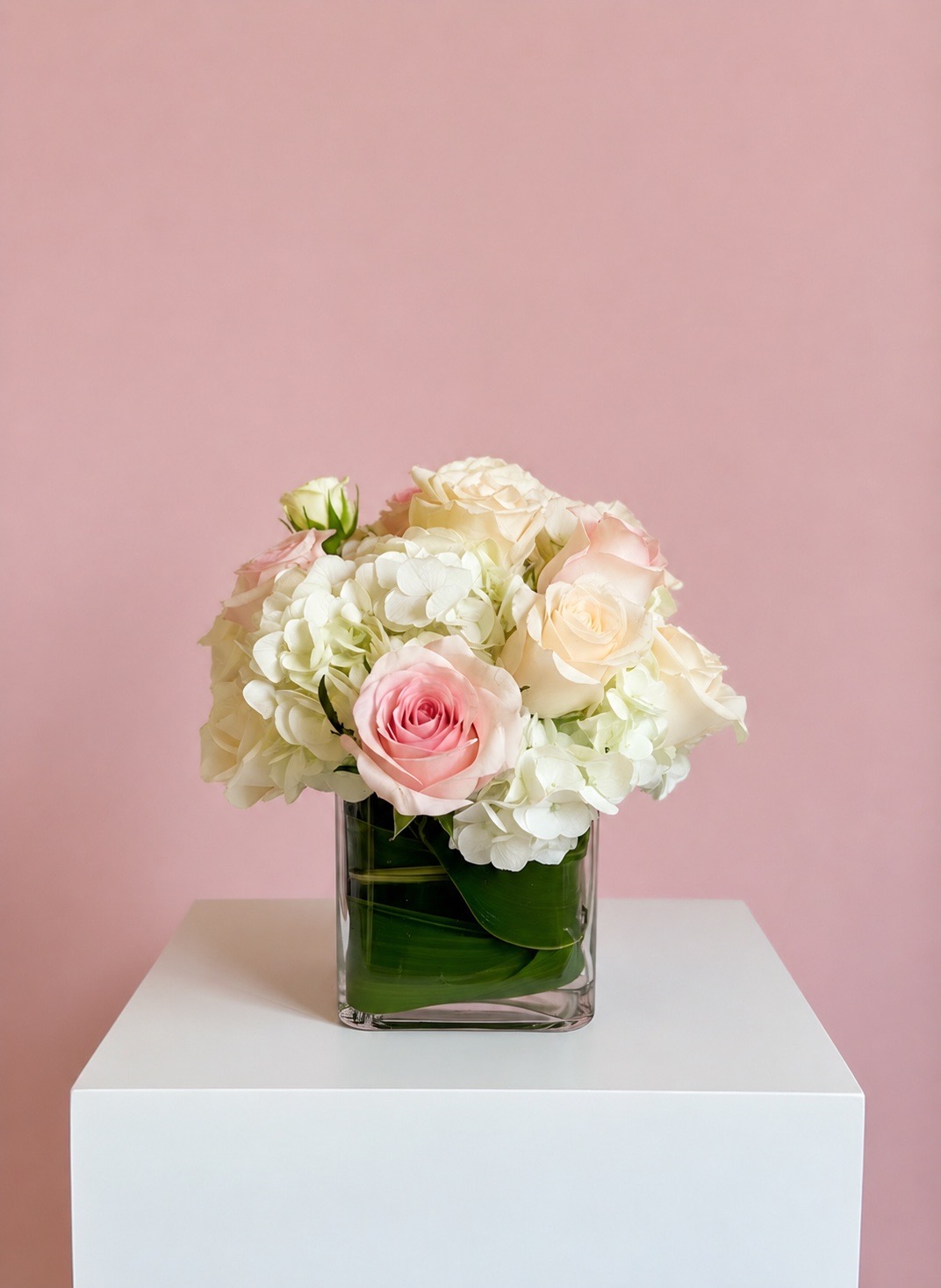
Start With Silhouette, Not a Flower List
Most consultations begin with a client naming flowers: peonies, garden roses, maybe eucalyptus for greenery. That's a reasonable place to start a conversation, but the wrong place to start a composition. A stem list without a silhouette is a grocery list, not a design.
Before choosing a single bloom, the shape the arrangement needs to occupy gets decided: a low, spreading mass along a 22-foot farm table, a tight round bouquet no wider than 9 inches for a bride under 5'4", a cascading form that draws the eye down an aisle runner rather than out. That silhouette dictates everything after it — which stems can hold a line, which can only fill, and how many of each the container supports before the shape collapses into a shrub.
Compare two arrangements built from the same 40 stems: one built to a tight, domed silhouette reads as finished. The other, with no governing shape, reads as a florist who ran out of vase and kept adding water. The difference isn't the flowers. It's the plan that came before them.
Ask a florist, at the first meeting, to describe the silhouette before naming a single variety. If the conversation goes straight to "we'll do peonies and ranunculus" with no mention of shape, height, or line, the composition is being decided by inventory rather than intention.
The Discipline of Negative Space
Negative space — the visible air between stems, the gap where a container's rim shows through — is the part of an arrangement most likely to be filled in by an anxious hand, and most likely to be the reason a piece reads as refined when it's left alone.
A trained eye can tell, from three feet away, when a designer has left room for a bloom to be seen individually rather than crowding a mass into an amorphous ball. In practice: for a 12-inch compote arrangement, negative space should equal roughly a third of the arrangement's total volume — enough that a single lisianthus or garden rose reads as a distinct event, not a smear of color.
This is the hardest instruction to give a nervous couple, because negative space photographs as absence, until the image sits next to a crowded arrangement and the crowded one looks smaller for its density. Give one bloom room and the arrangement gains scale. Crowd twenty stems together and it gains only weight.
The habit worth building, whether arranging your own reception flowers or briefing a florist: for every stem placed, ask whether removing it changes the silhouette. If the answer is no, that stem isn't doing structural work — it's filling the space that was making the other eleven stems visible.
Choosing Materials: Line, Form, Mass, and Filler
Every considered arrangement is built from four categories of material, and a florist who can name which stem belongs to which category is working from training, not instinct alone.
Line material gives an arrangement its outer shape and height — branches, delphinium, snapdragon, or a stem of flowering clematis trained to arc rather than stand. Form flowers are the focal blooms with clear architecture: garden roses in varieties like Mondial (dense, saturated, almost peony-like in fullness), Vendela (a cream that reads warm rather than stark under evening light), or Quicksand (a muted apricot that photographs well against skin tones). Mass material fills volume with smaller, repeated shapes — lisianthus, ranunculus, spray roses. Filler and textural material — dusty miller for its silvered softness, eucalyptus for line and scent, astilbe or wax flower for movement — knits the composition together without competing with the form flowers.
A common studio ratio for a 12-14 inch bridal bouquet: 3-5 stems of line material, 5-7 form flowers, 8-10 mass stems, and a modest handful of filler — never a filler-to-form ratio that overwhelms the roses doing the compositional work. When a bouquet feels heavy without feeling full, it's usually a filler problem, not a flower problem: too much greenery working to disguise a form choice that was never quite settled.
The Eleventh Stem: Why Restraint Reads as Considered
There's a version of every arrangement where ten stems make the composition and an eleventh, added with good intentions, ruins it. Not because the eleventh stem is unattractive on its own — because its presence collapses the negative space the first ten stems were sharing.
This runs counter to a client paying by the stem, who reasonably assumes more flowers means more value. But value in a floral composition isn't a function of stem count. It's a function of whether the arrangement holds its silhouette under the actual conditions of a wedding day — wind on a lawn ceremony, the crush of a reception aisle, six hours under tent lighting.
In studio terms, a composition gets tested by asking what happens if the last stem placed is removed. If the arrangement looks unfinished without it, it belongs. If the arrangement looks identical — or opens up and lets the Vendela roses read more individually — that stem was ornamental rather than structural, and instinct says add while restraint says stop.
Couples building their own arrangements can run this test at home with a modest grocery-store trial before committing to a full order: build a small arrangement, photograph it, then remove one stem at a time and photograph again. The version that looks most finished is rarely the fullest one.
Color Discipline: Building a Palette That Holds
A wedding palette built from a mood board of eleven colors will not survive contact with a reception hall's lighting. Warm-white string bulbs shift blush toward peach; a stone chapel with north-facing windows mutes a saturated palette into something closer to gray by late afternoon in autumn.
The disciplined approach: one dominant hue family — say, the cream-to-apricot range of Vendela and Quicksand roses — one supporting neutral, such as dusty miller's silvered green or the deep green of eucalyptus, and no more than one accent, a single note of plum lisianthus or burgundy scabiosa, used sparingly enough to read as intentional rather than a second competing palette.
Three colors, held with discipline, photograph as composed across every lighting condition a wedding day passes through — bright morning prep, golden-hour portraits, a dim reception. Six colors, however carefully chosen on a swatch, start to compete under artificial light, and the arrangement reads as busy rather than layered.
A practical test: photograph proposed palette swatches under a warm 2700K bulb, the kind used in most reception string lighting. If the colors blur into a single mass in that photo, they'll blur into the same mass in the reception hall.
Building the Composition: A Studio Process, Step by Step
A finished bridal bouquet or centerpiece is not improvised at the worktable. It follows a sequence, and skipping steps is the most common reason an under-briefed arrangement looks unresolved.
First, condition the material. Every stem is stripped of foliage below the waterline, cut at an angle under water, and rested in a cool room for a minimum of four hours — six for garden roses, which are thirstier than hybrid tea roses and will droop within a day if rushed to the worktable dry. Second, set the line: place three to five stems of the tallest, most flexible material to establish the outer silhouette before adding a single focal bloom.
Third, place the form flowers — garden roses or peonies set at varying depths, never all at one height, so the eye travels through the arrangement rather than landing flat. Fourth, fill mass, checking negative space after every third stem; this is the step most often rushed, and where a brief pause to view the arrangement from all sides prevents the eleventh-stem problem. Fifth, add filler last, sparingly, only where a visible gap in green or texture needs it — not by habit.
Finally, hydrate and rest the piece for two hours before transport, in a cool, dark space, ideally 34-38°F if a walk-in cooler is available. Followed in order, this sequence takes a trained designer 25-40 minutes per centerpiece and roughly 45 minutes for a full bridal bouquet — worth knowing when budgeting a florist's labor, not only their stem invoice.
Common Mistakes Couples Make — And What to Ask For Instead
Most disappointment with wedding flowers traces back to a handful of repeatable mistakes, not to a florist's skill.
Ask instead for a mock-up centerpiece four to six weeks out, a written stem count and ratio rather than only a total budget figure, and a seasonal availability conversation before settling on a specific bloom. A florist who welcomes these questions is one confident in the composition, not merely the invoice.
Materials That Keep: Choosing for the Full Day
A wedding floral arrangement has to survive more than a single photograph. It needs to hold its shape through a four-hour gap between ceremony and reception, transport in a non-climate-controlled vehicle, and — for the bridal bouquet specifically — six or more hours of handling.
Garden roses in tighter varieties, like Mondial, tend to hold their form longer than looser, more open varieties once out of water, making them a dependable choice for handheld bouquets. Lisianthus, by contrast, is remarkably durable for its delicate appearance and can go 8-10 hours without visible wilting when properly conditioned — worth knowing when a reception runs later than most.
Dusty miller and eucalyptus are chosen as much for durability as for color and scent; both tolerate heat and time out of water better than most flowering stems, which is part of why they appear so often in wedding work rather than purely for their look. The Royal Horticultural Society's guidance on rose care notes that cutting in cool morning hours and conditioning immediately significantly extends vase life — the same principle applies whether the rose ends up in a garden bed or a bridal bouquet.
This is the heritage argument in practical form: the arrangement built to keep is not a different arrangement from the one built to look composed on delivery. It is the same discipline, applied with an eye toward the eighth hour instead of only the first.
Working With Your Florist: A Timeline That Protects the Composition
The composition described in this guide is only achievable on a timeline that gives it room. Rushed sourcing and same-week decisions are where restraint gets abandoned first, because there's no time left to test a mock-up or reconsider a stem count.
A workable calendar: book a florist 9-12 months out for a wedding in peak season (May through October in most U.S. regions), following the consultation and design timelines the Society of American Florists outlines for full-service floral planning. Confirm final stem counts and palette 8 weeks before the date, when seasonal availability is locked and substitutions, if needed, can still be planned rather than improvised. Request a mock-up 4-6 weeks out. Finalize delivery and setup logistics 2 weeks out, including cooler space and transport vehicle details, which matter more than couples expect for arrangements over 18 inches wide.
Bring three reference photographs to a first meeting, not thirty. A florist working from a tightly edited reference set can identify the actual silhouette being responded to; a florist working from thirty saved images spanning six aesthetics is left guessing which one is the real brief.
The arrangement that does its work at a wedding is rarely the one guests comment on directly. It's the one no one mentions, because it never asked to be looked at — it simply held the room together, and stayed that way until the last toast was poured.
Considered
How many stems should be in a wedding bouquet?
There is no fixed number — a bridal bouquet is governed by silhouette and vessel size, not a target count. A common studio ratio for a 12-14 inch bouquet is 3-5 line stems, 5-7 form flowers such as garden roses, 8-10 mass stems, and a modest amount of filler. Adding stems beyond what the shape supports crowds the negative space and reads as heavier, not fuller.
What flowers last the longest in wedding arrangements?
Garden roses in tighter varieties such as Mondial hold their form longer than looser varieties once out of water. Lisianthus is notably durable for its delicate look, often going 8-10 hours without visible wilting when properly conditioned. Dusty miller and eucalyptus tolerate heat and time out of water better than most flowering stems, which is part of why they appear so consistently in wedding work.
When should I book my wedding florist?
For peak season weddings (roughly May through October in most U.S. regions), book 9-12 months ahead. Confirm final stem counts and palette 8 weeks out, when seasonal substitutions can still be planned rather than improvised. Request a mock-up arrangement 4-6 weeks before the wedding, and finalize delivery and cooler logistics 2 weeks out.
Why do more flowers sometimes make a centerpiece look worse?
An arrangement's visual weight comes from silhouette and negative space, not stem count. Adding stems without a governing shape collapses the gaps that let individual blooms read on their own, so the piece reads as crowded rather than composed. A wider vessel or a different silhouette usually solves a centerpiece that looks small — not additional stems packed into the same footprint.
How far in advance should I do a floral mock-up before the wedding?
Request a mock-up centerpiece or bouquet 4 to 6 weeks before the wedding date, ideally viewed under lighting similar to the reception venue. This timing still allows for adjustments to color, scale, or stem ratio without the pressure of a same-week decision, which is where most disappointment with wedding flowers originates.
What is the negative space rule in floral design?
Negative space refers to the visible air between stems in an arrangement. A common studio guideline is that negative space should account for roughly a third of an arrangement's total volume, giving individual blooms room to be seen rather than crowding them into an undifferentiated mass. Crowded arrangements often photograph as smaller and heavier than pieces with deliberate room left between stems.