Crafting Custom Floral Compositions: Form and Fragrance
A bride once asked her florist for "a little more" on the ceremony arch, twenty minutes before guests arrived. The arch already carried thirty-one stems of garden rose, clematis, and trailing eucalyptus, built over six hours to hold a specific line from the left post to the right. Adding stems at that point would not have made the arch fuller. It would have broken it. This is the quiet tension at the center of every custom floral composition: the instinct to add is almost always wrong, and the discipline to stop is the actual craft.
38 min read · Les Fleur Company
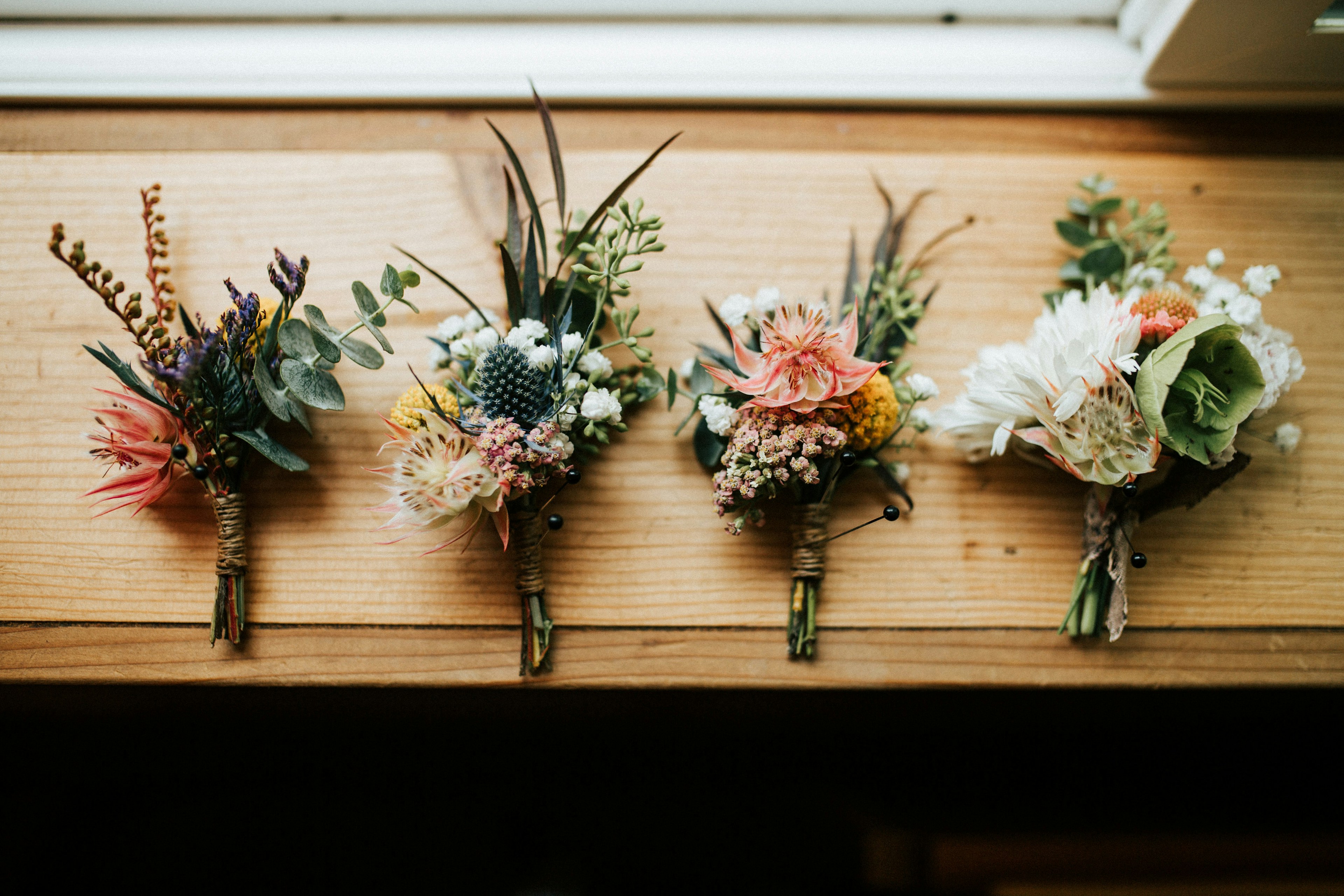
The Eleventh Stem
Every arrangement has a point past which it stops improving. Call it the eleventh stem, the one added out of nerves rather than need. A compote built to hold twenty-two stems does not become better at thirty-two. It becomes heavier, less legible, and harder to read from across a room.
In practice, this shows up most often when a client requests "full" or "lush" without a reference point. Full does not mean dense. A well-built arrangement reads full because of how negative space is distributed around the silhouette, not because every gap has been filled with a stem of dusty miller.
The discipline runs counter to instinct, particularly for clients accustomed to more-is-more retail bouquets. But restraint is what separates a composition from a bundle. For a longer treatment of this principle, see the five elements of a timeless floral composition, which covers silhouette discipline in more depth.
The practical rule used in the workroom: build to seventy percent of the volume that feels instinctively right, then step back for three minutes before adding another stem. Nine times in ten, nothing more is needed.
What Form Actually Means in a Floral Composition
Form is the skeleton underneath the flowers—the line the eye follows before it registers a single bloom. A cascading bouquet, a low compote, an asymmetric arch: each starts as a shape drawn in air, usually with foliage or branching material, before a single garden rose is placed.
Most amateur arrangements fail not because the flowers are wrong but because the form was never decided. Stems get added in the order they were purchased rather than the order the silhouette requires. The result photographs as a mass rather than a shape.
A useful exercise: sketch the intended outline on paper before conditioning a single stem. Mark where the highest point sits, where the lowest trailing element falls, and where the negative space should remain visible. This sketch becomes the contract the arrangement is built against.
Three silhouettes account for most formal wedding work:
Color theory interacts with form more than most clients expect—a palette guide is covered separately in this piece on color theory in wedding floral composition.
Fragrance as a Design Element, Not an Afterthought
Fragrance is usually the last decision made and should be among the first. Scent has weight, range, and a season, exactly like color or texture, and it behaves according to its own logic once placed in a room full of people, candles, and food.
Think of fragrance in three registers, borrowed loosely from perfumery: base notes that sit low and steady, heart notes that carry through the middle hours of an event, and top notes that announce themselves and fade quickly. Lavender and dusty miller function as base—quiet, herbal, present without demanding attention. Garden roses (Mondial, a deep red with moderate scent load, is a common heart-note choice) and peony sit at the heart. Clematis and stephanotis behave as top notes, sweet and immediate, best placed near entrances where guests pass through rather than sit for three hours.
The mistake most often made is treating fragrance as uniform—choosing flowers that all smell strong because strong reads as luxurious. In an enclosed reception tent, three heavily fragrant varieties compounding at once can overwhelm a room faster than any single design flaw. The fix is sequencing scent the way a composition sequences color: dominant, supporting, and quiet, in roughly a 20-60-20 distribution across the room's stems.
Building the Silhouette Before the Palette
Sequence matters. The workroom order that holds up across hundreds of installs: silhouette first, then structural material, then focal blooms, then fragrance, then color correction last. Reversing this order—starting with a color palette pulled from a mood board—produces arrangements that look correct in a photo and collapse in person.
Structural material means the branching, foliage, or woody stems that hold the shape once the mechanics are set. Eucalyptus, smokebush, and privet do this work. They are rarely mentioned in a client consultation and rarely photographed on their own, but they are load-bearing in every sense—remove them and the composition has no frame to hang color and scent from.
Only after the frame is set does focal material go in. This is where garden roses, peony, and lisianthus earn their place, one at a time, each checked against the silhouette sketch rather than added by habit. A florist who has built four hundred compotes still checks this way, because the temptation to skip the sketch never fully goes away.
The behind-the-scenes mechanics of this sequencing are detailed further in this guide to the craft behind bespoke arrangements, which walks through conditioning and mechanics in more technical detail than fits here.
Choosing Material by Function, Not Only Color
Every stem in a composition should be doing one of three jobs: holding structure, carrying focal weight, or contributing scent. Choosing material by color alone, without regard to function, is the single most common error in amateur floral work and a frequent one even among trained designers under deadline pressure.
Rose variety selection illustrates this well. Vendela, a creamy ivory garden rose, holds its form for five to seven days once properly conditioned and carries almost no fragrance—useful as a structural focal bloom where scent needs to stay quiet. Quicksand, a warm champagne-to-blush variety, shifts color slightly as it opens, which some ateliers use deliberately across a multi-day event to let the arrangement's palette deepen from ceremony to reception. Mondial carries more fragrance and a denser petal count, better suited as a heart-note bloom near seating where its scent has room to sit without crowding a shared table.
Lisianthus, often treated as a filler, deserves better billing—its ruffled bloom mimics peony at a fraction of the cost and a longer vase life, often ten to fourteen days compared to peony's three to five. For a nine-month wedding booked outside peony season, lisianthus is not a compromise. It is frequently the better material choice.
A material selection checklist worth using in any consultation: structure (does it hold shape for the full event window), fragrance (does it contribute or compete), and longevity (does it survive the gap between install and last dance).
The Atelier Process, Start to Install
Custom compositions are not assembled the morning of the event. The process for a full wedding order typically runs six to eight weeks from final variety confirmation to install day, with sourcing conversations beginning months earlier for anything requiring specific farms or growing regions.
A representative timeline: eight weeks out, final stem counts and varieties are locked against the season's availability. Three weeks out, a trial arrangement is built for any centerpiece appearing in more than twelve instances, to confirm the silhouette holds at scale. One week out, hard-good orders (compotes, mechanics, floral foam alternatives) are confirmed with the venue. Two days out, flowers arrive and conditioning begins—hydration, stripping, and in some cases a controlled cooler rest to slow bloom opening until install morning.
Conditioning is the least visible and most consequential stage. A garden rose cut and placed directly into an arrangement without twelve to twenty-four hours of hydration will underperform for the entire event, regardless of how well the silhouette is designed. This is the part of the atelier process clients never see and the part most responsible for whether an arrangement survives a ten-hour wedding day.
Studios working across multiple markets—Lake Tahoe among them—build in an additional buffer day when material travels any distance, since altitude and transit time both affect hydration on arrival.
Common Mistakes That Break a Composition
Most composition failures trace back to five recurring errors, all avoidable with process rather than talent.
Each of these is a process failure, not a design failure, which is the more useful way to think about them. Process can be fixed with a checklist. Talent cannot.
Balancing Form and Fragrance Across a Wedding Timeline
A wedding day asks a composition to perform in at least three distinct environments—ceremony, cocktail hour, and reception—each with different lighting, airflow, and proximity to guests. Fragrance and form both need to be planned against this sequence rather than treated as fixed from delivery to breakdown.
At a ceremony, outdoors or in a large room, fragrance can run heavier since airflow disperses it. This is the place for clematis, stephanotis, and heavily scented garden roses at the arch or aisle markers. Guests pass through rather than sit within the scent field for an extended period.
At cocktail hour, fragrance should soften. Guests are standing close to arrangements on cocktail rounds, often for forty-five minutes to an hour, holding food and drink. This is where lisianthus, dusty miller, and quieter rose varieties like Vendela do more of the work.
At the reception table, fragrance should recede almost entirely near the place setting, with any scented material concentrated at a centerpiece's edges rather than its center, or reserved for arrangements positioned away from the direct dining line—bar florals, entry pieces, restroom arrangements. This sequencing is standard practice across markets from El Dorado Hills estate weddings to dense urban venues, where ventilation is more limited and the margin for error on fragrance load is narrower.
Preservation and the Case for Restraint
A composition built with restraint tends to survive better, not only aesthetically but physically. Overcrowded arrangements trap moisture unevenly, stress stems against each other, and often show wilting hours before a sparser, well-conditioned composition of the same material.
There is a heritage argument here as well. Clients increasingly ask about preserving a bridal bouquet or a single arrangement after the event—pressed, dried, or cast in resin. Restrained compositions preserve more cleanly than dense ones, since each stem was placed with intention and can be extracted or dried individually without disturbing the surrounding structure.
The rose that keeps, in this sense, is rarely the one with the most petals massed around it. It is the one given room to be seen clearly in the first place, which is also the version most likely to be worth keeping at all.
For a client planning any high-occasion event beyond a wedding—an anniversary dinner, a landmark birthday—the same restraint principle applies at a different scale, discussed further in this piece on floral design for galas and landmark occasions.
Working With a Florist to Get This Right
The clearest way to arrive at a well-balanced composition is to bring a florist into the conversation earlier than feels necessary—ideally before a venue is fully locked, since room size and ventilation both affect the fragrance decisions above.
Come to the first consultation with three things: photographs of spaces you respond to (not just flowers), a rough guest count by moment of the day, and an honest account of any scent sensitivities among the wedding party. This last detail is asked less often than it should be and prevents a costly late change.
Ask direct questions of any atelier under consideration: how far in advance do they lock varieties, what is their conditioning process, and how do they sequence fragrance across a venue. The answers reveal more about the studio's process than any portfolio image.
A composition, done well, does not announce itself. It holds a room together for six hours and asks nothing of the people standing near it. That is the entire measure of the work.
Considered
How many stems should be in a custom floral composition?
There is no fixed number, but most well-composed centerpieces and compotes hold between eighteen and twenty-eight stems, depending on scale. The count matters less than the discipline behind it—each stem should carry a job. Past a certain point, additional stems crowd the silhouette rather than complete it.
Do fragrant flowers work at a formal dinner or wedding reception?
They can, but placement matters more than presence. Heavily scented varieties like garden roses, lavender, or clematis read well at entryways, ceremony arches, and low tablescapes away from the plate. Keep the strongest scents off the immediate dining surface so they do not compete with food.
What is the difference between floral design and floral composition?
Floral design typically describes the technical arrangement of stems—mechanics, structure, color. Composition is the discipline that governs those choices: silhouette, negative space, and restraint. A well-designed arrangement can still fail as a composition if it lacks a controlling idea.
How far in advance should custom floral compositions be planned for a wedding?
Most ateliers request nine to twelve months for full custom work, with material and variety selection finalized six to eight weeks before the event. This allows time to source specific rose varieties, confirm seasonal availability, and run a trial arrangement if the scale warrants it.
Why do some flower arrangements smell overwhelming in a small room?
Fragrance compounds concentrate in enclosed spaces, and heavy-scented stems like lilies or hyacinth can dominate a room that lacks airflow. The fix is proportion—reduce the count of high-fragrance stems and let quieter foliage like eucalyptus or dusty miller carry more of the visual volume.
Can a floral composition be both fragrant and long-lasting?
Yes, with the right variety selection and conditioning. Garden rose varieties such as Mondial hold scent and structure longer than many fragrant lilies, and proper hydration before the event extends both bloom life and fragrance intensity through a full day.