Timeless Floral Arrangements Built to Endure
A bride once asked, three weeks before her wedding, why the sample arrangement in her consultation photo looked nothing like the centerpiece at her best friend's reception six months earlier — same flowers, same florist, same season. The difference was not the flowers. It was the six hours between the first photograph and the last dance, and whether anyone had designed for them. Most couples do not ask this question until the reception is already underway and the arrangement they paid for has started to lean, gap, or drop. By then it is too late to fix. The fix happens at the workbench, weeks earlier, in decisions about structure that have nothing to do with how an arrangement looks the moment it is finished and everything to do with how it looks four hours later.
35 min read · Les Fleur Company
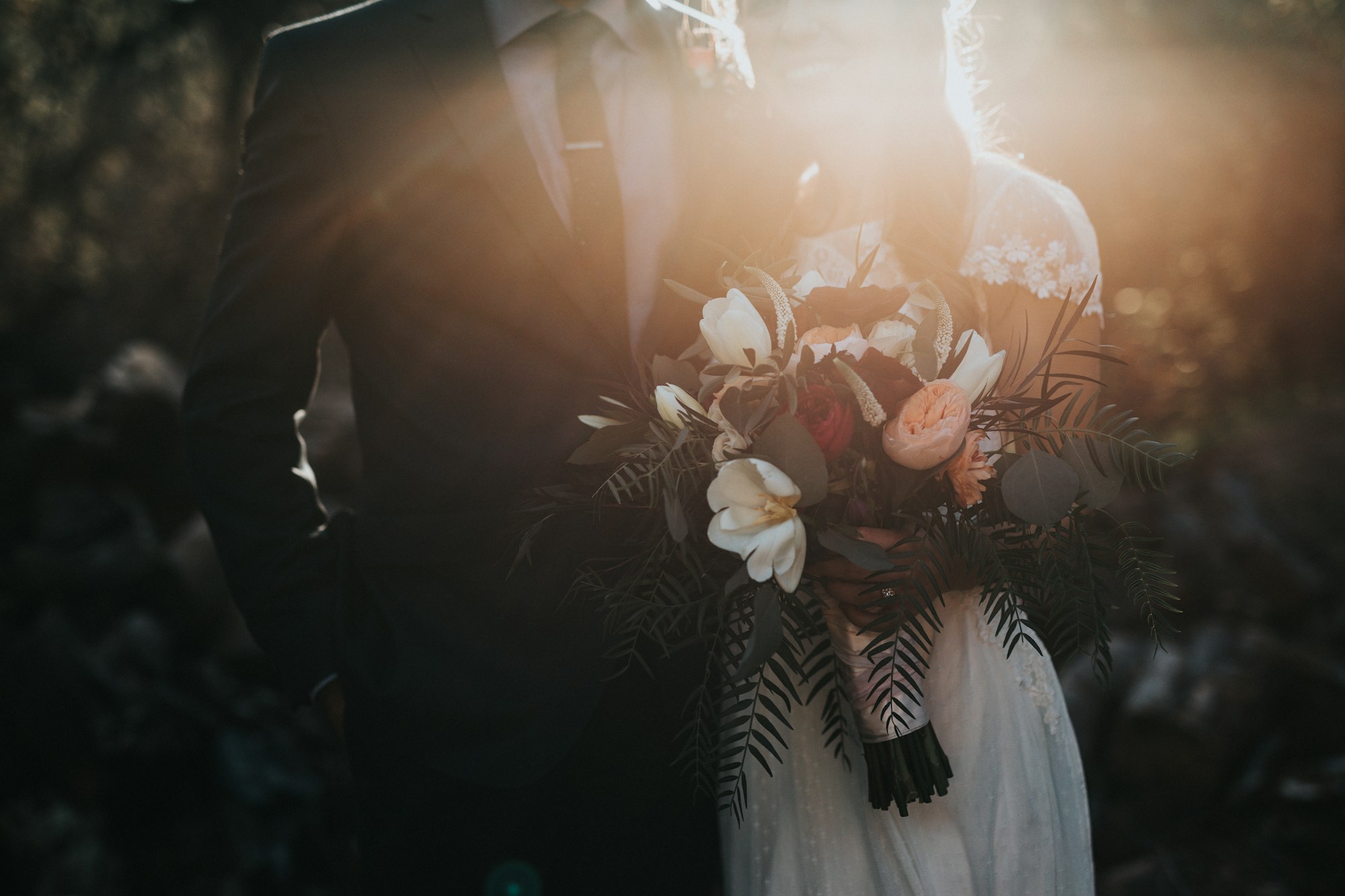
What Endurance Actually Means in a Composition
Endurance is not a marketing word in this studio. It is a measurable outcome: does the arrangement hold its silhouette from the ceremony processional through the last toast, roughly six to eight hours later, without resetting. Most florists never test for this because most florists are paid for the delivery photo, not the teardown.
An arrangement that endures is built the same way whether it will sit for two hours or ten. The difference is in the conditioning window beforehand and the ratio of structure to bloom. A composition with too much flower and too little frame fails at hour three. One built on a disciplined armature — chicken wire, a floral frog, sometimes both — holds at hour eight because every stem has its own angle and its own access to water.
This is the same discipline we write about in the five elements that govern a timeless composition: proportion, line, focal point, rhythm, and restraint. Endurance is simply what those five elements look like under time pressure.
Clients rarely ask about this directly. They ask whether the flowers will "hold up." The honest answer requires knowing the venue's temperature, the hour the ceremony starts, and how long the reception runs — details a composition is built around, not decorated with.
The Eleventh Stem and Why Restraint Is a Lifespan Decision
There is a point in every arrangement where one more stem stops adding and starts subtracting. In this studio we call it the eleventh stem — the one added after the composition was already finished, usually because a bouquet of thirty stems felt thin next to a wedding budget that suggested it should look like fifty.
That eleventh stem does two things. It disrupts the negative space that gave the arrangement its shape, and it competes for the same water supply as every stem already in place. A bouquet built for thirty stems and stretched to forty does not last longer because it has more flower. It lasts less, because the design was never engineered to support that density.
We hold stem counts to a number decided before cutting begins, not adjusted upward during assembly. A bridal bouquet in this studio typically runs 28 to 36 stems depending on bloom size — fewer for garden roses at full bloom, more for something smaller like lisianthus. That number is fixed in the design phase, and nothing gets added past it regardless of how the arrangement looks halfway through.
The read more on this discipline in our note on harmony and restraint in composition — the argument there is aesthetic. The argument here is practical: restraint is what keeps the arrangement standing at hour six.
Material Selection: Which Blooms Actually Hold
Not every flower is built for a long day, and pretending otherwise is how arrangements fail by the reception's second course. Garden roses in the Mondial and Vendela varieties hold their form for eight to ten hours once conditioned properly — their density gives them structural patience that thinner-petaled blooms lack. Quicksand, with its warmer tone, performs similarly and is a frequent choice for autumn weddings for that reason.
Lisianthus and clematis are close behind, both holding shape and color through a full reception when kept out of direct heat. Peony and dahlia are shorter-lived by comparison — gorgeous at hour one, visibly softened by hour five — and we generally place them in arrangements seen earlier in the day: ceremony arches, welcome tables, anything photographed before the reception clock starts running.
Lavender, dusty miller, and eucalyptus earn their place for a different reason. They are not the stems a guest remembers, but they are the ones holding the composition's structure and scent through the entire event without wilting, which is why they appear in nearly every long-format arrangement this studio builds.
Structure Before Volume: The Armature Nobody Sees
Every arrangement that holds through a full event has something underneath it that no guest will ever notice: a frame. In this studio that is almost always chicken wire, cut and folded into the vessel before a single stem goes in, sometimes paired with a floral frog for anything top-heavy like a garden rose dome.
The frame does the work that volume is usually asked to do. Without it, florists compensate for instability by adding stems until the arrangement physically props itself up — which is how an arrangement ends up with forty stems where twenty-five would have held, and why it starts shedding petals by hour four once that overcrowded base begins shifting.
With a proper armature, each stem is seated at its own angle, with its own access to the water below. That is the difference between an arrangement that droops uniformly over six hours and one that looks, at the end of the night, close to how it looked at the start.
This is also where negative space earns its keep structurally rather than just visually — the gaps between stems are not gaps in craft, they are gaps that let air and light reach blooms that would otherwise crowd each other into an early wilt.
Conditioning: The 18 Hours Before Anyone Sees the Flowers
No arrangement outlasts the condition of its materials when they arrived at the workbench. Every stem in this studio is processed the same way: stripped of lower foliage, cut at an angle, and set into a cool, dark holding space for 18 to 24 hours before design begins. This is not a precaution. It is the single largest factor in whether an arrangement holds through a reception or fails by the toasts.
Flowers delivered straight from a grower's box and arranged the same afternoon look identical to properly conditioned ones for the first two hours. The difference shows up later — stems that were never given time to fully hydrate drop their heads first, usually right around the hour most guests are taking photos with the centerpieces.
Temperature matters as much as time. Garden roses conditioned at 38 to 40 degrees Fahrenheit and brought to room temperature gradually on the morning of the event outlast roses pulled cold and placed directly into a warm reception tent. The shock of that temperature jump is what causes bent necks and dropped petals by the first dance.
The Association of Specialty Cut Flower Growers documents this postharvest handling window in detail, and it matches what we see on every delivery day: the flowers that were given time are the ones still standing at the end of the night.
Designing Around the Day, Not the Photograph
The most common briefing mistake a couple makes is arriving with a board of images and no itinerary. An arrangement designed only to be photographed at 4 p.m. is a different build than one designed to survive an outdoor ceremony at noon, a cocktail hour in direct sun, and a reception that runs until 11.
We ask every client the same three questions before sketching anything: what time does the ceremony start, is any part of the day outdoor and exposed, and how many hours pass between setup and the last guest leaving. The answers change stem selection, armature choice, and sometimes vessel material — a ceramic vessel holds water temperature more evenly than glass in direct sun, which matters for an arrangement sitting on an unshaded table from 2 until 9.
Couples planning in warmer climates, including mountain settings like Lake Tahoe where afternoon sun and evening cold both come into play within the same day, need this conversation earlier than most — the temperature swing itself becomes a design constraint.
An arrangement built for the day, rather than for the hour of the photograph, is the one still intact when the photographer packs up.
Color and Texture That Photograph Well at Hour Eight
Color does not fade uniformly. White and ivory blooms show stress first — a bruised petal edge or a browning tip reads immediately against a pale surface. Deeper tones, the burgundy of a garden rose or the green-cream of Quicksand as it opens further into the day, mask the same stress for hours longer.
This is a practical argument for restraint in palette, not just in stem count. A composition built entirely in soft white reads as elegant at the ceremony and fragile by the reception's second hour under tent lighting. Layering in deeper tones and structural greens — eucalyptus, dusty miller — gives the eye somewhere else to land once the palest blooms begin to show their age.
Texture follows the same logic. Smooth, dense petals like a garden rose hold their surface integrity longer under handling and photography than something papery and thin. An arrangement built from a mix of textures, rather than a single uniform bloom type, tends to look intentional rather than tired by the end of the night, because no single texture is doing all the visual work.
The guidance in our piece on building a floral legacy rather than a single-day bouquet covers this same tension between what photographs beautifully at minute one and what still reads well eight hours later.
Common Mistakes and What to Do Instead
The most expensive mistake is ordering by budget rather than by stem count. A couple who asks for "as full as possible" within a price range is, without meaning to, asking for an arrangement engineered to fail early, because fullness past a certain point is achieved by skipping the conditioning and armature work that holds a smaller arrangement together.
A second mistake is choosing peony or dahlia for a late-evening centerpiece because of a reference photograph taken on someone else's wedding morning. Both are early-day flowers. Asking them to hold until 10 p.m. under tent heat is asking them to do something they were never conditioned for.
A third mistake, more administrative than aesthetic, is finalizing the flower order too close to the event. Specific garden rose varieties — Mondial, Vendela — are grown to order by most farms, and a florist needs 10 to 12 weeks of lead time to secure them rather than substitute whatever variety happens to be available that week.
What Happens After: Preservation as the Final Measure
The true test of whether an arrangement was built correctly happens weeks after the wedding, when a couple decides whether the bouquet is worth preserving. Freeze-drying and pressing both depend on flowers that were never over-hydrated, bruised in transit, or left in a hot car between the ceremony and the reception — damage that does not show immediately but ruins the preservation process later.
Smithsonian Gardens' conservation notes on flower preservation make the same point from a different angle: the handling before preservation determines the outcome far more than the preservation technique itself. A florist who conditions and handles stems correctly through the event hands a preservationist something worth the effort. One who does not has already decided the bouquet's fate before anyone presses a single petal.
This is the throughline between a composition built for endurance during the day and a composition that has a second life afterward — the same discipline, structure, and restraint that hold an arrangement through six hours of a reception are what make it worth keeping at all. Our note on the atelier's relationship with impermanence looks at the other side of this — the arrangements never meant to last past a single evening, and why that is its own kind of discipline.
A bouquet that was handled well owes nothing to luck by the time it reaches a preservationist's table.
A Closing Note on What Lasts
Nobody at a reception thanks the florist for the chicken wire. They remember the arrangement standing at the edge of the dance floor, still upright, still itself, long after anyone stopped looking at it directly. That is the quiet standard this studio builds toward — not the photograph taken at four o'clock, but the centerpiece still holding its shape when the last song plays.
Considered
What makes a floral arrangement last through a full wedding day?
Conditioning and structure. Stems need 18 to 24 hours of hydration in a cool, dark space before design. A hidden armature — chicken wire or a floral frog — holds each stem at its own angle so none compete for water. Arrangements built this way hold through a six-hour reception without resetting.
Which flowers hold up best for a long wedding day?
Garden roses like Mondial and Vendela, lisianthus, and clematis hold their form for eight to ten hours once properly conditioned. Peony and dahlia are shorter-lived and better suited to arrangements seen earlier in the day, such as ceremony installations rather than late reception tablescapes.
Does a fuller bouquet mean a more luxurious one?
No. A bouquet built past 30 to 40 stems begins to compete for water and light within its own structure, and the silhouette suffers before the day ends. Restraint — a defined stem count and visible negative space — produces an arrangement that holds its shape longer than one built for volume.
Can wedding flowers be preserved after the event?
Yes, but only flowers handled correctly beforehand preserve well. Freeze-drying and pressing both depend on blooms that were not over-hydrated, bruised, or held in warm temperatures the week of the event. A florist who conditions properly gives a preservationist something worth keeping.
How far in advance should flowers be ordered for a wedding?
Most ateliers place final orders with growers 10 to 12 weeks out, with a final stem count confirmed 2 to 3 weeks before the event. This window allows for sourcing specific varieties, such as a particular garden rose cultivar, rather than substituting whatever is available that week.
What is the biggest mistake couples make when briefing a florist?
Leading with a Pinterest board of maximalist arrangements rather than describing how the day will actually move — outdoor ceremony, indoor reception, hours between. An arrangement designed without that information is designed for a photograph, not for the day it has to survive.