Seasonal Wedding Florals: The Atelier Case for Choosing by Season, Not Wish List
A bride called the studio in October asking for peonies in December. She had seen them in a friend's May wedding — full, blush, the size of a fist — and wanted the same for a candlelit reception at the end of the year. The honest answer took longer than she expected: peony does not grow in December in the Northern Hemisphere, the Southern Hemisphere crop that could be flown in would arrive tight and unlikely to open in time, and the cost of trying would run nearly double what a December flower earns on its own. She left with amaryllis and garden roses instead, and by the reception no one asked where the peonies had gone.
39 min read · Les Fleur Company
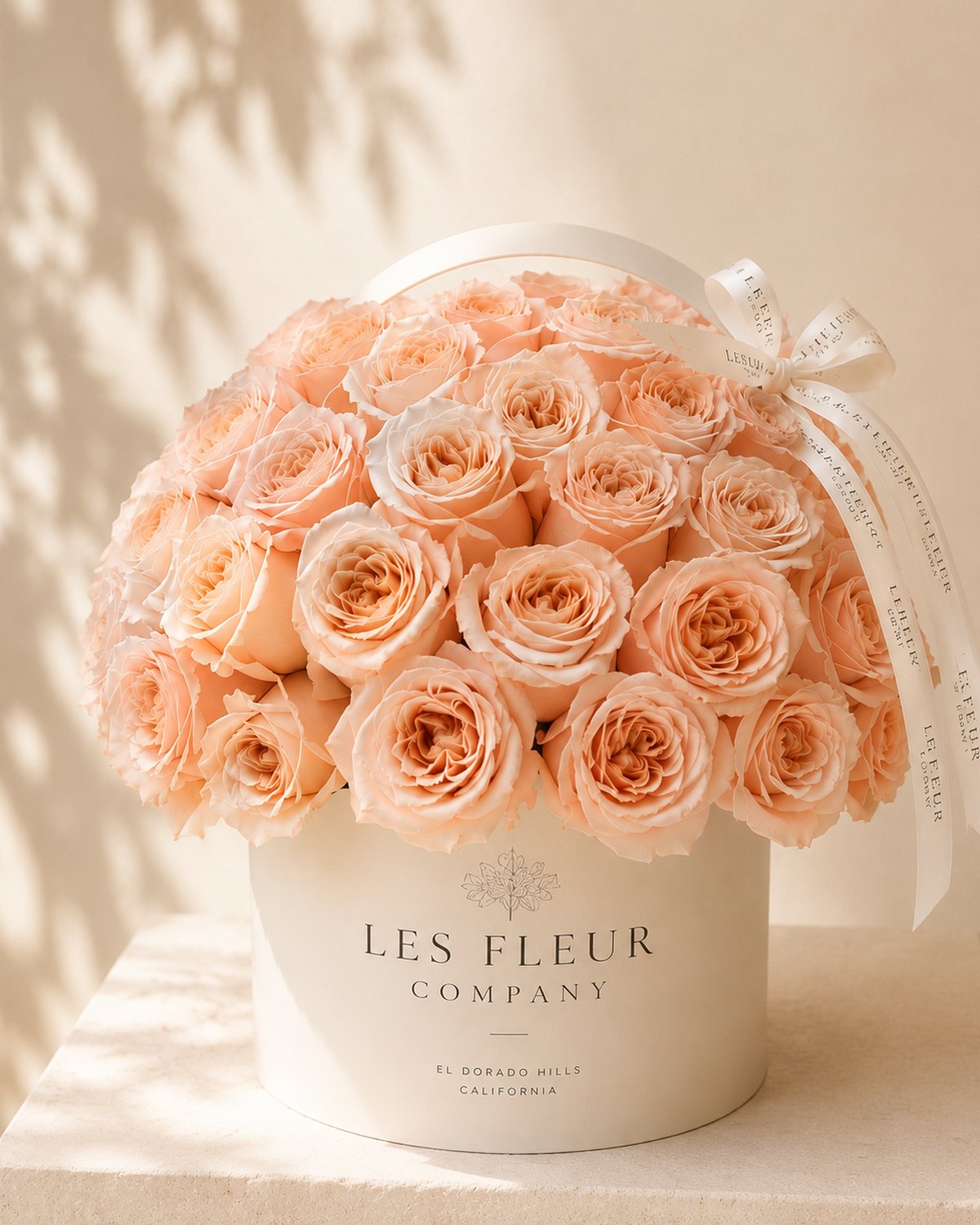
Why the Calendar Runs the Studio, Not the Mood Board
Every stem has a window. Peony holds roughly six to eight weeks, typically late April through June depending on latitude. Dahlia holds from July into first frost. Garden roses have the longest domestic season of the three, but even they thin out in the coldest months, when supply shifts to hothouse growers at a different price point entirely.
A studio that ignores this and designs from a saved image first will spend the client's budget chasing a substitute rather than building something considered. The stem gets flown in from Chile or the Netherlands, held in refrigeration through customs, and arrives at the workroom already a few days into its short life. It photographs acceptably in the flat-lay. It does not hold through a six-hour reception.
The discipline is choosing what the season offers at its best and building the arrangement's strength from that, rather than treating every wish-list flower as non-negotiable. A June wedding built on peony, garden rose, and clematis will outperform a June wedding built on out-of-season dahlia trying to look like something it isn't.
This is not an aesthetic compromise. It is the same reasoning a serious kitchen applies to produce, and it tends to read as more considered to a guest who has been to enough weddings to notice when the flowers look tired by hour four.
Spring: Garden Roses, Ranunculus, Sweet Pea
Spring is the most forgiving season to design in, largely because so much comes into bloom at once. Garden roses — Mondial for its density, Vendela for its ivory restraint — anchor most spring compositions. Ranunculus adds paper-thin petal texture without competing for attention. Sweet pea contributes scent, which matters more than most couples budget for; a ceremony arch with sweet pea worked through it changes how the space is remembered.
Tulip and lilac round out the early months, before late May brings the first peony of the year. Anemone, with its dark center, gives a spring palette contrast without introducing a second color family.
A typical spring bridal bouquet at the studio runs 18 to 24 stems total — fewer than clients expect, more disciplined than what a big-box order would produce. The restraint is intentional. A spring bouquet overloaded with every available bloom loses its silhouette; a spring bouquet built from four or five varieties, repeated with confidence, holds its shape through the receiving line and the photographs after.
Spring sourcing is comparatively low-risk. Domestic growers across California, the Pacific Northwest, and parts of the Northeast are in full production, which keeps both quality and pricing more predictable than any other season on the calendar.
Summer: Peony, Clematis, Lisianthus, Dahlia's Early Arrival
June and July hold peony at its latest and dahlia at its earliest, which gives summer weddings a rare overlap most other months don't offer. Lisianthus, sometimes mistaken for a rose at a glance, extends through the entire season and holds exceptionally well in heat — a real consideration for an outdoor June reception where the flowers sit through a warm afternoon before the ceremony even begins.
Clematis vine works into arrangements and installations where movement matters — a trailing element off a compote, a soft line through a ceremony arbor. Dusty miller, silvery and matte, gives a summer palette somewhere to rest the eye between saturated blooms.
Heat is the summer florist's real adversary, not sourcing. Stems are conditioned the night before in a cold room held near 34–38°F, then built the morning of and kept out of direct sun until the last possible moment before ceremony placement. A studio that skips this step will watch a beautiful arrangement wilt visibly by cocktail hour, regardless of how well it was designed.
Summer is also when studios see the widest range of client requests, since the season overlaps visually with both spring and autumn palettes. The discipline here is choosing one direction and holding it, rather than blending the two into something that reads as indecisive.
Autumn: Dahlia, Chrysanthemum, Amaranthus, Dusty Miller
Dahlia carries an autumn wedding the way peony carries a spring one — full, structured, available in a range from café-au-lait neutrals to deep burgundy. Chrysanthemum, unfairly associated with funeral arrangements in casual conversation, is in the middle of a real reconsideration among serious florists; the spider and football varieties in particular read as sculptural rather than sentimental.
Amaranthus, trailing and deep red or green depending on variety, gives autumn compositions the same movement clematis gives summer ones. Dusty miller continues its season here too, now paired against warmer tones instead of cool ones.
Autumn is a genuinely strong season for domestic sourcing in most of the country, second only to spring, and pricing tends to reflect that. A couple planning a September or October wedding with a considered dahlia-and-chrysanthemum palette will typically see a lower proposal than a couple insisting on out-of-season peony for the same month.
The one caution: first frost is unpredictable, and dahlia is frost-sensitive. Studios working with local growers build in a buffer — usually ordering the final week's stems from a secondary supplier as insurance against an early cold snap wiping out the primary farm's crop.
Winter: Amaryllis, Garden Roses, Anemone, Eucalyptus
Winter asks the most of a florist because so little is genuinely in season. Amaryllis becomes the workhorse — large-headed, formal, available reliably from November through the holidays. Garden roses shift to hothouse-grown stock, still excellent quality but at a different price point than their spring counterparts. Anemone has a second, smaller season in late winter that overlaps usefully with early spring bookings.
Eucalyptus, evergreen and available year-round, becomes more prominent in winter arrangements than in any other season — not as filler, but as structure, giving weight to compositions when flower variety is genuinely limited.
This is the season where the case for seasonal design is most tested, because winter weddings often come with the most ambitious mood boards — full of spring and summer references pulled from other people's weddings shot in warmer months. The honest studio walks the client through what November or January actually offers before the design meeting goes further, and builds from there rather than promising a substitution that won't hold.
Winter proposals, done honestly, are not necessarily cheaper than other seasons — hothouse and greenhouse stems carry their own premium — but they avoid the steepest costs, which come from air-freighting out-of-season blooms across hemispheres.
The Atelier Calendar: Sourcing and Lead Times
Behind every seasonal arrangement is a sourcing calendar most clients never see. Domestic stems are typically ordered 10 to 14 days before the wedding date, timed against the grower's harvest window rather than the studio's convenience. Garden roses and other specialty imports need 6 to 8 weeks of lead time, ordered through wholesale relationships the studio has built over years, not weeks.
A full wedding program — bridal party, ceremony structure, reception tables, incidental arrangements — is typically finalized in stem count and variety 6 to 8 weeks before the date, with the final order placed to the grower or wholesaler no later than 10 days out. This is not bureaucracy; it's the only way to guarantee the flowers ordered are the flowers that arrive.
The week of the wedding follows a fixed rhythm at most serious studios: stems arrive Tuesday or Wednesday, are processed and conditioned Wednesday through Thursday, arrangements are built Thursday into Friday, and installation happens the morning of or the evening before, depending on the venue's access window.
Clients who understand this timeline tend to have smoother planning experiences overall — they stop asking for last-minute substitutions two weeks out, once they understand that the order has already been placed with the grower and cannot be undone without real cost.
Composition: Why Restraint Matters More in a Seasonal Palette
A limited seasonal palette forces a discipline that an unlimited budget and unlimited flower access would never produce on its own. When only four or five varieties are genuinely at their peak in a given month, the florist is pushed toward repetition, toward negative space, toward a silhouette rather than an accumulation.
This is where the real craft shows. The eleventh stem in a bouquet — the one added because there was room, not because the composition needed it — is usually the one that ruins it. A seasonal palette makes that discipline easier to hold, because there simply isn't a tenth variety competing for space.
The strongest seasonal arrangements the studio has built share a pattern: three to five varieties, one clear dominant bloom, and enough negative space that the arrangement reads as composed rather than gathered. A dahlia-and-amaranthus centerpiece with room to breathe photographs better and holds attention longer than a centerpiece stuffed to its edges with every autumn stem available.
Couples sometimes resist this at the design meeting, worried that fewer varieties means less value for the money spent. The opposite tends to be true once the arrangements are seen in the room.
Heritage: Why Seasonal Flowers Age More Gracefully
A flower cut near its natural peak, grown within a reasonable distance of the studio, tends to hold its structure longer than one flown across hemispheres and held in cold storage for a week before it ever reaches a workroom. This matters for the six hours of a reception, and it matters again afterward, for couples who want to press a bouquet or preserve a single stem.
Garden roses in particular preserve well when cut fresh and dried properly — a consideration some couples don't think about until months after the wedding, when they're deciding what, if anything, to keep. A stem that arrived already stressed from transit rarely dries with the same form.
There's a longer case here too, about permanence — about choosing materials that were never meant to last forever, but that do their work honestly while they're present. A seasonal flower doesn't pretend to be something it isn't. It opens on its own timeline, holds for the hours it's needed, and is allowed to be exactly what the month provided.
That is, in the end, closer to what heritage means in this context — not preservation for its own sake, but a kind of honesty about what a material can and cannot do, chosen and used accordingly.
The Budget Conversation, in Real Numbers
Couples rarely ask directly how much seasonality affects the bottom line, so the studio raises it early. A forced out-of-season substitution — peony in December, for instance — typically adds 40 to 60 percent to the cost of that particular stem, once air freight, customs handling, and cold-chain storage are factored in. Across an entire wedding program, building around the season instead can bring the total proposal in 15 to 30 percent lower than one built around a fixed, out-of-season wish list.
A useful way to think about it: a mid-size wedding with a bridal party of six, a ceremony structure, and reception centerpieces for twelve tables might run in a certain range built seasonally in June. Ask for December peonies in the same program, and the peony line alone can add several thousand dollars before anything else in the proposal changes.
None of this means winter or off-peak weddings are compromised. It means the palette gets built from what the season does well — amaryllis and garden rose in December rather than a strained peony substitute — and the budget goes further as a result.
The studios worth hiring will walk through this math before the contract is signed, not after the flowers arrive.
Working With the Season Instead of Against It
The couples who end up happiest with their flowers are rarely the ones who got every bloom from the original mood board. They're the ones who let the florist explain what the month actually offers, then trusted the studio to build something with restraint inside that window.
Start the flower conversation with the date already fixed and ask the studio directly what's genuinely in season then — not what can be flown in, but what's growing. That single question reorders the rest of the planning conversation, usually for the better.
The room remembers the arrangement that held through the night, not the one that arrived by import and wilted before the toasts. Choose accordingly.
Considered
What flowers are in season for a spring wedding?
Spring brings garden roses (Mondial, Vendela), ranunculus, sweet pea, tulip, lilac, and early peony toward late May. Anemone and clematis extend the range for texture. These stems are widely grown domestically in spring, which keeps both cost and quality more consistent than off-season imports.
Can I still have peonies for a winter wedding?
Technically yes, through Southern Hemisphere import, but expect a premium of 40–60% over spring pricing and blooms that may not fully open by the ceremony. Most ateliers recommend garden roses like Quicksand or amaryllis instead — both read as full and formal without the gamble.
How far in advance should I book a florist for seasonal wedding florals?
Nine to twelve months out for a full wedding program, with final stem counts and substitutions confirmed 6–8 weeks before the date. Specialty imports and garden roses in particular need their own 6–8 week supplier lead time separate from the studio's general booking calendar.
Is choosing seasonal flowers actually cheaper?
Generally, yes — 15 to 30 percent less than forcing an out-of-season substitution, since the studio avoids air-freight surcharges and cold-chain holding fees. The savings are not guaranteed on every stem, but the overall proposal typically comes in lighter when the palette follows the calendar.
What's the most common mistake couples make with wedding flower choices?
Building the palette from inspiration images before checking what's actually growing that month. A photo shot in June with peony and garden rose gets requested for a November wedding, and the studio spends the budget chasing a substitute instead of building something proper to the season.