Reviving Vintage Floral Arrangements for a Luxury Wedding Atelier
A client arrives with a photograph. Not a Pinterest board — an actual photograph, creased at one corner, of her grandmother's wedding in 1962. The bouquet is small by current standards, loosely gathered, the roses at three-quarter bloom instead of the tight, uniform buds most florists order by default. She does not want a copy. She wants the feeling of that photograph carried into a ceremony sixty years later, in a room built of glass and steel. This is the actual brief behind most requests for vintage floral arrangements, and it is a harder brief than it sounds.
36 min read · Les Fleur Company
What "Vintage" Actually Means in Floral Composition
Ask ten florists what vintage means and eight will describe a color palette — dusty rose, sage, ivory. This is the shallow version. The deeper answer sits in structure: pre-1970s bridal work tended toward looser, rounder silhouettes with visible air between stems, built low and wide rather than tall and tight. Blooms were often shown at a more open stage, closer to their natural state than the tight, refrigerated buds common in contemporary commercial floristry.
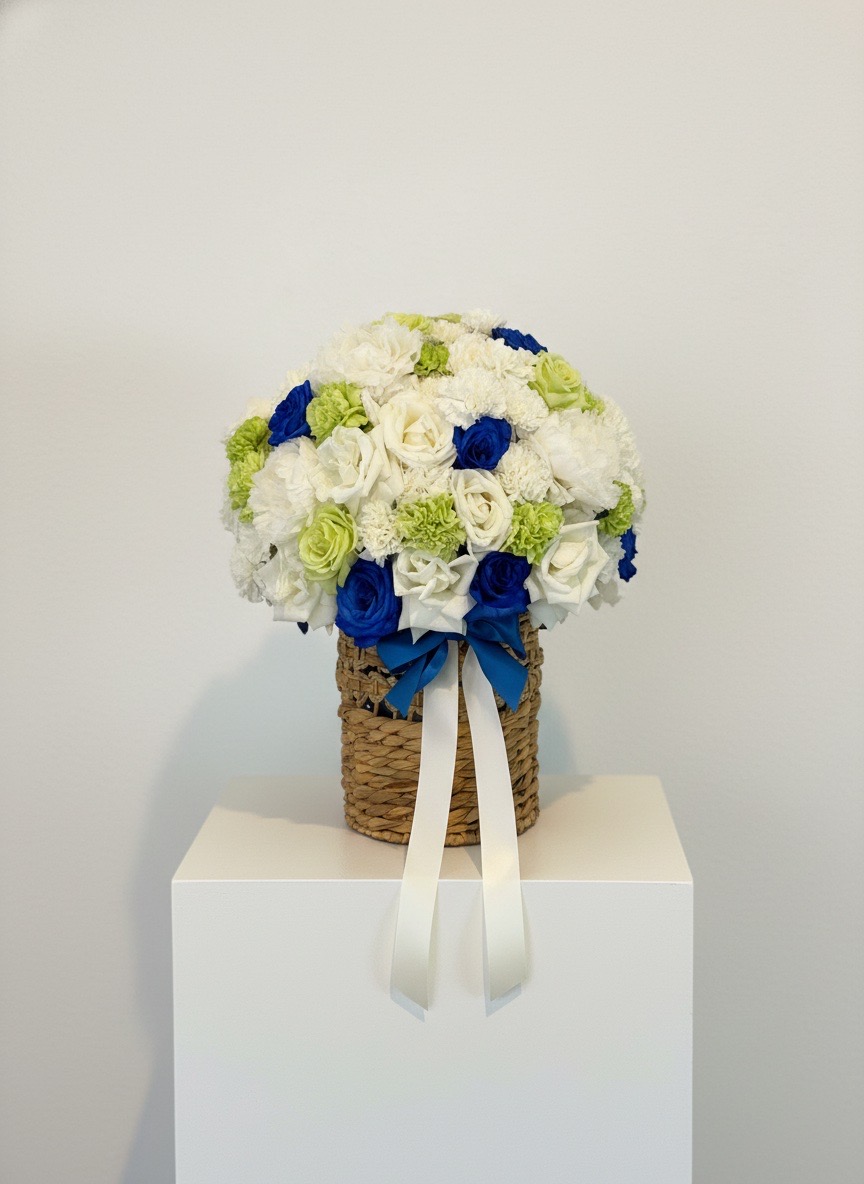
Density is the tell. A modern bouquet often runs thirty-plus stems packed into a dome with almost no negative space. A period-accurate revival piece might use eighteen to twenty-two stems, arranged so the eye can rest between blooms. That negative space is not an oversight. It is the entire point — the eleventh stem, added past the point of restraint, is what turns a composition into an assembly.
Recognizing this distinction changes the entire approach to sourcing and construction. It means the atelier is not chasing a color chip. It is rebuilding a proportion.
Reading the Archive Before Reaching for Stems
Before any flowers are ordered, the actual reference work happens in archives — family photographs, period bridal magazines, botanical illustration, sometimes a single surviving pressed flower tucked into a hope chest. The Smithsonian's history of the Victorian language of flowers is a useful primer here, not for the symbolism alone but for the period photography that accompanies it, which shows how loosely stems were once gathered by hand rather than wired into a frame.
The atelier's job at this stage is translation, not imitation. A photograph from 1962 was taken in black and white or faded color film; guessing at the true palette from a sixty-year-old print is unreliable. What survives clearly is the shape — the drop of a trailing stem, the height of the gathering point, the ratio of foliage to bloom.
Three questions guide this reading:
Skipping this research stage is the single most common reason revival arrangements read as costume rather than craft.
The Varieties That Carry a Period Without Costume
Certain varieties do the historical work honestly, without resorting to dyed petals or artificially dried textures. Garden roses are the anchor. Mondial, with its dense, cabbage-like petal count, reads immediately as heirloom. Vendela, in soft cream, echoes the ivory roses common to mid-century bridal photography. Quicksand, with its warm, shifting blush-to-caramel tone, does the work that a dyed rose would otherwise attempt and fail at.
Lisianthus stands in for the ruffled peony-adjacent blooms once common in period work, particularly outside peony season. Garden roses, as a category, are worth understanding on their own terms — their looser petal structure and shorter vase life relative to hybrid tea roses is precisely what gives them the aged, unposed quality a revival design needs.
Supporting material matters as much as the focal bloom. Dusty miller's silvered foliage was a staple of pre-1970s arrangements and remains one of the fastest ways to age a composition visually. Eucalyptus, used sparingly rather than in the trailing abundance common today, adds movement without tipping into a modern garland aesthetic. Clematis, particularly the vine left loose rather than wired flat, reintroduces the informality that photographs of the period consistently show.
Peonies deserve a note of caution: their bloom window is narrow, typically four to six weeks depending on region and cultivar, as detailed in growing guides such as the Missouri Botanical Garden's entry on Paeonia lactiflora. A wedding date outside that window means lisianthus or a fuller garden rose carries the visual role instead.
Structure First: Rebuilding Silhouette, Not Just Palette
Once the palette and varieties are settled, the harder work begins — rebuilding the actual shape. Most modern floral training defaults to a rounded, symmetrical dome. Revival work asks for asymmetry: a longer trailing edge on one side, a slightly collapsed crown rather than a perfect sphere, stems left at varying lengths rather than trimmed to a uniform plane.
This is where restraint becomes the discipline. It is far easier to add a stem than to leave a gap. The instinct, especially under a client's watchful eye at a preview, is to fill every visible space. A revival arrangement resists that instinct deliberately. The negative space between a garden rose and a stem of dusty miller is not empty — it is doing compositional work, the same way a pause does work in a sentence.
Stem count sits meaningfully lower than in dense modern work — often 25 to 40 percent fewer stems for a comparable bouquet size. That reduction is not a cost-saving measure, though clients sometimes assume it is. It is the entire visual mechanism that reads as period-accurate rather than sparse.
Height and gathering point matter as well. Many mid-century bouquets were gathered lower, closer to hand height, rather than built tall against the torso. Recreating that gathering point changes how the piece moves during a ceremony walk — a detail invisible in a static photograph but obvious in motion.
The Atelier Process: From Sketch to Standing Arrangement
A revival commission moves through the studio differently than a standard order. It begins with a hand sketch, not a mechanical spec sheet — the designer marking where the trailing line falls, where the gathering hand sits, which three or four blooms will serve as focal points against a supporting field of ten to fifteen secondary stems.
Construction happens in stages across a single extended session rather than an assembly line. Foliage is placed first to establish the silhouette's outer edge — dusty miller and eucalyptus set the frame before a single rose enters the piece. Focal blooms come next, placed at uneven intervals rather than evenly spaced, with attention to which face of each garden rose turns outward.
Wiring and taping, largely invisible in the finished piece, take considerably longer in revival work than in modern construction. A looser silhouette needs more internal support to hold its shape through an eight-hour day, not less — the appearance of casualness is, paradoxically, the most engineered part of the process.
A typical revival bridal bouquet takes 90 minutes to two hours of dedicated studio time, roughly double a standard modern bouquet of comparable size. That time is the actual cost driver in revival work, more than the stems themselves.
Common Mistakes When "Vintage" Becomes Costume
The failure mode is consistent across the industry: treating vintage as a texture pack applied to a modern silhouette. Dried flowers, bleached ruscus, and sepia-toned ribbon layered onto a dense, symmetrical dome does not read as heirloom. It reads as a modern arrangement wearing a costume.
A second common mistake is chasing an exact color match to a faded photograph. Old film stock and printing processes shifted color substantially — a rose that photographs as dusty peach in a 1968 print may have been a saturated coral in person. Matching the print rather than the plausible original leaves the arrangement looking artificially aged rather than authentically period.
A third mistake, particularly common with less experienced designers, is over-researching the decade and under-researching the client. Not every couple wants strict period accuracy. Some want a single gesture toward heritage — a grandmother's brooch pinned into the bouquet, one variety her mother grew — set against an otherwise contemporary design. Forcing full period accuracy onto that brief misreads the assignment entirely.
A short list of what to avoid:
Preservation and the Case for the Arrangement That Lasts the Day
Heritage work carries an obligation modern florals sometimes skip: the arrangement has to survive contact with the day. A ceremony at 4pm, photographs at 5, a reception running past 10 — garden roses and lisianthus have to hold shape and hydration across six or more hours without refrigeration.
This starts with harvest timing. Garden roses cut too tight will never open into the period-correct three-quarter bloom the design calls for; cut too open, they will not survive transport. Growers working with the atelier on advance order typically harvest 24 to 48 hours before the event, timed against bloom stage rather than a generic delivery schedule.
Hydration treatment before the bouquet leaves the studio matters more in revival work than in dense modern arrangements, because the looser structure offers less mutual support between stems. A proper flower food solution and a cool, dark holding period of several hours before the ceremony noticeably extends the working life of the piece.
For couples who want a physical remnant beyond the day, pressing or professional preservation of a single bloom — often the one carried from a family member's original arrangement — closes the loop the entire commission was built around. The revived bouquet does its work for one day; the preserved stem does its work for decades.
Budgeting and Timeline for a Revival Commission
Clients are often surprised that a lower-stem-count arrangement costs more than a fuller modern one. The math is straightforward once the labor is visible: revival work runs 1.5 to 2 times the studio hours of standard construction, and that labor, not the stem count, is the primary cost input.
A realistic range for a full revival bridal package — bouquet, two to three attendant bouquets, boutonnieres, and one ceremony piece — sits meaningfully above a comparable modern package, largely on account of sourcing rare varieties and the additional hand-work. Specific garden rose varieties like Mondial are grown to order for weddings booked well in advance, which affects both cost and timeline.
Timeline matters more here than in most floral commissions. Booking nine to twelve months ahead allows the atelier to place a growing order for specific varieties rather than substituting whatever is available closer to the date. A revival design attempted on six weeks' notice will almost always require compromise on variety, if not on silhouette.
A working budget conversation should cover: variety availability by season, the number of studio hours the silhouette actually requires, whether preservation of a keepsake bloom is part of the scope, and a contingency plan if a specific heirloom variety is unavailable close to the date.
Working With an Atelier: What to Bring to the First Consultation
The first meeting determines most of what follows, and clients get more from it by arriving prepared. A physical photograph, even a poor-quality one, is more useful than a curated digital mood board — the atelier is reading structure, not aesthetic mood.
Bring any material object connected to the sentiment: a swatch of fabric from a grandmother's dress, a pressed flower, a piece of jewelry that will sit near the bouquet in photographs. These inform color and scale decisions in ways a verbal description cannot.
Be honest about what matters most — exact period accuracy, a general heirloom feeling, or a single specific gesture toward a family member. This single clarification changes nearly every downstream decision, from stem count to variety selection to whether preservation services are worth budgeting for.
Ask direct questions in return: which varieties are realistic for the wedding date, what the studio hour estimate looks like, and how the arrangement will be prepared to hold through the specific hours of the day's schedule. An atelier confident in its process will answer all three without hesitation.
A Quiet Observation
The photograph the bride carried in was never really about the flowers. It was about a room, decades ago, that held together for one afternoon because someone paid attention to restraint. The work of reviving it is not reproduction. It is listening closely enough to a shape from the past to let it stand quietly in a room it was never built for.
Considered
What makes a floral arrangement look vintage rather than just old-fashioned?
Silhouette does the work color cannot. Vintage arrangements favor loose, asymmetrical shapes with visible negative space, garden roses and lisianthus left partially open, and a lower stem count than a modern dense arrangement. The palette is secondary to the structure.
Which flowers work best for a vintage-inspired wedding arrangement?
Garden roses (Mondial, Vendela, Quicksand), lisianthus, clematis, dusty miller, and eucalyptus reliably carry period weight. Their bloom shapes and foliage textures echo pre-1950s floral photography without requiring dyed or artificially aged materials.
How far in advance should I book an atelier for vintage wedding florals?
Nine to twelve months, particularly if the design calls for a specific garden rose variety. Growers plant to order for weddings booked that far out, and a revival design often depends on one or two varieties that are not held in general inventory.
Do vintage arrangements cost more than modern wedding florals?
Often, yes — not because the flowers cost more per stem, but because the labor does. Hand-wiring, taping, and building a loose asymmetrical silhouette takes more studio hours than assembling a dense, uniform arrangement.
Will vintage-style flowers hold up through a full wedding day?
With the right preparation, yes. Garden roses at the right maturity stage, proper hydration before transport, and structural support built into the mechanics — not visible in the final piece — allow a loose arrangement to hold its shape from ceremony through last dance.
Can a modern venue support a vintage floral design?
Yes. The arrangement carries the period reference, not the room. A restrained, loose silhouette against a contemporary space reads as intentional rather than mismatched, provided the scale and density of the florals are considered against the architecture.