Heritage-Inspired Floral Arrangements for Luxury Weddings
A bride in El Dorado Hills once brought her grandmother's wedding photograph to a consultation — black and white, 1962, a bouquet of garden roses so full they had gone slightly blowsy by the time the photographer got his shot. She did not want a replica. She wanted the feeling of it: a bouquet that looked grown rather than assembled, that would have made sense at any wedding across the last hundred years.
37 min read · Les Fleur Company
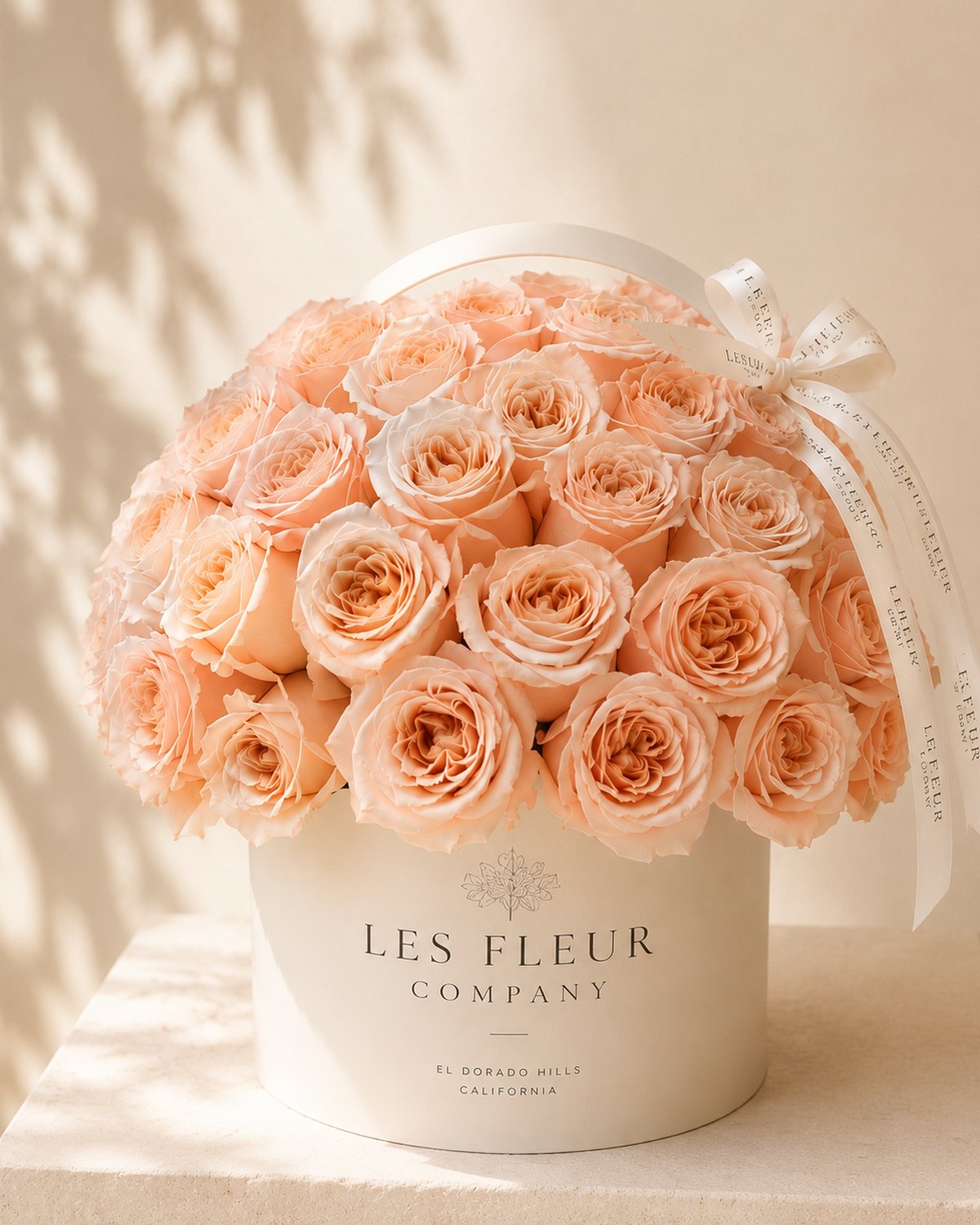
The Rose Your Grandmother Would Recognize
A bride in El Dorado Hills once brought her grandmother's wedding photograph to a consultation — black and white, 1962, a bouquet of garden roses so full they had gone slightly blowsy by the time the photographer got his shot. She did not want a replica. She wanted the feeling of it: a bouquet that looked grown rather than assembled, that would have made sense at any wedding across the last hundred years.
That instinct is the argument for heritage-inspired floral arrangements. Trend-driven florals date themselves within a photograph cycle or two — a particular shade of terracotta, a particular season's grasses. Heritage composition does not chase a color forecast. It works from materials and proportions that were already correct before the client was born, which is why they still read as correct now.
This is not nostalgia dressed up as design philosophy. It is a sourcing decision, a structural decision, and a restraint decision, made in that order. The rest of this guide walks through each one, with the specifics a considered client should expect to discuss at a first consultation.
What Heritage-Inspired Composition Actually Means
Heritage, as a working term, refers to two things at once: the lineage of the material and the discipline of the arrangement. A garden rose bred in the 1980s from stock that traces to nineteenth-century European cultivars carries heritage in the bloom itself. A structure built with visible negative space, rather than packed edge-to-edge with color, carries heritage in the form.
Both matter. A florist can source the correct rose and still produce a modern, densely-packed arrangement that reads as contemporary event design rather than heritage work. The reverse is also true — a loosely gathered, restrained silhouette built from commercial spray roses will not carry the weight the client is paying for. The two decisions have to agree with each other.
For couples building a full wedding program around this register, the composition principles are worth reading in more depth — the piece on five essential elements of a timeless floral composition covers the structural side of this decision in detail, and is a useful companion to the sourcing conversation below.
A rough rule that holds across most heritage-register work: if a stem needs to be explained to a guest before they can appreciate it, it does not belong in the arrangement. The work should read as inevitable, not clever.
Materials That Carry a Legacy
The material list for heritage-inspired work is narrower than most clients expect, and that is by design. Garden roses sit at the center — Mondial for its density and cool white-to-blush range, Vendela for its ivory warmth, Quicksand for a deeper, antique tan that reads almost sepia in photographs. These are not interchangeable with standard florist roses; the petal count alone can run two to three times higher, which changes how the bloom opens and how it photographs at hour six of a reception.
Around the rose, the supporting cast is equally specific: lisianthus for its ruffled, almost peony-like density at a fraction of the cost; peony itself, where the wedding date allows for its narrow April-through-June window; clematis for movement along the edges of an arrangement; dusty miller for its silvered, slightly rough texture against soft petals; lavender for scent as much as form; and eucalyptus, chosen by variety rather than treated as generic greenery.
According to the American Rose Society's garden rose classifications, many of the varieties used in this style of work descend from Old Garden Rose lines bred well before the hybrid tea became the commercial standard — which is precisely the lineage a heritage-register bouquet is drawing on. It is worth asking any florist proposing this style of work which specific varieties they intend to source, and why, rather than accepting a general description like "garden roses" without names attached.
The Discipline of Restraint
Composition, in this register, is a subtraction exercise more than an addition exercise. A centerpiece built to twelve stems of garden rose alone, with no filler, reads as more considered than one built to thirty stems across six varieties. The instinct to add "just one more element" is the single most common way a heritage-inspired arrangement gets pulled off course.
There is a working principle in the studio that the eleventh stem ruins the composition — not literally always the eleventh, but the point past which every additional stem starts working against the silhouette rather than for it. Most arrangements have that point somewhere between eight and fourteen stems of primary material, depending on scale. Past it, the eye stops resting anywhere.
The companion piece on the five elements of a masterful floral composition covers this in more technical detail — proportion, focal point, line, texture, and color, each treated as a lever rather than a checklist item.
In practice, restraint shows up in small studio decisions: leaving one side of an arrangement visibly lighter than the other, letting a single clematis vine cross the frame rather than filling every gap, choosing not to match the boutonniere exactly to the bridal bouquet. None of these read as absence to a guest. They read as intention.
Color Palettes Drawn from Historical Reference
Heritage-register palettes tend to sit in a narrower value range than contemporary event palettes — parchment, faded rose, bruised plum, the deep cream of an aged photograph rather than the bright white of a printed invitation. These tones come from period reference: portraiture, botanical illustration, the muted dye lots available before synthetic pigments standardized color in the twentieth century.
The practical reason this matters is photographic. A saturated, high-contrast palette reads well in a single well-lit reception photo and poorly in the twenty other lighting conditions a wedding day produces — golden hour, candlelight, a shaded ceremony arbor. A palette built on tonal restraint holds its character across all of them.
For couples building a full palette rather than a single centerpiece, the guide on color theory in wedding floral composition is worth reviewing alongside a swatch of the linens and stationery — palette decisions made in isolation from the rest of the day's materials rarely hold together once everything is in the same room.
A working note from the studio: clients who arrive with a single reference image tend to end up with a better result than clients who arrive with a folder of forty. The narrower the reference, the clearer the palette decision.
Inside the Atelier Process
A full-service heritage composition typically moves through four stages. First, consultation — usually 60 to 90 minutes, where material, palette, and budget get established against the wedding date and venue. Second, sourcing, which for rare garden rose varieties can mean placing an order with a grower eight to ten weeks out, since these are not held in standing commercial inventory the way commodity roses are.
Third is mechanics — the unglamorous structural work of chicken wire, floral tape, and water sources built into the design before a single stem goes in, which determines whether a large-scale arrangement holds its shape through a six-hour reception or begins sagging by the toast. Fourth is installation, typically the morning of the event, with garden roses and peony conditioned the night before to open at the correct rate.
The piece on how atelier floristry elevates wedding composition through process goes further into what happens between the consultation and the wedding day — the part of the work a guest never sees but that determines whether the arrangement survives the day intact.
For couples planning further from the studio's home base, this same process runs consistently across markets — the studio's Lake Tahoe wedding work follows the identical four-stage structure, adjusted only for altitude and the shorter mountain growing season.
Silhouette, Scale, and the Space Between Stems
Scale is where heritage-inspired work most often goes wrong at the planning stage. A centerpiece designed for a six-foot round table needs a different silhouette than the same material scaled up for a twelve-foot farm table, and simply doubling the stem count is rarely the correct adjustment. The relationship between the arrangement's height, width, and the negative space around it has to be recalculated for each table size, not scaled proportionally.
A useful frame: the arrangement's widest point should generally not exceed roughly two-thirds of the table's width at that section, leaving room for place settings and sightlines across the table. Guests need to see each other over or through the centerpiece, not around a wall of stems.
Negative space — the visible gaps between blooms, the bare inch of stem before the next cluster of lisianthus — is not an oversight in this style of work. It is what lets the eye register individual stems rather than a solid mass of color, and it is usually the first thing a less experienced arrangement sacrifices under time pressure.
Vertical arrangements for ceremony arbors or aisle markers follow the same logic at a different scale, with the added consideration of wind exposure for outdoor venues — a concern worth raising early with any florist proposing large-format installations at an exposed site.
Sourcing Heritage Blooms Through the Seasons
Availability, not preference, sets the outer boundary of what a heritage-inspired arrangement can include on a given date. Peony has a narrow window, roughly April through June in most California growing regions, and a wedding scheduled for September simply cannot include it regardless of budget. Garden roses have a longer season but still peak in late spring and early autumn, with summer heat shortening vase life considerably.
A studio working in this register plans backward from the date: what is realistically available, at what quality, from which growers, rather than presenting a client with a fixed material list and hoping the calendar cooperates. According to Smithsonian Gardens' research on historical American cutting gardens, this seasonal discipline is itself part of the heritage — pre-industrial cutting gardens were planned around bloom windows out of necessity, not aesthetic preference, and that constraint produced much of the restrained, seasonally coherent look now associated with heritage floral work.
Practical guidance for couples: bring the wedding date to the first consultation before the mood board. A palette built around peony for a September wedding will need to be revised, and it is far better to revise it in the first meeting than after a deposit has been placed. The studio's guide on crafting an unforgettable floral legacy walks through how to build a seasonally realistic wishlist without losing the heritage character of the palette.
Where Couples Go Wrong — and the Correction
The most common mistake is over-specifying stem count rather than trusting silhouette. A client who requests "as full as possible" is often asking for the eleventh stem, the one that pulls the arrangement toward generic abundance rather than considered form. The correction is a conversation about density versus restraint at the consultation stage, ideally with reference photographs that show both approaches side by side.
A second frequent mistake is choosing palette before venue. A parchment-and-plum palette that reads beautifully in a barn with exposed wood will read differently against the marble and gilt of a hotel ballroom. The correction is simple in sequence, if not always in practice: lock the venue, then the palette, then the material list — not the reverse.
A third mistake, less discussed, is treating the florist's proposal as a menu to be maximized rather than a composition to be trusted. Some of the studio's strongest work has come from clients who arrived with a firm budget and a loose brief, and let the florist make the material and structural decisions within that budget. Some of the least successful arrangements have come from the opposite: a rigid, itemized list assembled from inspiration photos that were never designed to work together.
The correction, in every case, is the same: bring the constraints — date, venue, budget, one or two reference images — and let the composition decisions belong to the person trained to make them.
Choosing an Atelier That Works This Way
Not every florist works in this register, and that is not a criticism of the ones who do not. Heritage-inspired floral arrangements require a different sourcing relationship — standing orders with growers who carry garden rose varieties, a willingness to say no to a client's Pinterest board when the material will not hold the requested form, and a studio calendar built to accommodate eight-to-twelve-week lead times rather than same-week turnarounds.
When evaluating a studio for this kind of work, ask direct questions: which garden rose varieties do they source regularly, not just occasionally. What does their mechanics process look like for a large-scale installation. How far in advance do they need the wedding date locked to guarantee peony or a specific rose variety. The answers will tell a considered client more than a portfolio of photographs alone.
For couples planning in the studio's core markets, the El Dorado Hills wedding program and its counterparts follow this same process end to end, from first consultation through installation morning.
The rose your grandmother would recognize is still available, if the right questions get asked early enough, and if the studio chosen is willing to leave the eleventh stem out.
Considered
What does heritage-inspired floral design mean for a wedding?
It refers to arrangements built from garden rose varieties and traditional cutting-garden flowers with documented lineage, composed with restraint so the piece reads as considered rather than decorated. The emphasis sits on materials and proportion that would have looked correct at a wedding a century ago, not on trend-driven stems.
Are heritage garden roses more expensive than standard wedding roses?
Generally, yes. Varieties such as Mondial or Vendela are grown in smaller volume and have shorter vase windows than commercial hybrid tea roses, which raises the per-stem cost. The tradeoff is a bloom form, scent, and depth of petal that commercial roses do not replicate.
How far in advance should I book a florist for heritage-style wedding florals?
Eight to twelve weeks is standard for full-service composition work. Peak-season Saturdays between May and October, and any request built around a rare or imported variety, typically require booking four to six months out to secure sourcing.
Can heritage floral arrangements be preserved after the wedding?
Certain elements can — pressed petals, a bouquet preserved under glass, dried lavender or dusty miller. Full arrangements are not built to outlast the event itself. The preservation conversation belongs at the consultation stage, not after the flowers have already been cut and conditioned.
What flowers are considered heritage varieties for weddings?
Garden roses including Mondial, Vendela, and Quicksand, along with lisianthus, peony, clematis, dusty miller, and lavender, are common in heritage-register work. Eucalyptus is used more for structure than lineage, though several varieties trace back to Victorian-era cutting gardens.
Why do some wedding florists avoid trend-driven color palettes?
Trend palettes date a photograph quickly and rarely carry the same depth as historically referenced tones. A palette built on restraint — parchment, faded rose, bruised plum — tends to look correct ten years after the wedding, where a seasonal color-forecast palette often does not.